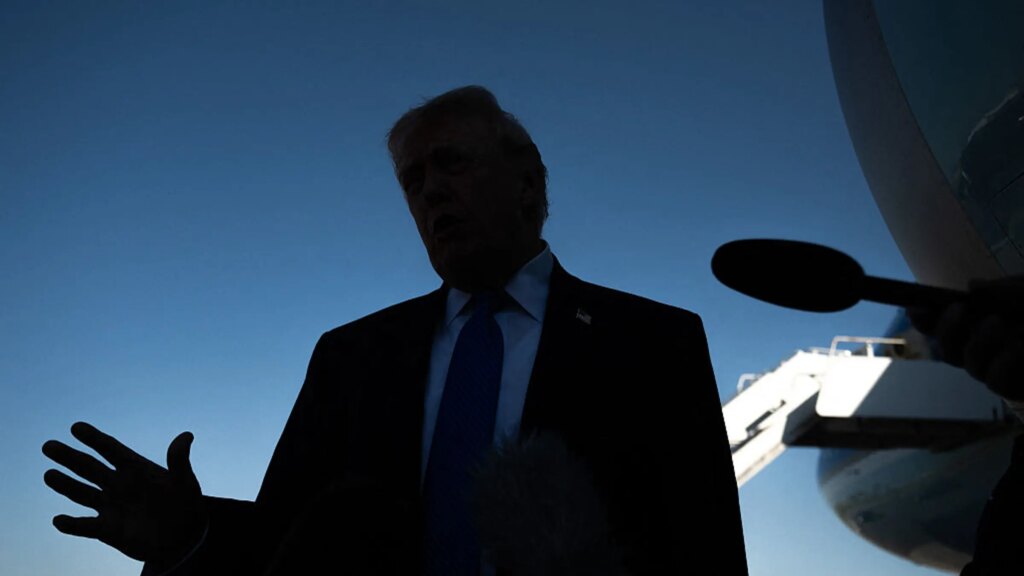
Of all the reasons proffered for the Iran war—and there’ve been a few—probably the easiest for Americans to get behind is that striking the regime was necessary to permanently derail its nuclear weapons program.
After all, the International Atomic Energy Agency (IAEA) last May revealed Iran had stockpiled 408.6 kg of 60%-enriched uranium, which with further refinement could potentially fuel nine warheads. The nation’s inventory of some 2,500 ballistic missiles—the largest in the Gulf—and support for terrorist proxies across the region added to the security migraine. Iran “can’t have nuclear weapons,” President Donald Trump said in February. “It’s very simple. You can’t have peace in the Middle East if they have a nuclear weapon.”
But while the strikes against Iran’s nuclear sites and scientists will no doubt slow Iran’s atomic ambitions in the near-term, analysts say the regime—providing it survives, which all signs suggest it will—will now be even more set on acquiring a nuclear weapon.
“For Iran, nuclear weapons are now the only thing that will guarantee regime survival,” says Ramesh Thakur, professor emeritus and director of the Centre for Nuclear Non-Proliferation and Disarmament in the Crawford School of the Australian National University, who previously negotiated with Iran on behalf of the U.N. “So why wouldn’t they get them?”
Indeed, given Iran’s ballistic missile infrastructure has been badly degraded by U.S. and Israeli attacks, a nuclear bomb may prove “a faster route to restore deterrence for a regime that is now more radical and has been attacked twice in the midst of negotiations,” says Jennifer Kavanagh, director of military analysis for the Washington-based think tank Defense Priorities.
But it’s not just Iranian nuclear weapons that the U.S. and world must worry about going forward. On Tuesday, North Korean Supreme Leader Kim Jong Un left little doubt he was referencing Iran when he said the “present situation clearly proves” his country was correct to hang onto its nuclear arsenal, which he termed “irreversible,” while accusing Washington of “state sponsored terrorism and aggression.”
Of course, for rogue states the writing was already on the wall given the fates of Libyan leader Muammar Gaddafi and Iraq’s Saddam Hussein, both toppled after abandoning their nuclear programs. (Ukraine no doubt also rues voluntarily giving up its nukes following the breakup of the Soviet Union.) That message was underscored by Trump pulling out of the Iran nuclear deal, officially the Joint Comprehensive Plan of Action (JCPOA), in 2018, spotlighting the futility of striking a bargain with a capricious U.S. where any administration can rip up the pacts of its predecessor.
The difference the Iran War really makes is the galvanizing effect it has on U.S. allies and neutral states pondering their own nuclear deterrent. Already, Europe was reeling from Trump’s humiliating broadsides, threats to seize Greenland, and trashing of NATO, prompting discussions toward a new protective alliance chiefly against Russia. Whether this involves French and British nukes stationed in the east of the bloc, or other members such as Germany or Poland developing their own weapons, is unclear, though the trajectory is irrefutable—not least since Vladimir Putin already claims to have moved nuclear-capable missile systems into neighboring Belarus.
Then there are U.S. allies in the Middle East, who have received a stunning wake-up call regarding the impotence of American security guarantees following Iranian reprisals. Instead of safeguarding host populations and infrastructure, Washington’s overriding focus has been on protecting its military bases all while—along with regional nemesis Israel—plunging the Gulf’s people and economies into crisis. If Iran survives the current onslaught, expect its nuclear ambitions emboldened, prompting Saudi Arabia, Turkey, and possibly Egypt to explore their own deterrents, says Thakur.
Moving east, India and Pakistan are already nuclear powers, and after recent border skirmishes, neither will be dialing back. But the real change might be in East Asia, where Kim’s belligerence and rising fears regarding China’s designs on self-ruling Taiwan had already reenergized the nuclear debate.
In South Korea, public support for indigenous nuclear weapons reached a record 76.2% last year, spotlighting unprecedented anxiety about relying on the U.S. nuclear umbrella. “The bipartisan U.S. position through many decades has been that we can provide extended deterrence, so you don’t need nuclear weapons,” says Daniel Pinkston, an adjunct professor at Troy University in Seoul. “But this administration is not interested in any kind of security cooperation.”
In Japan, which remains the only nation to have suffered nuclear attacks, the picture is understandably more complicated. In December, an unnamed government security adviser told reporters they believed Japan should have nuclear weapons given heightened security risks in what was seen as an attempt to gauge and guide the national mood. (Japan’s civilian nuclear energy program is already producing so much weapons-grade uranium and plutonium that in 2014 Tokyo agreed to ship excess material to the U.S. to mitigate fears that its storage sites could be targeted by terrorist groups.)
Japanese Prime Minister Sanae Takaichi was quick to walk back the official’s remarks, insisting she adheres to Japan’s “three non-nuclear principles”—not possessing, producing, or hosting nuclear weapons—that date from 1967. However, Takaichi has also said that the “hosting” prohibition may be inconsistent with U.S. security guarantees if it prevented American nuclear submarines docking in Japan. Taro Kono, a former defense and foreign minister, went further, insisting that Japan should not shy away from an open debate on acquiring nuclear weapons.
Such suggestions are anathema to historic rival China, where a Foreign Ministry spokesman warned Japan going nuclear would “bring disaster to the world.” This is not least because of Takaichi’s recent remarks that Japan could be drawn into any conflict over Taiwan, which sent relations with Beijing spiraling.
Taiwan itself once harbored nuclear ambitions though was strongarmed into abandoning its secret program by the U.S. in 1988. Taipei resurrecting a nuclear program would be extremely risky, given it would hand Beijing a giftwrapped excuse for invasion, though it’s still “possible,” says Thakur. Even in Australia, the possibility of acquiring nuclear weapons has slowly migrated from crackpot mutterings to fringe discourse.
It’s doubtful that the nuclear genie can be put back in the bottle. However, while more nuclear weapons clearly bring heightened risks of catastrophic miscalculation and misstep, there could be benefits. Relying on other nations for security guarantees warps national incentives by not forcing states to grapple with their own geopolitical reality, argues Kavanagh. It’s for this reason that the U.S. has long employed “strategic ambiguity” over its backing for Taiwan—chiefly to prevent hotheads in Taipei picking a fight with China in the steadfast knowledge that the U.S. would be obliged to finish it. “In my view, security guarantees actually do more harm to U.S. interests and stability than they do to help,” says Kavanagh.
However, if we are to embrace a new nuclear tooled-up world, then a drastically upgraded architecture is required to police it. This might take the form of a new Treaty on the Non-Proliferation of Nuclear Weapons, or NPT, which includes states like Pakistan and North Korea and works with them to monitor stocks and mitigate risks of further proliferation to bad actors, particularly non-state ones.
But while the Trump Administration’s attempts to rid Iran of nuclear weapons may only hastened a new paradigm of nuclear abundance, it’s far from the greatest irony. That must surely be reserved for the fact it’s far from clear that Iran actually wanted a nuclear bomb in the first place. After all, Tehran happily agreed to the 2015 JCPOA that lifted economic sanctions in exchange for capping enrichment at 3.67%, reducing their centrifuges, and granting unprecedented access to IAEA inspectors (who all verified the deal had been adhered to until Trump pulled out).
Indeed, that same IAEA report from last year concluded that it had “no credible indications of an ongoing, undeclared structured nuclear program,” while U.S. intelligence agencies agreed that “Iran is not building a nuclear weapon,” though had “undertaken activities that better position it to produce a nuclear device, if it chooses to do so.”
In Tehran, Thakur recalls being told by one former Iranian President that weapons of mass destruction are theologically un-Islamic, because they are indiscriminate with civilians as primary targets. “But his point was that there is a limit to how far the Ayatollahs can control the national security forces, who are the ones who are interested in [a nuclear deterrent].” Don’t expect that interest to wane anytime soon.
The post Trump Says His Goal Is to Stop Iran Getting a Nuclear Bomb. But the Result Might Be Lots More Nukes Across the Globe appeared first on TIME.