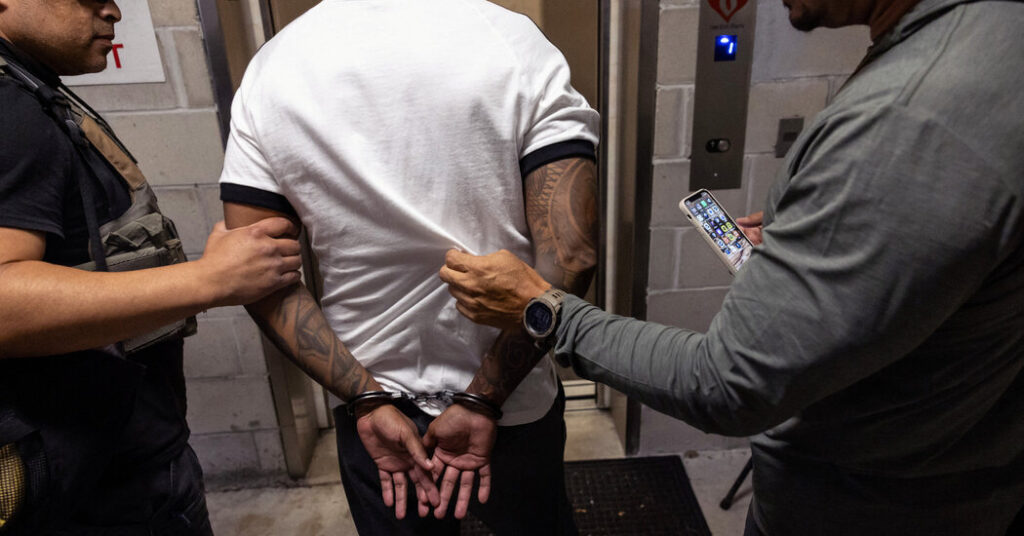
A year after Gov. Ron DeSantis of Florida pledged to make his state one of the toughest in the nation on immigration enforcement, he has largely succeeded: More immigration arrests were made in Florida in 2025 than any state but Texas, and there have been few signs of the crackdown easing.
Yet the enforcement machine that the Republican governor hastily built to support the federal crackdown he welcomed is starting to show cracks, weighed down by a crush of detainees crowding some jails and a set of growing concerns, even among some law enforcement officials, about aggressive enforcement tactics in a midterm election year.
At a meeting of the State Immigration Enforcement Council last week, several Republican sheriffs expressed concern about unauthorized immigrants who have not committed any crimes being detained and deported.
“There are those here that are working hard,” said Sheriff Grady Judd of Polk County, the chairman of the new council, which advises the governor and cabinet members on immigration enforcement. “They have kids in college or in school. They’re going to church on Sunday. They’re not violating the law, and they’re living the American dream.”
The comments from the elected sheriffs signaled a shift in tone among a small but influential group of Florida Republicans who have helped carry out President Trump’s and Mr. DeSantis’s immigration policies.
“It’s too wide a net,” Chief Ciro M. Dominguez of the Naples Police Department, another member of the council, said during its quarterly meeting on March 16. “And we’re hurting people who are not the target of this.”
Elsewhere in the country, immigration arrests have fallen as federal law enforcement agencies have moved away from militarized raids that have resulted in violent clashes with protesters, including the fatal shootings of two American citizens in Minneapolis in January.
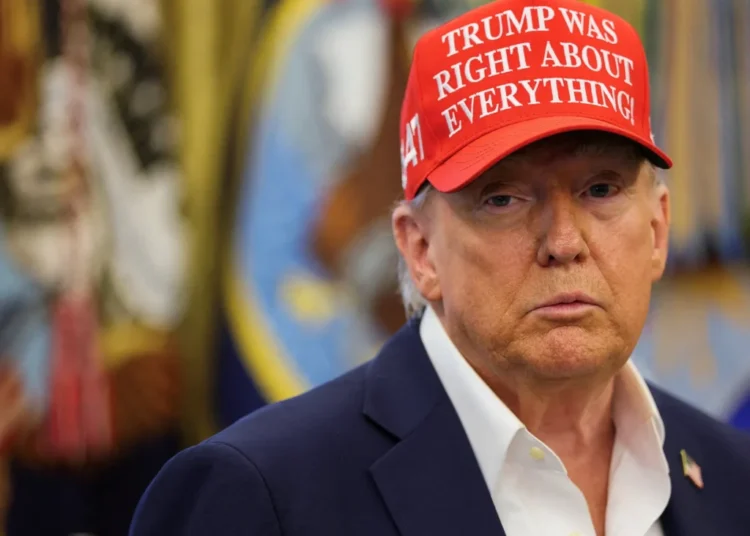
House Republicans acknowledged at a meeting in Doral, Fla., this month that the immigration crackdown had alienated some voters. Party officials have advised lawmakers to refrain from discussing “mass deportations” ahead of the midterms. And at his confirmation hearing last week, Markwayne Mullin, the new homeland security secretary, committed to working with senators in both parties to address their concerns about Mr. Trump’s immigration policy.
But in Florida, immigration arrests have continued at an aggressive pace up to now. The Immigration and Customs Enforcement field office in Miami, which covers all of Florida, Puerto Rico and the Virgin Islands, has reported almost 10,000 arrests so far this year, more than any other ICE field office.
The state has not seen large militarized raids, in part because the DeSantis administration required state and county law enforcement agencies to sign formal cooperation agreements with federal authorities. That led to about 20,000 immigration arrests made by state and local agencies in 2025, Mr. DeSantis said in January. The Florida Highway Patrol had made just over half of those arrests.
The sheriffs who raised concerns at the recent meeting were quick to say they backed Mr. Trump, Mr. DeSantis and the deportations of unauthorized immigrants who commit crimes. But they also floated the idea of asking Congress to consider providing those who are not criminals with a path to legalize their immigration status — an idea that Mr. DeSantis promptly rejected.
“This idea that unless you’re an ax murderer you’re able to stay, that is not consistent with our laws, and it’s also not good policy,” Mr. DeSantis said last week.
Last year, Florida opened two state-run detention centers, one in the Everglades and another west of Jacksonville, to house federal immigration detainees. But many of the detainees were held in local jails until federal immigration agents could transport them to the centers, a process that slowed as the number of immigration arrests grew. Detainees with no criminal charges were sometimes held in cramped jails for more than a week, violating Immigration and Customs Enforcement guidelines that limit such stays to three days.
In Orange County, home to Orlando, the county mayor and immigration lawyers said that federal authorities had been picking up jailed detainees and driving them not to immigrant detention centers, but around town for a few hours. Federal authorities would then rebook the detainees into the jail the same day, in order to restart the three-day clock, the mayor and lawyers said.
So many immigration detainees were being held in the jail for extended periods last year that federal judges in Orlando started freeing some of them.
In one dramatic hearing last month, a federal prosecutor declined to argue the government’s position that the county jail should keep holding a Venezuelan detainee with a brain tumor. The detainee, Johnny Rondón Rodríguez, had been in the jail for 25 days.
His lawyer, Phillip Arroyo, said Mr. Rondón had been pulled over on Interstate 75 and detained despite having a pending asylum case and not being charged with any wrongdoing. Mr. Rondón said he was not receiving his medication to treat the tumor while in jail.
Yohance Pettis, an assistant U.S. attorney, said that if the court believed it should release Mr. Rondón, “then I am willing to do the right thing.” The judge, John Antoon II of the Federal District Court, called the prosecutor’s position “refreshing” and granted Mr. Rondón an immediate release.
Spending has been another sore point, with Republican state lawmakers pushing back against Mr. DeSantis’s immigration enforcement budget. This month, they renewed an emergency fund that the governor had used to build and operate the Everglades detention center — but only after creating new guardrails, including requiring regular reports to the Legislature on how the money is being spent. The Florida Tributary, an online news outlet, recently reported that the DeSantis administration was spending more than $1 million a day to run the center, known as Alligator Alcatraz.
When Florida opened the center last summer, Mr. DeSantis said the federal government would reimburse the state for its operating costs. But Florida has yet to receive the $608 million federal reimbursement it requested. The money has been held up, first pending the completion of an environmental review, and later by the partial shutdown of the Department of Homeland Security.
In September, a federal appeals court reversed a judge’s order to shut down the Everglades detention center and allowed it to remain open. Environmentalists had challenged the legality of opening the center on protected land; oral arguments in the case are scheduled for next month.
The center held about 1,500 detainees as of Jan. 26, according to evidence presented in a federal court hearing that month in Fort Myers, Fla. It was the only time in months that the facility’s detainee population had been made public.
One Sunday last month, more than 100 activists gathered outside the detention center to demand its closure. The weekly vigils, organized by the Workers Center, a Jewish social justice organization, have been held for more than 30 consecutive weeks.
Among those present was Arianne Betancourt, 33, whose father, Justo Betancourt, a 54-year-old Cuban national, was detained in South Florida in October. He was ultimately transported to the Mexican border to present himself for deportation, according to a petition his lawyer filed in federal court. But the Mexican authorities rejected him, citing his health problems, which include diabetes. Mr. Betancourt was then returned to Alligator Alcatraz.
Holding a microphone, Ms. Betancourt described how her father had grown increasingly frail and dispirited as his detention dragged on.
“I need my dad,” she said. “I need him more than ever.”
Allison McCann contributed reporting
Patricia Mazzei is the lead reporter for The Times in Miami, covering Florida and Puerto Rico.
The post Florida’s Immigration Crackdown Is Showing Cracks: ‘We’re Hurting People’ appeared first on New York Times.