

Spencer Rascoff met his wife before Tinder. And eHarmony. And Match.com.
He was 17 years old, attending a barbecue for students who planned to attend Harvard College. They got to Cambridge, started dating, and have been together since. His next love-match was startups, founding a slew of tech and media companies, including his opus, Zillow.
Then came Match Group, the conglomerate that owns apps like Tinder and Hinge. He knows what you’re thinking: What qualifies this long-married man to know what singles want? He’s never had a Tinder hookup gone wrong; he’s never longed for those in Hinge’s rose jail.
“I am living proof of how important it is to find the right person,” he told me at Match Group’s sunny West Hollywood office. “Were it not for her, it would be awful.”
Rascoff thinks you can find that same life partner on his apps. The market seems to disagree, with stocks down across the category in recent years. In the post-pandemic dating app boom, Match Group’s stock traded around $150; now, it hovers around $30. Five days before I spoke with Rascoff, the S&P 500 announced that it would expel Match Group.
Rascoff needs to make online dating sexy again. He’s done it before — think of how stuffy the homebuying process was before Zillow. But Zillow was a disruptor, where Match Group is a legacy player. It’ll take bigger swings to get more Americans swiping right.
Inside Rascoff’s Tinder redesign
Rascoff doesn’t come across like the stereotypical “founder mode” type. He’s calm and quiet-spoken, often stopping mid-sentence to consider exactly what he wants to say.
Power centralized around Rascoff soon after he joined Match Group. He took over as CEO of Tinder from Faye Iosotaluno. Two of Match Group’s longest-standing faces have also since left: Hinge founder Justin McLeod and chief operating officer Hesam Hosseini. The COO position will not be refilled.
Rascoff quickly reformed Tinder into a series of independent pods. He subscribes to Amazon’s two-pizza rule: a team should never be so big that they’d need more than two pizzas. He also made the company flatter. It put Tinder in line with how he ran Zillow and how Hinge was already running, he said.
“Tinder product and engineering used to be a very large, monolithic organization where the priorities of what gets built came from on high,” he said. The org chart change “unleashed an enormous amount of innovation that was buried.”
He also drilled into the app’s mission statement: “Tinder is the most fun way to spark something new with someone new.” The team now says it in unison before every company meeting, something Rascoff said he values, even if it can be “awkward” and “creepy.”
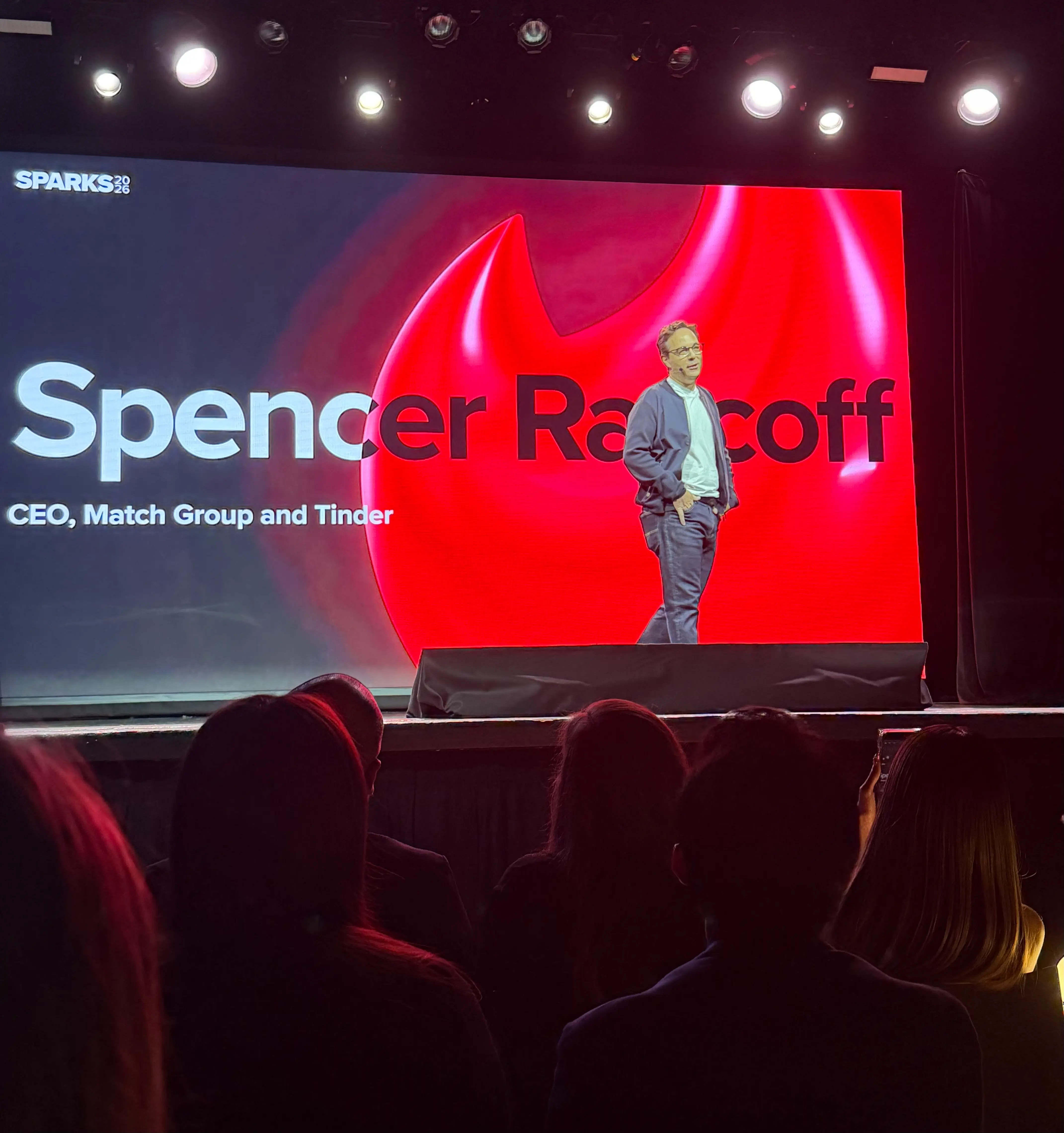
Multiple Tinder leaders told me that the dating app now runs more like a startup. (Two leaders directly used the term “founder mode.”) It’s an ironic twist, given that Tinder itself was born in a conglomerate: IAC’s Hatch Labs. But Rascoff seems bent on ripping up any remnants of bureaucracy.
Right before the team went on stage at the Tinder Sparks conference, Rascoff approached Claire Watanabe, Tinder’s vice president of product. He was using the new Music Mode, and wanted to know why he couldn’t hear it on his profile, she said.
“He’s into the details,” Watanabe said. “He has an opinion.”
Navigating a sour dating app market
Rascoff and I mostly abstained from talking about Hinge. Part of that is because of the event: We’re here for Tinder Sparks, a moment when Rascoff can play Steve Jobs to talk about a litany of new features.
The other reason, though, is that Hinge is doing really well.
Hinge is “on a path to be a billion-dollar business,” Rascoff said. “The way they’ve done that is by knowing whom they’re building for, and by bringing consumer insights into what they’re building.”
Tinder, on the other hand, has slumped. Its annual downloads have been shrinking since 2023, according to Appfigures. In 2021, 61 million people downloaded Tinder, the firm found. In 2025, that figure dropped to 48 million downloaders. Meanwhile, Appfigures found that Hinge was consistently showing positive growth in annual downloads.
Make no mistake: Hinge maintains a fraction of Tinder’s user base, and Tinder is still the biggest dating app in the world. But the warning signs are certainly flashing as red as a Tinder flame.
The Tinder Sparks event was a moment to turn it all around. Rascoff spoke confidently on stage, looking casual in his blue jeans, and outlined a vision for the future of dating. We sipped oat milk lattes and smiled for the photo booth. It’s hard not to be excited about an app when it’s named in a Bad Bunny song.

The room’s optimism didn’t seem to match Tinder’s perception in the outside world, where we hear constantly about “swipe fatigue” and the decline of online dating. Women especially report low-quality matches; a 2022 Pew study found that more women reported negative than positive online dating experiences.
When I asked Rascoff about fatigue, he chose his words carefully. “Some people have left the category because they find dating apps tedious,” he said. His goal is to introduce “fun” features to combat that feeling.
M Science research analyst Chandler Willison said that some investors have begun to think that those worries — about “systemic issues” and “industry-wide malaise” — weren’t as unchangeable as they once believed.
“Spencer has done a really good job pushing back against that idea,” Willison said.
A new generation of daters
Rascoff may be married, but he’s still swiping.
He excitedly showed me his phone. His Tinder profile had a photo of him, his wife, and his dogs. His bio says that he’s “just here for research about our product.”
It’s not his first go-around on the apps. A few years after his father died, Rascoff’s mother got on the apps. He served as his mother’s “dating copilot,” helping her improve her profile and respond to messages.
For Tinder to bounce back, he’ll have to aim his dating advice down a generation. Rascoff talks about Gen Z constantly. He went directly from Match Group’s Gen Z employee resource group to our interview, he said. He cracks jokes about Gen Zers who bring up astrology in their job interviews, and shows off a Rubik’s Cube with Tinder’s imaginary Gen Z customers.
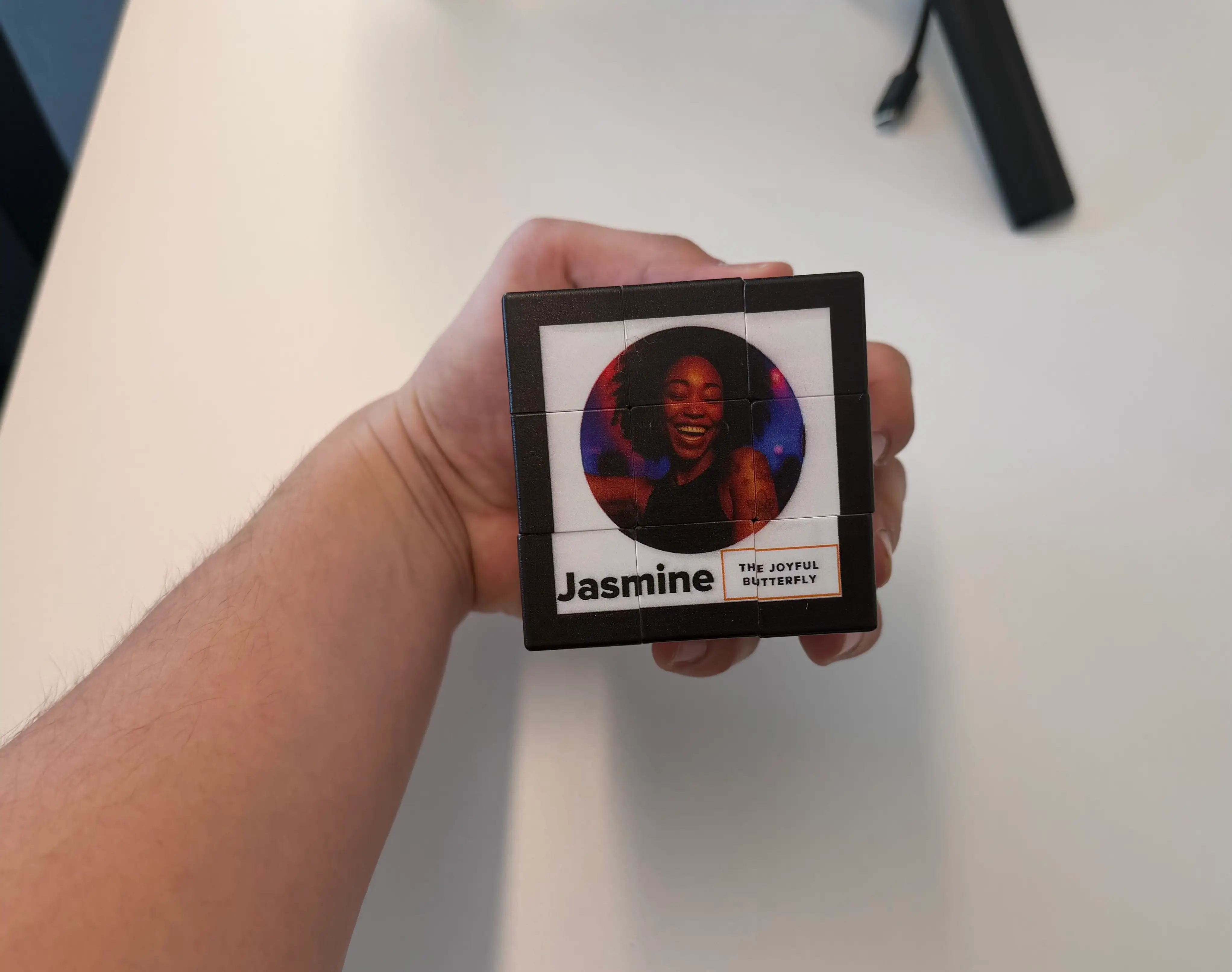
Match Group isn’t the first company to prioritize Gen Z. It’s why Nespresso brought in Dua Lipa, and why the Duolingo owl raved to “brat.” For Match Group, though, the generation is life-or-death. You might still need espresso or a language app when you’re 45 and happily married, but you won’t need Tinder.
I’m a Gen Zer myself, a 23-year-old Tinder swiper. It was an odd experience to sit in the Tinder Sparks auditorium and be told by older generations how I want to date. I want to be “perceived authentically,” they said. I’m interested in “self-development,” they said.
During our interview, Rascoff reminded me that Gen Z wants “lower pressure” ways to date. That’s why they pivoted to in-person events; because they’re chill, and because they’re “meeting Gen Z users where they are.”
The low-pressure model made sense. I’m not dating for marriage; I just want to have a good time. But why, then, are all my friends on Hinge, the higher-pressure alternative? (Hinge lets you like fewer people, and doesn’t provide the anonymity of a two-way match.) I could name at least four Gen Z couples in my life who met on the app designed to be deleted.
For a while, all I heard about Tinder was that it was an endless hole of one-night stands. Then, I met up with a friend, who told me that she’d started dating. She let me in on a secret: it wasn’t Hinge she was using, but Tinder. It was easier, she said.
There’s little real data to back up a Tinder turnaround yet. Monthly downloads remain at about 3.9 million and haven’t started climbing, per Appfigures. Willison said that Tinder was still in a “recovery” phase. But my friend’s confession felt like a sign. People can (and do) still find sparks on the app.
Rascoff said he thinks he’d do well on Tinder. Those who are authentic and put in the hours find their spark, he said. “If I were single, I would certainly do that.”
Read the original article on Business Insider
The post The king of love: How Spencer Rascoff reshaped Tinder — and our dating lives appeared first on Business Insider.