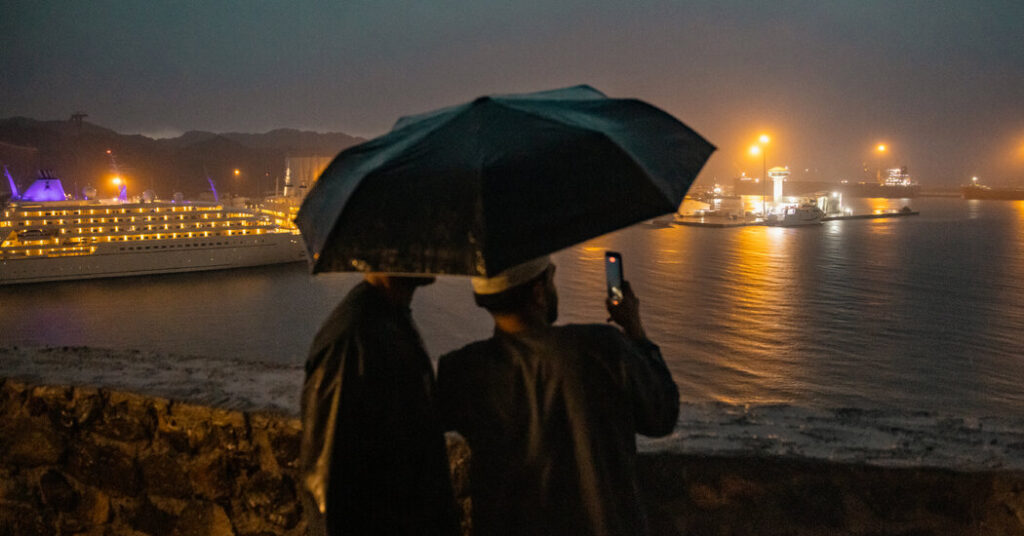
Iran will allow Malaysian vessels to pass through the Strait of Hormuz, Malaysia’s prime minister, Anwar Ibrahim, announced Thursday, easing concerns over the disruption of energy supplies caused by the war in Iran.
It is unclear how many Malaysian vessels will be allowed to pass through the strait. Malaysia’s Ministry of Foreign Affairs did not immediately respond to a request for comment.
Iran’s government did not immediately confirm the agreement. Previously, Tehran has said ships with no ties to Israel or the United States would be allowed to pass through the Strait of Hormuz, the narrow passageway through which a fifth of the world’s oil and gas travels in normal times.
Despite being an oil producer, Malaysia imports more than it exports, leaving nearly half of its supply dependent on the strait.
But even as Malaysia won this reprieve, which was granted after high-level talks, the Malaysian government, which maintains a policy of neutrality with Iran, continues to plan for a more volatile future.
Mr. Anwar said in a televised address on Thursday that Malaysia will take pre-emptive energy-saving steps as tensions between Iran and the United States persist.
He called for work-from-home arrangements across the public and private sectors, in a return to policies reminiscent of the Covid-19 era.
“Can we simply allow the situation to continue without taking any action, and assume that we are spared from all these problems?” he said.
“Civil servants will, in phases and selectively, be allowed to work from home, and I believe that beyond the public sector, we will also urge the private sector to implement similar arrangements,” Mr. Anwar added.
Facing higher global oil prices linked to the Iran conflict, the amount Malaysia spends on fuel subsidies has surged more than fourfold in less than a week, rising into the hundreds of millions of dollars. The government announced on Thursday that it will trim subsidy allocations for its most widely-used petrol starting next month, while keeping the retail price fixed at about 50 cents per liter.
After Mr. Anwar’s announcement, Malaysians began bracing for the aftershocks of rising oil prices, from higher transport costs to more expensive food.
“This is a new wound after Covid. I am worried life will never be the same,” said Sherman Jansen, who works in business development at a car parts company in Shah Alam, Malaysia. “Some say fuel prices leap faster, but almost never drops.”
Although Malaysia is not facing a critical fuel shortage like some neighboring countries, such as the Philippines, it has started to manage demand to avoid a deeper crunch, said Lee Heng Guie, executive director of the Socio-Economic Research Center, a Malaysian think tank.
“We are slowly adjusting to the energy supply shocks. Malaysia has started to prepare to conserve fuel even if oil prices surge further due to the ongoing Iran war,” Mr. Lee said.
The prime minister acknowledged that dynamic in his televised address, saying, “There are countries that are much more severely affected than us.”
“But this does not mean we have missed out on everything,” he added.
The post Malaysia Says Iran Will Allow Its Ships to Pass Through the Strait of Hormuz appeared first on New York Times.