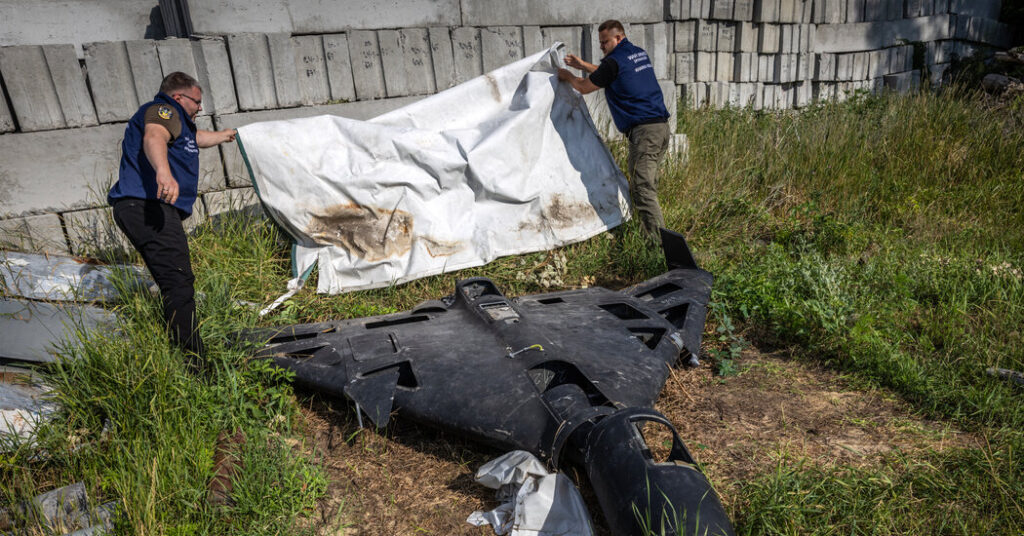
European allies are increasingly concerned that Russia is preparing to deliver advanced drones to Iran, a traditional ally, for use in the war with the United States and Israel.
Russia and Iran grew closer during Russia’s continuing invasion of Ukraine. The Russians have used Iranian drones extensively in Ukraine and have also been one of Iran’s most important customers for its oil, dodging Western sanctions.
After the United States and Israel attacked Iran several weeks ago, Russia began passing satellite and other intelligence to Iran about American bases and other potential targets in the region, according to U.S. officials.
Earlier this month, President Volodymyr Zelensky of Ukraine said Ukrainian intelligence had discovered that Russia had supplied Iran with drones and intelligence used in attacks against U.S. military facilities in the Middle East during this war.
In an interview with CNN’s Fareed Zakaria on March 15, Mr. Zelensky said Moscow had transferred drones produced under Iranian licenses, which were subsequently deployed against American bases and neighboring countries.
A report in The Financial Times on Thursday seemed to support those statements, saying that Russia was “close to completing a phased shipment of drones, medicine and food to Iran,” according to Western intelligence reports.
Asked in Brussels about the reports on Thursday, Mark Rutte, the NATO secretary general, would not directly confirm if Russia is sending combat drones to Iran, saying that was a matter of intelligence “so we keep that secret.” But, Mr. Rutte said, officials have long noted “a close connection” between Iran, Russia, North Korea and China.
“So it tells you something when these reports come out that Russia is sharing so much, also with Iran,” he said. “So let’s not be naïve about it.”
In a social media post on Thursday, the British defense minister, John Healy, said “Russia and Iran have been working together — sharing tactics, training and tech.”
Two senior European officials, speaking anonymously given the diplomatic sensitivity of the topic, said their intelligence agencies believed that Russia was preparing to deliver drones to Iran for use in the war with the United States and Israel. They offered no details about prospective shipments or timing.
A third European official was not as definitive, saying there were “strong indications” that the Russians and Iranians had made such a deal. But that official did not know whether any drones had been delivered, or were in the process of being delivered.
Iran’s arms factories, both for drones and ballistic missiles, have been prime targets for the huge U.S. and Israeli bombing campaign since the war began nearly a month ago. So presumably any Russian drones would help fill the gap.
Dmitry S. Peskov, the Kremlin spokesman, on Thursday denied that Russia was delivering drones and other arms to Iran for use in this war and called it “false information” in a statement to the Russian news agency Vesti.
Mr. Peskov had also denied an earlier report this month in The Wall Street Journal that Russia has already supplied Iran with modernized components for its drones meant to improve communication, navigation and targeting.
Russia has previously said it has transferred medical supplies and food to Iran overland through Azerbaijan and will continue to do so.
Earlier this month, on March 7, President Trump downplayed reports that Russia was providing Iran with intelligence to target American troops. “If you take a look at what’s happened to Iran in the last week, if they’re getting information, it’s not helping them much,” Mr. Trump told reporters.
Russia’s help to Iran follows Tehran’s important military aid to the Russian army in Ukraine at one of its lowest points in September 2022, especially by providing hundreds of the Shahed-136 Iranian drones.
Russia then built its own production facility for the drones in Yelabuga, Tatarstan, around 620 miles east of Moscow. While Russian specialists initially assembled drones from Iranian kits, the operation has scaled up dramatically.
In early 2023, the plant produced roughly 100 drones per month but now can produce thousands. The design has also evolved. Russian engineers have modified the original into a distinctively Russian product, featuring domestic airframes, warheads and navigation systems.
Last July, Timur Shagivaleyev, the head of the special economic zone that houses the Yelabuga factory, described it on Russian state television as “the biggest and the most secretive strike drone factory in the world.” In a report, which never mentioned Russia’s cooperation with Iran, he said the factory was producing nine times more drones than was initially planned.
Lara Jakes and Michael Schwirtz contributed reporting.
Steven Erlanger is the chief diplomatic correspondent in Europe and is based in Berlin. He has reported from over 120 countries, including Thailand, France, Israel, Germany and the former Soviet Union.
The post European Allies Worry Russia Is Preparing to Deliver Drones to Iran appeared first on New York Times.