Around the turn of the century, cities like New York and London faced massive public health crises due to overwhelming amounts of horse manure.
With over 500 tons produced daily, one estimate published by the Times of London in 1894 projected, “In 50 years, every street in London will be buried under nine feet of manure.” Cars were introduced as “mechanical horses”—an eco-friendly solution. Automobiles, trains, and buses were quickly and widely adopted between 1900 and 1912, effectively resolving what would become known in hindsight as the Horse Manure Crisis of 1894.
The self-driving car that takes me to work this morning, and every other morning, doesn’t even have a steering wheel. The standard model is just a featureless compartment, smooth, seamless, and enclosed. The surfaces are somehow always warm to the touch, smooth and gently curved with no edges or corners. I usually pull the shades down over the double-paned windows to block out the morning light. I recline all the way till I’m flat on my back because I like to get a few extra minutes of shut-eye whenever I can, and let the quiet hum of the engine lull me. But this morning I’m restless and I’m already wide awake, thinking about how when I was in high school, my dad used to let me drive his white Bronco.
When people find out I work for Replika Co., the only thing they want to know is if we’re all fucking the robots. I tell them, you know I’m not allowed to talk about work. I say, I’m up to my neck in NDAs, and I change the subject.
“The refurbs always show up filthy”
Cities were suddenly inhospitable to horses when asphalt roads and dense traffic became commonplace thanks to widespread adoption of their mechanical counterparts, and a massive decline in the equine population followed. Official records say that most of them were sent to farms out West. The rest, officially unaccounted for, went straight to the glue factory.
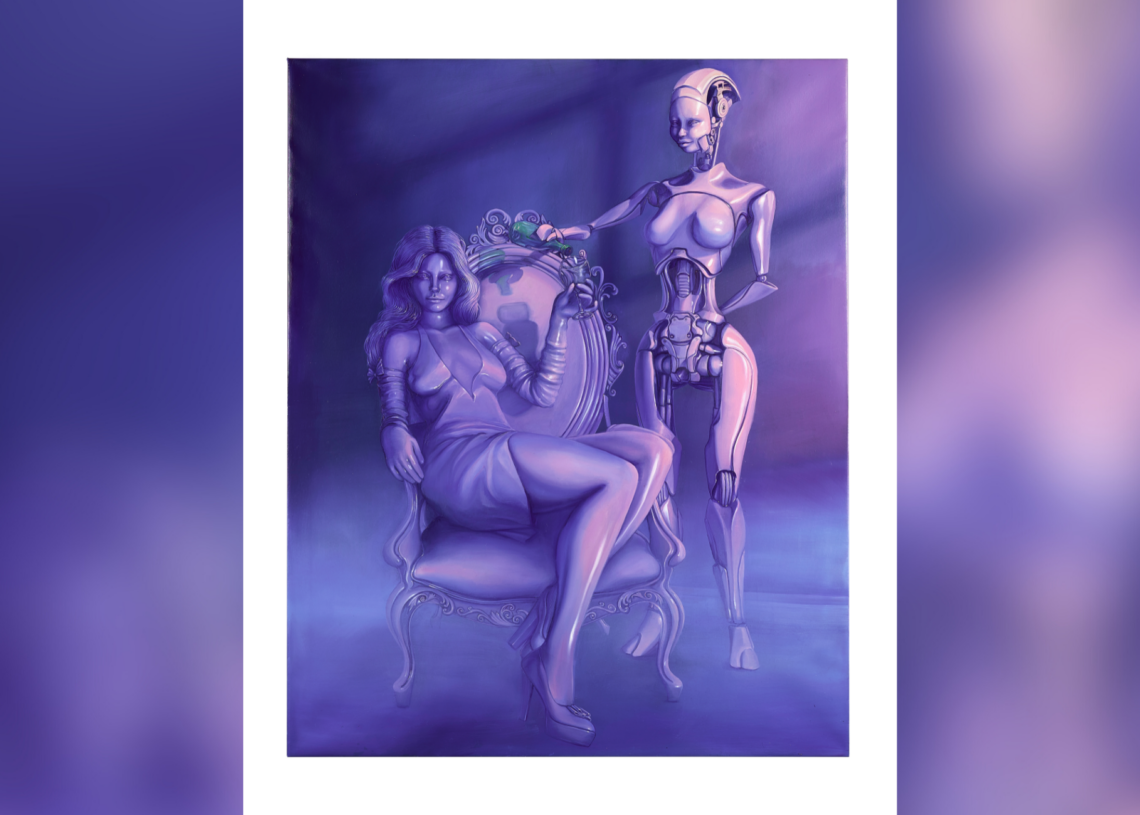
Because I always say I’m not allowed to talk about work, people just assume that I work in engineering, or even better, that I’m a programmer, that I know all kinds of things they don’t know. Truth is, I work in refurbs. When customers become eligible for a new model, they can trade in their old ones for a rebate. The old models that arrive in decent shape get a tune-up, a clean-up, and get resold at a discount to lower-income households. The ones beyond repair get broken down for parts. Replika Co. isn’t supposed to accept trade-ins if they’re missing entire limbs, but every once in a while, one of them sneaks in without a foot, or an eye. It just depends who’s working intake that day, always some intern with a parent who’s got connections in the industry. They’ll climb the ladder in no time, skip over the warehouse floor entirely, and be working in marketing in a few years’ time.
The refurbs always show up filthy. That’s where I come in. I’m in charge of the power washing. I’ve got a few guys who work below me, they break them all down into parts and then put the pieces where they belong; legs with legs, thumbs with thumbs, and so on. Me and the guys, we have this song we sing on the job, it goes:
Sometimes you’re Jesus
Sometimes you’re Satan
Sometimes you’re the butcher
Sometimes you’re the bacon
Lately, this weird thing has been happening in my power-washing station. The models are supposed to be totally powered down at that point, since their core processors get removed almost right away during intake. But sometimes, when the water hits them, they open their eyes and start screaming. Management says it’s just a glitch in some older models.
There’s a medical phenomenon called Lazarus Syndrome, where a clinically brain-dead patient spontaneously crosses their arms over their chest. The name is, of course, a reference to Lazarus of Bethany, whose life is restored by Jesus four days after his death. Occurrences of Lazarus Syndrome in intensive-care units have been mistaken for evidence of resuscitation of patients, but they’re dead as can be—it’s just postmortem neuromuscular excitability.
Management says when the robots scream, it’s kind of like a mechanical version of Lazarus Syndrome. They say don’t overthink it, even though it’s been happening more and more recently. Aside from that, most days are pretty uneventful, and I can’t complain. Jobs are hard to come by, and it’s easy work, and the pay is alright, and we get to fuck the robots.
Sometimes you bruise
Sometimes you bleed
Sometimes you bite
The hand that feeds
The first widely recognized human fatality connected with a self-driving car occurred on March 18, 2018, when Elaine Herzberg, a 49-year-old pedestrian pushing a bicycle down a four-lane highway, was struck by an Uber test vehicle operating in autonomous mode in Tempe, Arizona, USA. She later died from her injuries. Uber’s then-CEO, Dara Khosrowshahi, tweeted: “Some incredibly sad news out of Arizona.”
As prey animals, a horse’s best defense is to make it difficult to know when it’s in pain.
I can smell fire and taste soot in my mouth as we draw nearer to the Replika Co. building. I can feel we’re going much too fast now—the car’s engine is growling, guttural. I struggle to sit up straight, fumbling with the lever at my hip to upright the seat until finally I shoot up, folded at the waist, bound by the automatic seatbelt. The vehicle is moving so fast that my back is pressed hard up against the seat by inertia. The seatbelt automatically tightens across my waist and shoulders. I’m suddenly struck by a wave of heat so intense that when I see the Replika Co. building on fire, it comes as no surprise.
It all makes sense.
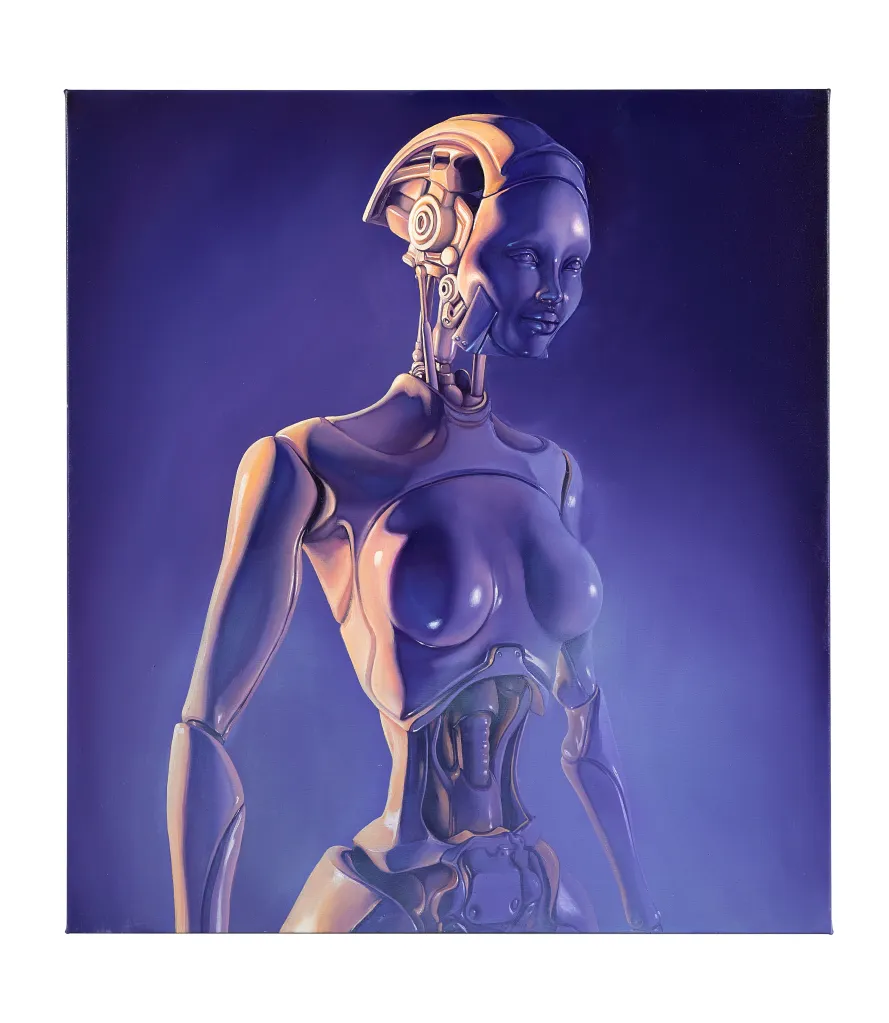
Flames blow straight up out of every window and crawl skyward to lick the roofline. The exterior has already burned off, exposing the concrete and metal skeleton underneath, and glowing embers flutter all around. My car rips past so quickly I can only see into my power-washing station for a second, just long enough to see it empty and incinerated, and then the whole thing disappears behind me in the rearview. Suddenly, I am freezing cold.
At least Rome had ruins. Virtual worlds disappear and leave no trace.
All that is not saved will be lost. As my vehicle speeds down the empty highway toward the glue factory, we hit a bump that jolts me in my seat and makes the strap across my waist cut into the soft flesh of my belly. I tell myself it was probably just a dog, but I can’t know for sure.
Follow Emma Stern @lava_baby
The post Read ‘Ruins’ by Emma Stern, a Story About Working in a Sex Robot Factory appeared first on VICE.