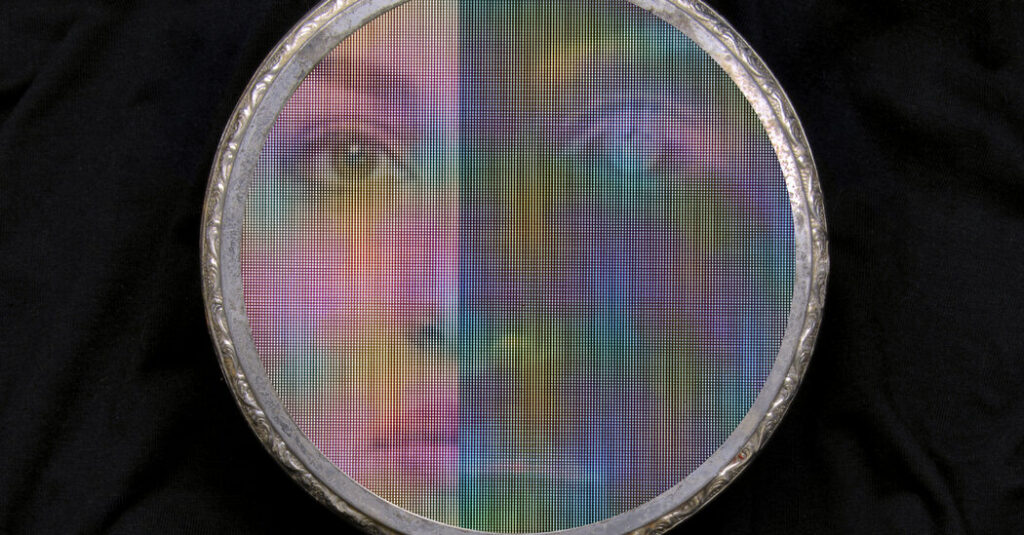
It finally happened: Social media companies have been held accountable for the toxicity of their algorithmic grip.
In a first ruling of its kind, a California Superior Court jury found Wednesday that Meta and YouTube harmed a user through their addictive design choices.
The consequences for the industry could be significant. This case is only one of thousands set to be litigated across the country, and courts are seeking to consolidate them. This could wind up with a single significant settlement similar to the agreement that the four largest cigarette makers made in 1998 to resolve lawsuits for an estimated $206 billion as part of a master agreement with 46 states.
Compensating people for the harm caused by their products is just the silver lining. The real win would be if the social media giants were finally forced to design less harmful products.
I’m talking about features like infinite scroll, which entices people with seemingly endless content, and autoplay, which automatically starts videos before our eyes. And of course, there are the algorithms that spread misinformation and amplify outrage. These are all techniques Big Tech uses to keep us staring at the screen for as long as possible. Too bad if its profitable practices extract a terrible cost on its users and on our society.
For years, Big Tech has defended itself from allegations of harm by repeatedly playing the get-out-of-jail-free card it was granted in a 1996 law. Known as Section 230 of the Communications Decency Act, it freed tech companies from liability for the content users posted on their sites — and all manner of tech companies used it for decades to successfully defend themselves from a growing list of allegations that they enable deadly drug sales, sexual harassment and illegal arms sales.
A new generation of lawsuits is starting to pierce that veil. Rather than alleging that the content was harmful, the plaintiffs argue that the company’s design features and algorithms are perpetrating harm. “The tech industry has historically insulated itself from scrutiny by asserting Section 230, the First Amendment or both. But that time is over,” said Meetali Jain, founder of Tech Justice Law Project, a nonprofit advocacy and litigation group.
In the California case, a jury ruled that Meta and YouTube must pay $6 million in financial damages to K.G.M., an anonymous 20-year-old who testified that social media’s beauty filters caused her serious anxiety about her appearance. Features like autoplay and like counts let her check how many people voted on her posts, contributing to her depression.
The verdict is likely to be appealed. And we’ll probably see contradictory rulings as other plaintiffs’ cases get tried in courts across the country. But with this ruling, the era of holding tech companies accountable for their antisocial choices has finally begun.
It’s hard to remember, but back when Facebook introduced the News Feed in 2006, it was just a way for people to see their friends’ posts all in one place, rather than having to visit each of their friends’ individual pages.
Along the way, the algorithmic feed has morphed into an entirely different beast — one over which users have little control. The social media companies realized people will stay on their apps longer if they are hypnotized by an endless stream of shocking and crude content. Whatever content keeps eyeballs on the site longer wins.
In this Darwinian world, there has been little room for algorithms to play to the better angels of our humanity. Why would a profit-seeking company encourage us to put down our phones, go for a walk, see a friend or visit a grandparent? Why would it encourage us to feel confident when low self-esteem would keep us coming back for more?
These companies could all still make plenty of money without many of their most toxic features. They don’t need to offer beauty filters (that swiftly generate unrealistic and idealized beauty images) and endless notifications that leave users dogged by the fear of missing out. They could stop force-feeding outrageous content and give people back some control over their feeds.
The truth is, it’s hard for profit-motivated companies to decide to make less money. So we can raise the cost of bad behavior. It worked with smoking: You can still smoke, but it can cost $15 a pack, and you often can’t find a place where it’s allowed these days.
Similarly, there is no need to ban social media. We just need it to be too expensive for the companies to keep doing business as usual.
The Times is committed to publishing a diversity of letters to the editor. We’d like to hear what you think about this or any of our articles. Here are some tips. And here’s our email: [email protected].
Follow the New York Times Opinion section on Facebook, Instagram, TikTok, Bluesky, WhatsApp and Threads.
The post Big Tech Should Pay for What It Has Done to Us appeared first on New York Times.