Tareq Alotaiba is a fellow at the Belfer Center at Harvard University.
Arab states spent decades learning to contain the Muslim Brotherhood. Europe has yet to begin. The result is a dangerous irony: As the radical Islamist group’s influence wanes in the Middle East, it is growing stronger in Europe by the day.
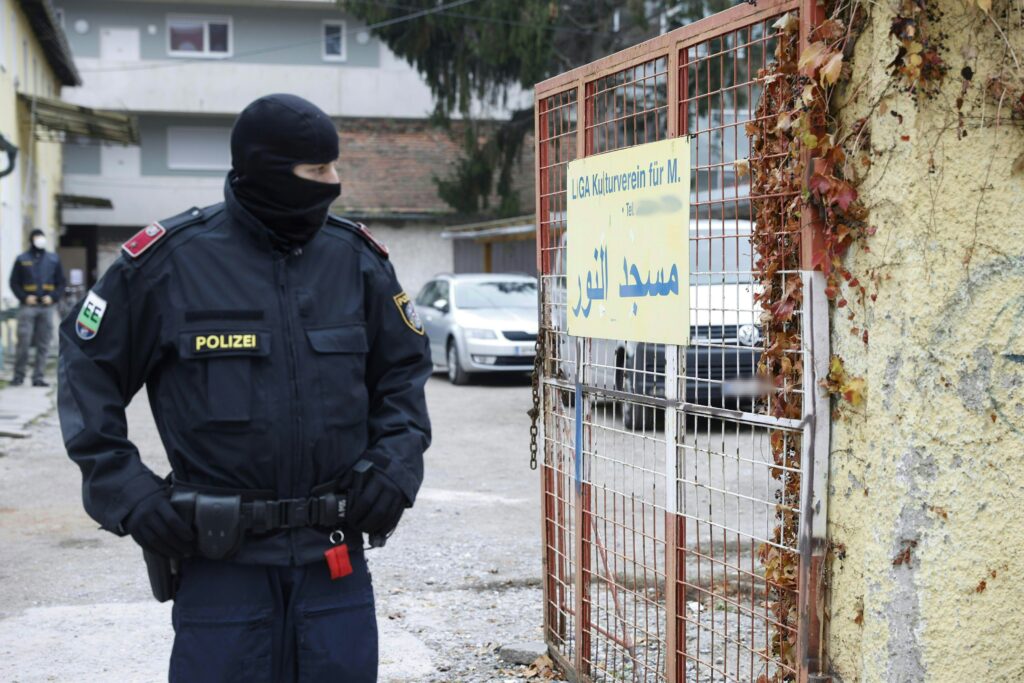
For years, security experts in the United States and Europe have warned about the organization. And yet, outside of Austria, no E.U. state has taken decisive action. Most Western states tolerate the group’s political wings, citing its peaceful integration into political systems. In the United States, President Donald Trump signed an executive order designating chapters of the Muslim Brotherhood as foreign terrorist organizations. But there has not been a concerted Western effort to counter the movement’s ideological threat.
In Britain, the United Arab Emirates cut scholarships for Emirati students, concerned they could be radicalized by Islamists in the country. In Belgium, neighborhoods have become parallel societies. In Germany, despite the government raising concerns, the group continues to grow in its cities. In Sweden, the Qatari-funded affiliate has turned the country into a hotbed of Islamist ideology.
Last year, a French government report on the Brotherhood called out the danger and warned of the group’s spread in European society. The report was picked up and repeated in European capitals, where academics and civil society dismissed it as alarmist.
Why the complacency? Western conventions against interfering with religion are one reason. But that bias for tolerance has served to give mosques tied to the Brotherhood free rein to spread messages of intolerance and hate, including some that exalt jihadist violence, in many Western cities. The group’s spread also threatens the cohesion of European states by exacerbating racial tensions and establishing alternative social structures based on its interpretation of sharia.
The modus operandi of the Brotherhood is patience — it waits until it is confident in its strength, then moves against the established state structure. The French report described a deliberately “subversive” project by the national Muslim Brotherhood affiliate, Musulmans de France, to gradually challenge secularism in France. The influence of the group has contributed to the ghettoization of immigrant communities, isolating Muslims from mainstream society. Because of that, European Muslim youths increasingly adhere to extreme religious views at odds with the national values of their adoptive states.
The problem has been building for a long time. In 2017, Abdullah bin Zayed al-Nahyan, the UAE foreign minister, warned, “There will come a day that we will see far more radical extremists and terrorists coming out of Europe because of [a] lack of decision‐making, trying to be politically correct, or assuming that they [Western states] know the Middle East, and they know Islam, and they know the others far better than we do.” Europe has become the Brotherhood’s ideological center.
One challenge in addressing the threat lies in the group’s approach to its Islamist agenda. Although its ideology has inspired much terrorism, its methods have seldom been violent. The Brotherhood’s strategy is to slowly indoctrinate youth until the organization can leverage its societal influence into political control.
Another challenge is the group’s informal structure. There is no formal headquarters or leader — it’s a coalition of loosely linked Islamist social and political organizations. These are based on the original Egyptian Muslim Brotherhood, founded in 1928, whose ideology later adopted the writing of Sayyid Qutb. Qutb’s philosophies are hostile to Arab leaders and Western states, blaming debauchery and what he saw as moral inadequacies for the poor state of Arab societies. His doctrines on jahiliyyah, revolutionary vanguardism and the rejection of secular governance have shaped generations of Islamic terrorists from al-Qaeda to the Islamic State.
The West can learn from states such as Jordan, Morocco and the UAE, which have succeeded in combating the Brotherhood’s influence. In the Islamic world, the relationship between states and the group takes four forms. One is control, whereby states such as Morocco allow Islamists to act within their political systems but control them. Second is conflict, in which the group is made illegal and consequently either is eradicated, as in the UAE and Jordan, or forced underground, as in Egypt. Third is influence, where the Brotherhood sways or is part of the state, as in Turkey. Finally, there is convenience. States cooperate with the group when it suits their agenda, such as in Saudi Arabia, or, in the case of Qatar, supporting the Brotherhood and other affiliated Islamists.
The possible consequences of Europe’s approach — inaction — should be apparent to all as the 25th anniversary of the 9/11 attacks approaches. The Hamburg cell, which took part in planning the terrorist atrocity, included the three al-Qaeda suicide pilots, Mohamed Atta, Marwan Al-Shehhi and Ziad Samir Jarrah. They were international students in Germany, and it was there that they were indoctrinated and radicalized in a mosque tied to the Muslim Brotherhood.
The values of Western democracies created an environment that has protected the Muslim Brotherhood and allowed it to expand its influence. It took decades for Arab states to weaken the group’s influence. It would be a mistake for the West to assume it has that kind of time.
The post While the Mideast pushed out the Muslim Brotherhood, Europe let it in appeared first on Washington Post.