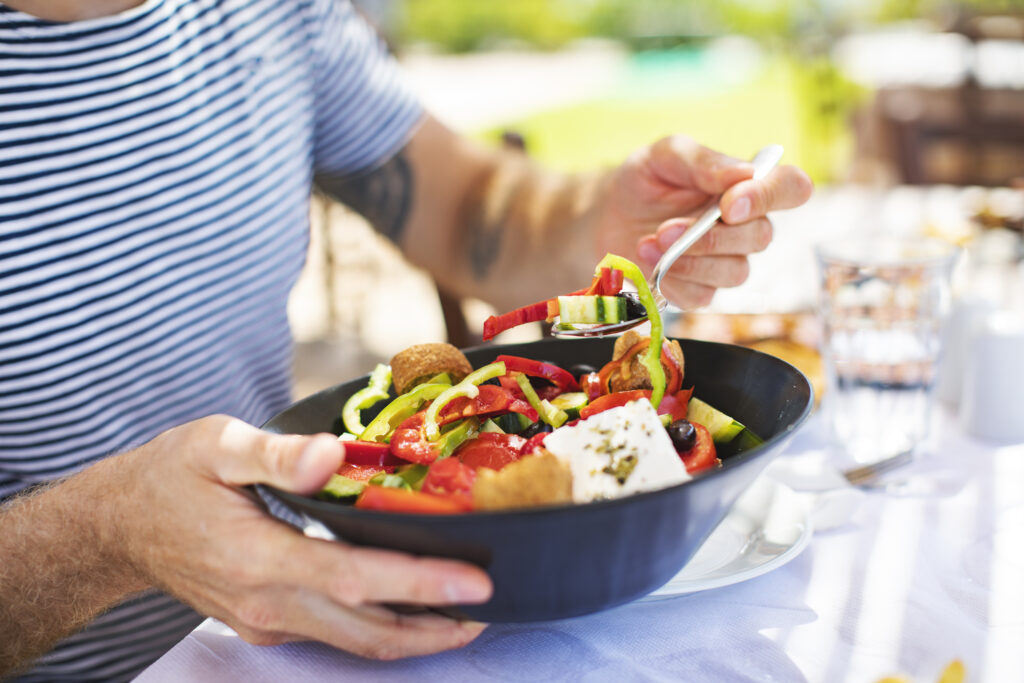
Almost everything you eat passes through your gut microbiome, the community of trillions of bacteria, viruses and other microbes that live in your intestines.
These microbes play a critical role in your health. One reason is that they produce short-chain fatty acids. These special compounds protect your colon and boost your gut health. They help lower inflammation, regulate your immune system and stimulate the production of GLP-1, the powerful satiety hormone that’s mimicked by weight-loss drugs such as Wegovy.
But that’s only if your gut microbes are nourished with the right foods, said Chris Damman, a microbiome expert and gastroenterologist at the digestive health center at the University of Washington Medical Center. You can do this by adding four things to your diet, according to Damman:
Fiber: Our gut microbes thrive on fiber. When we eat plants, the fiber that they contain travels down to our large intestines, where our gut microbes metabolize and convert it into short-chain fatty acids.
Fermented foods: Yogurt, sauerkraut, kimchi, kombucha and other fermented foods contain probiotics, which are live microbes that are good for your health. Researchers have found that eating fermented foods can reduce inflammation and increase the diversity of microbes in your gut, which is associated with lower rates of obesity and metabolic disease.
Healthy fats: Unsaturated fats such as the kinds found in olive oil, avocados, seafood, nuts and seeds protect your cardiovascular health and increase the proportion of bacteria in your gut that produce short-chain fatty acids.
Polyphenols: Plants contain potent antioxidants and micronutrients called polyphenols. These compounds help to give fruits and vegetables their vibrant colors. They also act like fertilizer for your gut, stimulating the growth of beneficial bacteria.
Damman, who is 49 and lives in Seattle, has been studying the link between the gut microbiome and metabolic health for two decades. He says that one of the key problems with ultra-processed foods — which make up a majority of the calories in the American diet — is that they typically contain very little of the things that our gut microbes crave, such as fiber and polyphenols. Damman recently developed a free food-scanning app called Smart Bites to help people make healthier choices at the grocery store.
We wanted to find out how Damman’s knowledge of the gut microbiome influences his daily diet and health behaviors. So, we caught up with him to find out what foods are an essential part of his diet; how he manages to make quick, convenient and healthy homemade dinners for his family; and why he recommends eating desserts such as ice cream and chocolate-covered nuts.
What’s your general approach to nutrition?
My philosophy is balance. It’s easy to be black and white about nutrition and say, “This is bad, and this is good.” But I don’t subscribe to that. We’ve all heard that we eat too much salt, sugar and fat. But what’s often missing from our diet is the counterbalancing factors to each of those things: That would be potassium for sodium, fiber for sugar and other carbs, and then unsaturated fat for saturated fat.
So many ultra-processed foods are concentrated with salt, sugar and saturated fat. But they’re also often lacking fiber, potassium and unsaturated fats. And if you subtract those things from your diet, it creates a void. It’s true that we need to eat less because we have too many calories. But the way to eat less it is to have healthier calories that make you less hungry. And we can do that by restoring the nutrient balance that’s naturally present in food.
What’s a typical breakfast for you?
I try not to eat right when I wake up. I have a black coffee first and settle into the morning. It creates a longer fast that way. I wake up early, at 5 a.m., and eating at that time wouldn’t be the best thing for my metabolism. I generally have dinner the night before at 6 or 7 p.m. And I eat breakfast around 9 a.m.
I have two go-to breakfasts. One is oatmeal, which by itself is pretty healthy. Oatmeal has a lot of fiber. But it’s important to balance it with what it’s missing. It doesn’t have much protein or fat. So, I add nuts and seeds and a little whole milk. I also have no qualms about adding a little dark chocolate as well. The fiber in the oatmeal balances the sugar in the dark chocolate. And the unsaturated fat in the nuts balances the saturated fat in the chocolate. So, there are things that balance everything in that meal. I’ll often throw in some berries or fruit as well, and that adds some nutrient density to the meal to balance the calorie density.
What’s your other go-to breakfast?
The other is yogurt. I love yogurt. It’s a fermented food. I’ll often do a low-fat Greek yogurt, and I’ll sprinkle some granola on it. I like Bear Naked granola quite a bit. The fruit and nut flavor is the healthiest, although I’ll often go for the chocolate cashew butter one. And then I’ll add a few nuts and some fruit to balance it out.
What do you eat for lunch?
I have lunch around noon. I don’t have time to prepare a meal, so I usually eat leftovers from dinner. Your evening meals — if you’re preparing them at home — are generally going to be some of the healthiest meals you eat. So, I intentionally make a little extra the night before so I can have leftovers for lunch.
If we’ve had meat the night before, like barbecue chicken or on occasion steak, then I might heat up a piece of that, slice it up and put it on top of romaine lettuce. I’ll add some nuts or seeds, a bunch of vegetables, and then some oil and vinegar and make it a salad. I try to stay away from store-bought salad dressings. They tend to be loaded with salt. But some are better than others. I like Paul Newman dressings — but in moderation, not tons.
Do you exercise?
Yes. I try to get out for a run at least three days a week, and I run anywhere from three to six miles at a time.
Do you lift weights?
No, but I’ve started Pilates to build more core strength and to balance out my muscles. I first discovered yoga, Pilates and that whole realm of exercise when I was in medical school. It was incredible how much it upped my running game. It kicked my butt the first few weeks. But it helped me develop core strength. So, I’m trying to reincorporate it now.
What do you eat for dinner?
Life has gotten super crazy with all of my kids’ sports and activities. My girls are 9, 11 and 14. But we are still very intentional about having our family meal. Sometimes that means we eat earlier, before my daughter leaves for practice, and sometimes we eat after.
I think evening meals can be one of the hardest things because it’s the end of the day and you’re tired, and the last thing you want to do is cook. So, I’ll often start thinking on the weekends about what the meals are going to be for the whole week.
One thing I do is I have categories of meals. We have a salad day — a hearty salad, that is — a soup day, a stir-fry day, a pasta day, a Mexican day and a meat day. The salad day might follow the meat day because then you have extra garnishes. And within each of those categories, there are tons of things you could do. We’ve developed a repertoire of different soups and pastas. We might have pasta with marinara one day. We might have pasta with pesto sauce and get a rotisserie chicken and then throw in some peas. There’s also a freebie day where we get takeout or have leftovers.
Do you eat any treats or junk foods?
Of course. Michael Pollan says: Eat food, mostly plants, not too much. But I think he’s also the one who said it’s okay to cheat every now and then. And my girls love to remind me of that.
If I want something sweet, then I’ll have a small bowl of dark chocolate ice cream. Or chocolate-covered nuts. That’s a go-to for me. Chocolate-covered nuts are surprisingly good for you. The only strike against them is that they’re very energy-dense, so you can go through them pretty quickly and eat a lot of calories.
You have a new app, called Smart Bites. Can you tell us how it works?
The app has simple functions. You can scan a barcode for any food or product at your grocery store, and it will give you relative rankings of that food compared to its peers. So, let’s say you want to buy a cookie for dessert; underneath the rankings of the different cookies, there’ll be a ranking of all the different options that might be better for you.
And if you look at something like a cookie compared to ice cream, you’ll see that some brands of ice cream aren’t all that bad for you. It’s mostly milk from a cow with a little sugar and some flavorings and maybe some nuts in it.
If you have a craving for potato chips, you can put that into the app and find the healthiest options — like potato chips made with avocado oil, less salt and maybe one that has more fiber in it. But the app can also tell you what else to eat with those potato chips to make them healthier. It will help you create a balanced meal or snack.
What parting advice do you have for our readers?
Eat food, mostly plants, not too much. You can make nutrition advice as complicated or as simple as you want it. But I think all roads lead back to that very simple statement.
Do you have a question about healthy eating? Email [email protected] and we may answer your question in a future column.
The post What an expert on the gut microbiome eats in a day appeared first on Washington Post.