Americans feel gloomy about artificial intelligence, and everyone connected to the industry knows it.
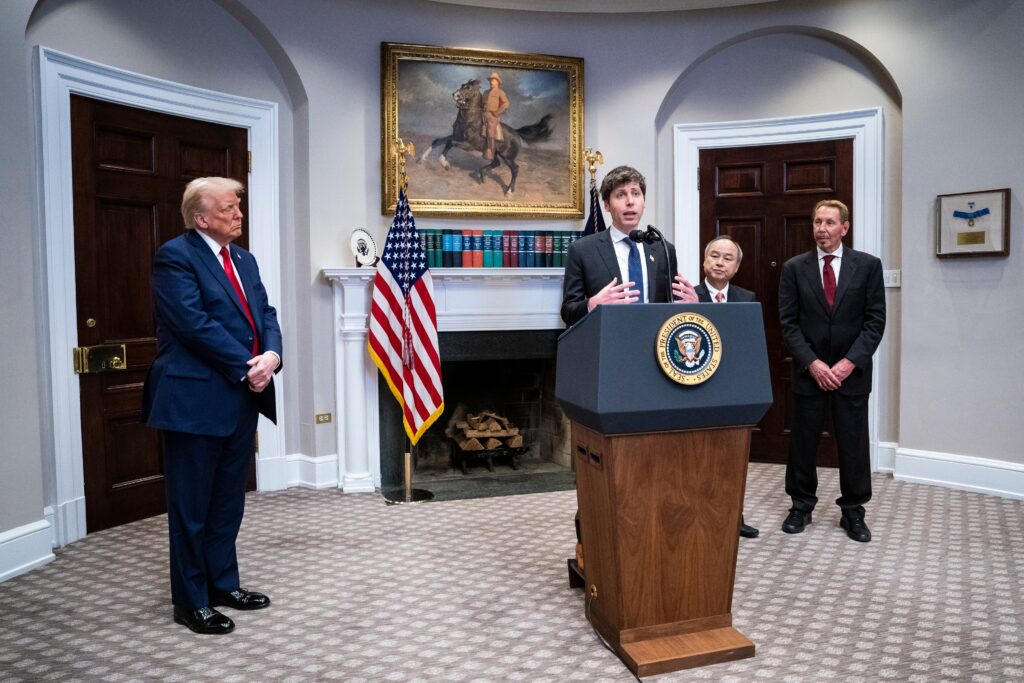
“AI is not very popular in the U.S. right now,” Sam Altman, the OpenAI CEO who runs ChatGPT, acknowledged at a recent conference. The hosts of the prominent technology podcast “All-In” regularly lament AI’s bad reputation. President Donald Trump said this month that AI companies “need some PR help.”
The comments reflect polls revealing that a majority of Americans aren’t sold on the benefits of AI and fear the technology will wipe out jobs. In a recent NBC News survey, only the Democratic Party and Iran were less popular than AI.
But for AI-skeptical Americans, recent tech history suggests that hatred of AI may not slow it down or meaningfully change the industry. For AI executives and their White House backers, it may be comforting to know that being unpopular isn’t necessarily bad for business.
For years, Americans have said they don’t like social media, Meta or the company’s boss, Mark Zuckerberg. U.S. politicians on the left and the right have pilloried the industry. The revulsion doesn’t seem to have hurt companies where it matters most. Revenue growth and the number of users keep climbing, while the industry remains largely unbothered by U.S. regulation.
If the AI industry is taking notes, it might have learned the nihilist lesson that nothing matters and companies can tune out public animosity and screeds by politicians.
Lee Vinsel, a Virginia Tech professor who studies human-technology interaction, pointed to a long history of negative public reaction to new inventions. Critics feared that bicycles would degrade women’s morals and radio was rotting people’s brains.
The derision has rarely been enough to hold back a new technology from widely spreading, he said. “Eventually most of us come over to using it,” Vinsel said.
AI faces the added challenge of bursting into daily life when Americans are unhappy about the direction of the country and the economy. Combine that with a technology whose biggest backers believe it might destroy jobs or end humanity, and it’s a recipe for public and political backlash.
Providing special treatment (regulatory moratoriums, tax abatements, zoning preferences) for AI companies is bad policy on its face, but it is particularly absurd when its proponents are predicting massive unemployment as a result. https://t.co/C1yOpgaBU3
— Ron DeSantis (@RonDeSantis) November 25, 2025
Katie Harbath, who previously worked on public policy at the company now called Meta, said that Americans who have already seen the harms from social media are wary of a repeat with another transformative technology.
The AI industry’s growth could meaningfully slow if public distaste leads more government officials to block construction of AI data centers, said Harbath, the CEO of technology consulting firm Anchor Change. This week, Sen. Bernie Sanders (I-Vermont) said that he introduced legislation to halt new data centers until lawmakers enact AI regulations.
Still, Harbath isn’t sure that AI’s bad reputation will last, or stop Americans from using the technology. “Just because people say they don’t like it, their actual behaviors may not follow,” she said.
That disconnect is apparent at Harbath’s former employer and other social media companies, where public opinion and usage have gone in opposite directions.
About two-thirds of Americans have said that social media had a mostly negative effect on how things were going in the U.S., Pew Research Center polling from 2024 found. A 2021 Ipsos poll found that Facebook was much less popular than other large tech brands. Only about 45 percent of Americans had a favorable opinion of Facebook — compared with 74 percent who had favorable views of Google and 70 percent for Amazon. (Amazon founder Jeff Bezos owns The Washington Post.)
Few widely known public figures are as unpopular as Zuckerberg, according to YouGov polling. (Vladimir Putin is one person who is more unpopular.) The Meta CEO was even booed at a recent mixed martial arts fight, which should have been a safe space for the billionaire who remade himself into a combat sports-loving bro.
You might think that having a bad reputation would be bad for business. But despite those attitudes, a significant percentage of Americans use Google’s YouTube, Meta’s Facebook and Instagram apps and TikTok, according to Pew surveys. Usage of Meta’s apps is higher than it was just before the 2016 U.S. presidential election, a moment that for some marked a turning point in social media’s public reputation.
Meta’s $75 billion in revenue in the United States last year was nearly nine times the money it pulled in a decade earlier, according to data compiled by S&P Global Market Intelligence.
While politicians, nongovernmental organizations and citizens have accused Meta or its peers of contributing to genocide, spreading propaganda to American voters and addicting children, there are few meaningful U.S. laws or regulation to show for years of scandals.
It’s still possible that mistrust in social media has stung. Perhaps Meta wouldn’t have lost so many teenage users if people felt better about the company. The industry continues to face regulation in other countries and lawsuits. Two separate juries this week found that Meta, and in the other case, Meta and YouTube, harmed children. The companies said they would appeal.
Adam Berinsky, a political science professor at the Massachusetts Institute of Technology who specializes in public opinion, pointed out a difference between the American public’s disapproval of AI and social media.
People may not need to trust social media to use it, he said, but “if I don’t trust AI, I’m not going to trust the outputs in the first place.”
The factors behind Americans’ attitudes toward AI are complicated, and there’s plenty of room for people to change their minds, according to pollsters and other experts.
The AI Infrastructure Coalition, which represents AI-related businesses including Google and Microsoft, and tech investment firm Andreessen Horowitz, said that people like AI more as their usage of it increases.
“We are confident that as more Americans experience its benefits firsthand, in their health care, their businesses, and their daily lives, that support will continue to grow,” Brian Walsh, the group’s executive director, said in a statement.
Berinsky said the unfavorable opinions about AI aren’t that bad compared with Americans’ low confidence in many institutions, including big business, Congress and newspapers.
“For trust these days, that’s actually pretty decent,” he said of AI’s polling numbers. “Sad but true.”
The post AI is just another technology Americans don’t like but can’t stop using appeared first on Washington Post.