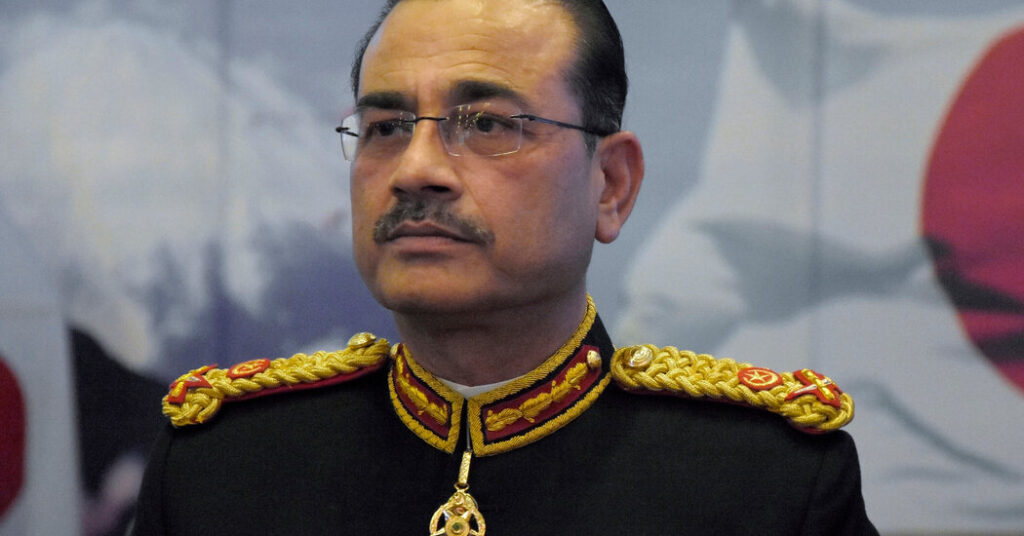
Syed Asim Munir, Pakistan’s army chief and the country’s most powerful man, has in recent weeks emerged as a central figure in behind-the-scenes diplomacy aimed at easing tensions between the United States and Iran.
His role highlights both Islamabad’s acute exposure to regional instability and newly found geopolitical relevance built on the personal relationship Field Marshal Munir has built with President Trump, analysts say.
“Pakistan likely never had the kind of access to the White House it has now,” said Qamar Cheema, a Pakistani security analyst.
Field Marshal Munir is a career military officer who rose to lead the Inter-Services Intelligence, the country’s premier spy agency, before assuming command of the army in 2022. He also has lifelong legal immunity in Pakistan, after lawmakers approved a constitutional amendment last year that gave him sweeping authority over all military branches and limited the independence of the country’s highest court.
Since then, he has embraced an increasingly visible profile, particularly since Pakistan’s brief war with India last May. Last year, he met twice with Mr. Trump, who refers to him as his “favorite field marshal.”
Pakistan is now using that relationship to re-establish its status as a major U.S. partner in Asia, after years of being snubbed by the Biden administration in the wake of the U.S. withdrawal from neighboring Afghanistan in 2021.
Pakistan has its own stakes in the negotiations over Iran. It shares a roughly 560-mile porous border with Iran and hosts one of the largest Shiite populations outside of Iran. Many Shiites look to Tehran for religious guidance and, at times, political inspiration. Analysts say a prolonged conflict risks fueling sectarian tensions, disrupting fuel supplies and triggering economic shocks in Pakistan, which is already grappling with inflation.
“It is in Pakistan’s interest to ensure that the United States reach an understanding with Iran,” said Kamran Bokhari, the senior director of New Lines Institute, a D.C.-based research organization. “Islamabad does not want the state collapse in Tehran even as the regime is being severely degraded.”
Elian Peltier contributed reporting.
The post Pakistan’s Army Chief Uses Relationship With Trump to Foster Talks with Iran appeared first on New York Times.