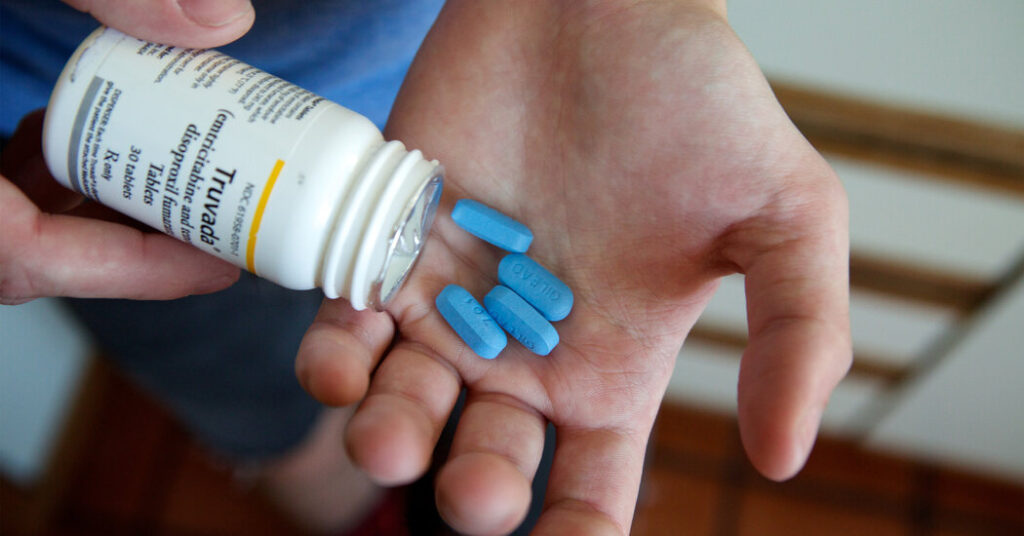
Florida on Tuesday approved nearly $31 million in short-term funding for H.I.V. medications for thousands of residents, reversing course after state health officials restricted access to a program that helps people afford the costly medications.
The Florida Department of Health had imposed tougher eligibility rules on March 1 that kicked more than 12,000 residents with H.I.V. out of the state’s AIDS Drug Assistance Program, potentially depriving them of lifesaving medications, according to the AIDS Healthcare Foundation, a nonprofit advocacy group.
The foundation sued the department over the changes. Protesters rallied in opposition in Fort Lauderdale and at the State Capitol in Tallahassee. The department had cited a projected $120 million state budget shortfall in restricting eligibility for the program.
This month, the Florida House of Representatives and State Senate, both led by Republicans, unanimously approved legislation that provides $30.9 million to fund the program through June 30 and restores the previous eligibility rules.
Gov. Ron DeSantis, a Republican, signed the bill into law on Tuesday. His office did not immediately respond to a request for comment.
“Lawmakers on both sides understood the urgency of the crisis,” State Senator Carlos Guillermo Smith, a Democrat from Orlando who spoke out in support of the bill on the floor, said in an interview on Wednesday. “It is a matter of life and death. People had already lost access to their medications.”
Florida was one of nearly 20 states, led by both Republicans and Democrats, that have imposed restrictions on AIDS Drug Assistance Programs, according to an analysis released this month by the health research group KFF.
The programs help pay for H.I.V. medications that can cost thousands of dollars a month, provide them free to some people, and pay insurance premiums for others. They support about 25 percent of the 1.2 million people with H.I.V. in the United States.
The programs are contending with rising costs as H.I.V. drugs become more expensive and as health care subsidies have expired, sending premiums soaring. At the same time, federal funding for the programs has remained flat for more than a decade.
The Florida Department of Health had cut eligibility for the state’s AIDS Drug Assistance Program to 130 percent of the federal poverty level, or $20,748 in annual income for an individual, down from 400 percent, or $63,840 in annual income. The new law restores eligibility to 400 percent.
“For 10 weeks, 12,000 Floridians living with H.I.V. did not know if they could fill their next prescription,” Esteban Wood, the director of advocacy and legislative affairs at the AIDS Healthcare Foundation, said in a statement on Tuesday. “Today, they can.”
Because the law provides funding for the program only through June 30, its future remains uncertain. Mr. Smith said that lawmakers may have to pass another temporary funding bill while they work on ways to keep the program solvent.
“This is not a perfect solution,” he said. “We need a long-term solution that guarantees long-term, uninterrupted access to treatment.”
Michael Levenson covers breaking news for The Times from New York.
The post Florida Restores Access to Low-Cost H.I.V. Medications After Uproar appeared first on New York Times.