Max Raskin is a co-founder of Uris Acquisitions and a fellow at New York University School of Law.
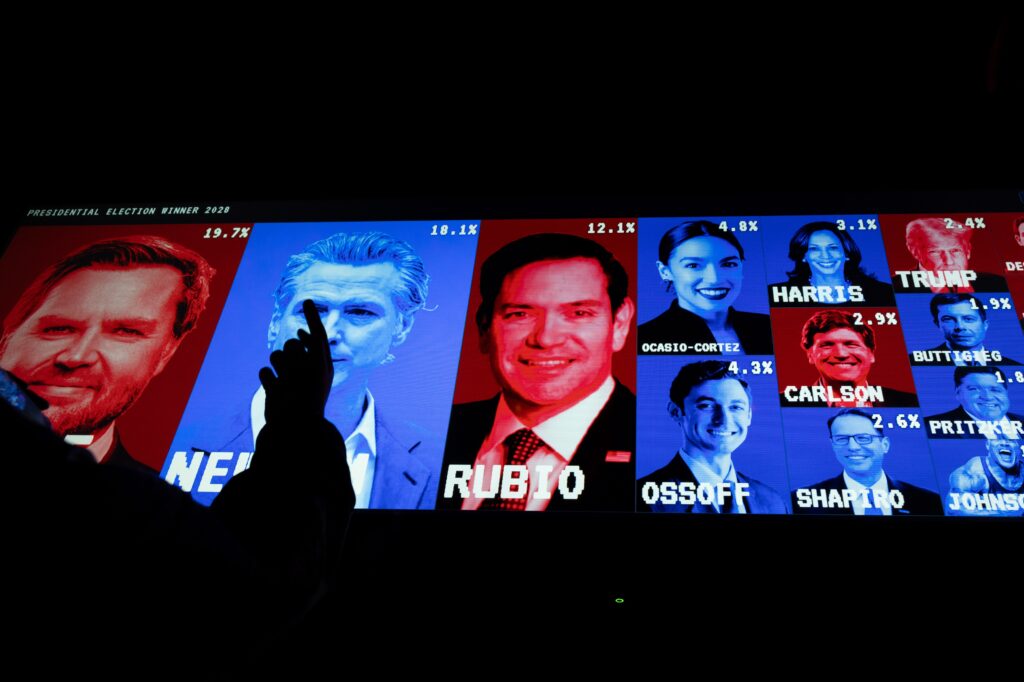
Prediction markets are Washington’s latest bogeyman, but President Donald Trump isn’t spooked. They’re better than the “fake polls,” he told me in a phone call Sunday night. “They predicted me pretty right … by a landslide.” He’s got a point.
A 2025 study from Vanderbilt University scholars concluded that data from Polymarket was “superior to polling in predicting the outcome of the 2024 presidential election, particularly in swing states.” The market was faster too. After the July 2024 attempt to assassinate Trump, traders immediately integrated the news into the Republican’s odds, increasing his chances. Polling data, by contrast, “did not react similarly” and “consistently hovered around a 45% chance.”
The election wasn’t an aberration, either. In a 2004 article for the Journal of Economic Perspectives that surveyed the four most recent U.S. presidential elections, Justin Wolfers and Eric Zitzewitz noted that prediction market data “has both yielded very accurate predictions and also outperformed large-scale polling organizations.”
That’s perhaps why other countries, like Britain, have long allowed betting on elections. The practice was also well-established in the U.S. between 1868 and 1940 — with citizens trading hundreds of millions of dollars, and the New York Times providing “nearly daily price quotations from early October until Election Day,” Paul Rhode and Koleman Strumpf wrote in the same journal. These markets did a “remarkable job forecasting elections in an era before scientific polling.” That’s because, as the Times pointed out in 1924, “the Wall Street odds represent the consensus of a large body of extremely impartial opinion that talks with money and approaches Coolidge and Davis as dispassionately as it pronounces judgment on Anaconda and Bethlehem Steel.”
Yet prediction markets aren’t limited to political forecasts. They can be used to predict such events as “Who will be confirmed as Fed Chair?”and “Who will win Survivor Season 50?” Traders placed hundreds of millions of dollars on bets related to the Iran war. That’s in addition to the billions of dollars of monthly volume on all sorts of other risks.
This may sound like unhealthy gambling, and in many cases it is. But the urge to regulate — typified by Arizona’s attorney general filing criminal charges against prediction market Kalshi last week — misses the societal benefits that come from speculation.
Speculators create the liquidity that helps businesses and individuals plan their futures. A company with large exposure to oil prices, for instance, might observe the increasing odds of a war in the Middle East and hedge either through traditional commodities trading or by buying “military strikes to occur” contracts. When the latter appreciates, the eventual payout might offset losses owing to high oil prices. What looks like gambling can generate a public good: freely available, continuously updated probabilities about the future. In an uncertain world, knowing better data about when a war might occur — or the probability of a hurricane — provides peace of mind and can save lives.
To dismiss event contracts because they involve gambling is like dismissing the internet because a large portion of web traffic is indecent and inane. In a free society, it isn’t the government’s job to police financial tools simply because they can be misused. Plenty of people gamble on the stock market, but we obviously don’t shut it down.
This is what makes the Arizona attorney general’s actions so unfortunate, and the federal government’s posturing wise. The Commodity Futures Trading Commission recently filed an amicus brief in the U.S. Court of Appeals for the 9th Circuit affirming the agency’s exclusive jurisdiction over prediction markets and extolling their value.
As it regulates, the CFTC will want to ensure that these contracts are designed correctly. M. Todd Henderson and I recently proposed a useful framework in The Post: Differentiate between “skin in the game” and “fly on the wall ” contracts — that is, between events in which individuals or groups control the outcome (e.g., sports) and those in which they don’t (e.g., the weather).
We want financially motivated researchers and analysts using their information to bet on fly-on-the-wall contracts because their doing so provides the public with more information — think farmers better understanding temperatures and climate. For skin-in-the-game contracts — which are sometimes more difficult to police in the absence of fiduciary relationships — we should create incentives that lead to positive social outcomes, say, whether a disease will be cured by a certain date. Establishing such a contract encourages those with insider knowledge to put that knowledge to good use by creating a financial prize for long-shot endeavors.
What makes markets so powerful is that they are a mechanism for combining trillions of points of localized, ever-changing knowledge and data, and producing a single actionable price. In his seminal article, “The Use of Knowledge in Society,” Friedrich A. Hayek explained that the price system is the marvel that allows industrial society to function. “Man has been able to develop that division of labor on which our civilization is based because he happened to stumble upon a method” — the price system — “which made it possible,” Hayek observed. By expanding prices to predictions, many economists believe we can open a new way of planning for the future.
President Trump says he doesn’t have time to look at these markets. “I’m focused on winning battles of every way, shape and form.” But he says he’ll look “some day in the future — maybe.” That we all have the luxury of being able to look a little further into the future is a testament to his regulatory reform.
The post Trump is right about polls — and the better bet appeared first on Washington Post.