Bringing anime and manga to live-action life onscreen is not easy, particularly for fantastical shonen manga — action-adventure stories targeting primarily teenage boy readers — like Eiichiro Oda’s “One Piece.” The settings are whimsical and outlandish, and the expansive worlds, colorful characters and peculiar creatures are tricky (and expensive) to get right.
Then there’s a more modest but no less important production challenge: hair.
Hair has been an issue in many live-action anime adaptations. Most Japanese manga is printed in black and white, so artists differentiate the characters with wild hairstyles and other big graphic swings, Jonathan Clements, the author of “Anime: A History,” wrote in an email. When a manga is then adapted into color animation, they often further differentiate the characters with a rainbow of different hair colors.
“Once you’re pushing the envelope, you might as well push it all the wacky way,” Clements wrote.
Capturing these styles in live action, however, risks coming across as Spirit Halloween or just culturally awkward. For example “Fullmetal Alchemist” (2017), is based on a manga set in a fictional Germanic country, but in the Japanese live-action remake, the blonde wigs sit clumsily atop the cast. “It’s a sort of European icing of Japanese actors through wigs and makeup,” said Rayna Denison, a University of Bristol professor and the author of “Anime: A Critical Introduction.”
Other adaptations choose to skip the hairstyles entirely and go for something more manageable and realistic. These include “Dragonball: Evolution” (2009), an infamous misfire still lamented on anime subreddits and listicles about the worst anime movies.
The craftspeople on “One Piece,” now streaming its second season on Netflix, were aware of the potential pitfalls. “It was a challenge to bring color and life to these 2D characters without it looking like cosplay,” Amanda Ross-McDonald, who runs hair and makeup for “One Piece,” said in a video interview.
The show is about a group of pirates, known as the Straw Hats, who have wacky and dangerous adventures as they pursue a treasure known as the One Piece. While the international ensemble of actors helps “One Piece” stay faithful to the look of the manga’s diverse cast of characters, the series has no shortage of hair challenges.
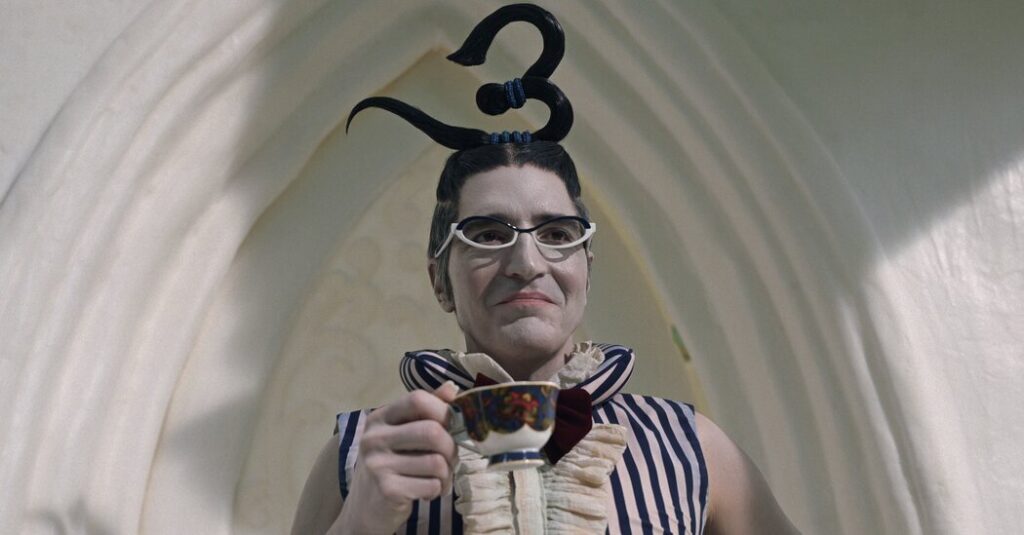
The swordsman Zoro (Mackenyu) sports a vivid green mane; the assassin Mr. 3 (David Dastmalchian), who debuts this season, has hair formed into a big number 3. Season 2 introduces other new characters with wild hairstyles, including Hanger, whose hair is shaped like a clothes hanger, and Dr. Hiriluk (Mark Harelik), whose spiked wig is in the shape of a cross.
Ross-McDonald said the key to making them feel like an organic aspect of a live-action cartoon world was a combination of careful craft and collaboration across the production.
All the wigs are made from real human hair and are dyed and knotted by hand, she said. “It takes us six to eight weeks to hand-make one wig for one of our characters.”
To make sure the wigs look as close as possible to the manga designs, the team uses as a guide the art book “Color Walk,” which collects many of Oda’s original illustrations and character sketches for “One Piece.” They then refine and adjust the wigs to complement the actors’ skin tones. For a character like Nami (Emily Rudd), her bright orange hair is a mix of different colors and textures, including red, orange, brown, yellow and gold highlights.
Other jobs are more complicated. The character Igaram (Yonda Thomas), for example, has white powdered hair that looks like a colonial wig on steroids. It also hides small guns.
Ross-McDonald and her team asked the props and special effects department to build a cage for the guns that would also be lined with lights. For Mr. 3, the prosthetics department built a mold that would sit on the actor’s head as a base, and the hair artists then wrapped the wigs around it.
“It starts with a meeting where we take one wig and ask the other departments what elements they can bring to it,” Ross-McDonald said. “It’s a give and take.”
The careful hair construction extends beyond the primary cast. The key to making “One Piece” feel like a real place, in a live-action context, is to surround the main weirdos with a bunch of others.
“We had to bring that part of the world into our background so that you feel like they live in this world,” Ross-McDonald said. “It’s not just the heroes who’ve got these fantastical colored wigs.”
In the first episode of the new season the Straw Hat Pirates visit Loguetown, a city full of flamboyant outfits and, as with the aptly named Hanger, even stranger hairstyles. When Igaram and Mr. 3 arrive later in the season, they look right at home.
For Ross-McDonald, the ultimate goal is to make the outrageous seem unremarkable. She loves when viewers are surprised to learn that characters like Nami or Zoro are wearing wigs. Sometimes she even manages to fool her colleagues.
“There’s these actors walking around the set, and a lot of the crew don’t know who they are because we transform them so realistically,” she said. “That for me is the most magical thing that we do.”
The post How ‘One Piece’ Fixed a Common Problem for Anime Adaptations appeared first on New York Times.