The Trump administration this winter secured a secret deal with the government of Cameroon to deport hundreds of migrants after remaining silent about a deadly crackdown against protesters there and withholding $30 million from a local United Nations office, according to officials and U.S. government documents.
The deal is part of a broader Trump administration campaign to coax countries to accept migrants who cannot be legally deported from the United States to their home countries because they would likely face persecution. It is also the clearest example to date of the diplomatic horse-trading the United States uses to engineer such agreements.
The documents obtained by The New York Times include confidential State Department correspondence and a funding memo, which connects the money transfer to the Cameroon deportation arrangement. The files, coupled with confirmation from officials, reveal how the U.S. government used financial pressure and political incentives to secure a deal that the deportees’ lawyer compared to “selling people.”
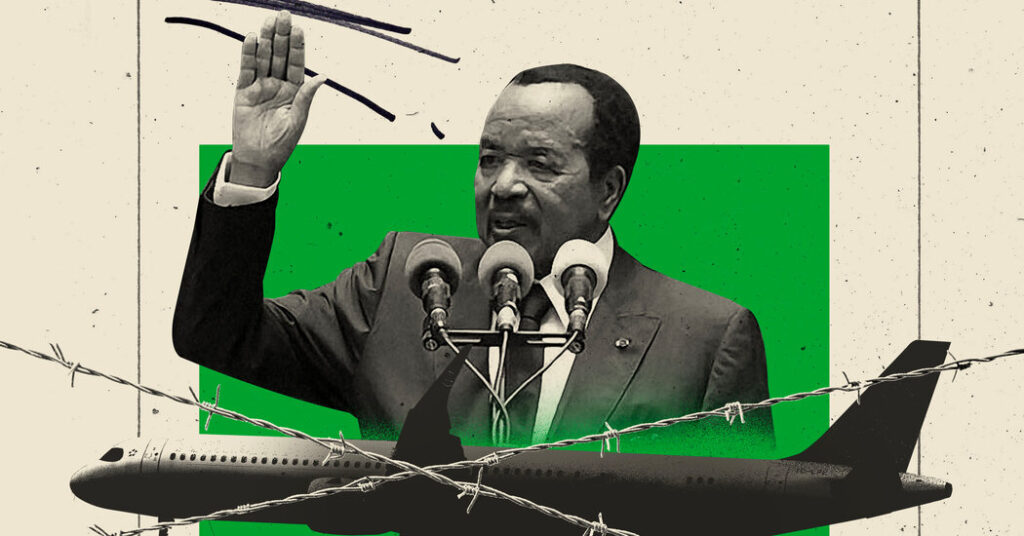
Cameroon has, for more than four decades, been led by a strongman president, Paul Biya. The Trump administration opted not to criticize his disputed re-election in October, and said nothing afterward when security forces waged a deadly crackdown on protesters.
That gave the United States leverage weeks later, diplomats wrote, when it came time to negotiate a deportation deal. The correspondence does not say that the U.S. withheld criticism in exchange for taking the migrants, but diplomats made clear that they believed the silence would play to their advantage in negotiations.
To mount further pressure, the U.S. government withheld a $30 million disbursement to the Cameroon office of the U.N. refugee agency until Mr. Biya’s administration agreed to the deportation deal, according to a senior Cameroonian official. He, like other Cameroonians and Americans briefed on the arrangement, spoke on condition of anonymity to discuss sensitive diplomacy.
Through arrangements made with other governments, the United States has deported hundreds of people to at least 25 third countries with which they have no ties, according to the Senate Foreign Relations Committee, and is “actively pressing” dozens more.
The State Department’s communication shows that U.S. officials seized a moment when Mr. Biya, was particularly isolated. In November, a team of American negotiators traveled to Cameroon to complete the deportation deal, as Mr. Biya, 93, faced international condemnation for his post-election protest crackdown.
Then on Jan. 12, two days before the first flight carrying deportees left Louisiana bound for Cameroon, the State Department announced a $30 million payment to the United Nations’ refugee program in Cameroon. According to the funding memo obtained by The Times, the payment was made in support of the deportation agreement between the two countries.
The Cameroonian official said Cameroon was initially against the agreement and likened it to “blackmail.” The government later came around, he said, reasoning that the deal might eventually encourage the United States to repatriate Cameroonian dissidents and separatists who had fled to America.
A U.S. official described the payment as part of an emerging Trump administration pattern of withholding money for country-specific United Nations programs as leverage in deportation deals.
For now, most of the deportees are being held in limbo at a state-run detention facility in Yaoundé, Cameroon’s capital. But behind closed doors, officials there have made it clear that the migrants would be sent back to their home countries.
“You are going to go back to your country,” an official of Cameroon’s foreign office told the deportees this month, according to a video recording obtained by The New York Times. “The new U.S. government has a policy,” he added, “and they will do everything to deliver on that.”
At least 17 migrants, accused of entering the United States illegally, have so far been deported to Cameroon since January as part of the deal. None of them is a citizen of Cameroon. The U.S. courts granted almost all of them protections intended to prevent the Trump administration from repatriating them to their home countries.
Among them are people who sought refuge in the United States because they were fleeing war or imprisonment for their political beliefs, or persecution because of their sexuality.
In interviews, deportees said they were placed on Department of Homeland Security flights in handcuffs and shackles. Many were unaware of where they were being taken. The Times interviewed five of the migrants after their deportations to Cameroon. They described feeling traumatized and afraid, stuck between seemingly endless detention and the possibility of being returned to danger in their home countries. Two of them called the deal dehumanizing, saying it amounted to an exchange of money for human lives.
All spoke on the condition of anonymity because they feared retribution.
The State Department said it would not comment on the content of confidential communication or on how the payment to the United Nations was connected to the deportation agreement.
But in the public statement announcing the $30 million payment, the department said it had given the money to the U.N. High Commissioner for Refugees’ office in Cameroon to “facilitate the voluntary return of refugees” and “combat illegal immigration.”
A separate U.N. body, the International Organization for Migration, which facilitates migration pathways for displaced people, said it had referred some of the migrants now in Cameroon to the UNHCR to apply for asylum.
But a spokesman for UNHCR said the $30 million had not been earmarked to help the deportees apply for asylum or be resettled. And the Cameroonian foreign office representative flatly told the group, “You are not refugees, you cannot seek refugee status in Cameroon.”
When presented with The Times’s findings, the UNHCR spokesman, Chris Melzer, said the organization had not been told that the State Department payment was made in support of the deportation deal. The funding, he said, was typical of the amount the office receives from the United States on an annual basis.
Mr. Melzer said Cameroon was facing its own migration problems. Hundreds of thousands of refugees from the Central African Republic need resettlement in eastern Cameroon, according to the United Nations, and tens of thousands of Nigerian refugees crowd camps in the country’s far north.
It was unclear whether Cameroon received any money directly in exchange for accepting the deportees. The U.S. government has paid $32 million directly to countries in other third-party deportation deals, according to a recent investigation by the Senate Committee on Foreign Relations.
Eileen Sullivan contributed reporting.
Hamed Aleaziz covers the Department of Homeland Security and immigration policy for The Times.
The post In Secret Deportation Deal, U.S. Leveraged Favors and Funds appeared first on New York Times.