Taline Shehab’s family should have been celebrating her 5th birthday on Sunday. Instead, they are in mourning.
An Israeli airstrike killed her on March 12 as she slept in the family’s apartment near Beirut. Her father, Mohamad Shehab, a well-known cameraman who had just finished work on a popular Lebanese television series, was also killed. Her mother, Natalie Shehab, who owns a clothing store, remains in a coma, unaware that her husband and only child are gone.
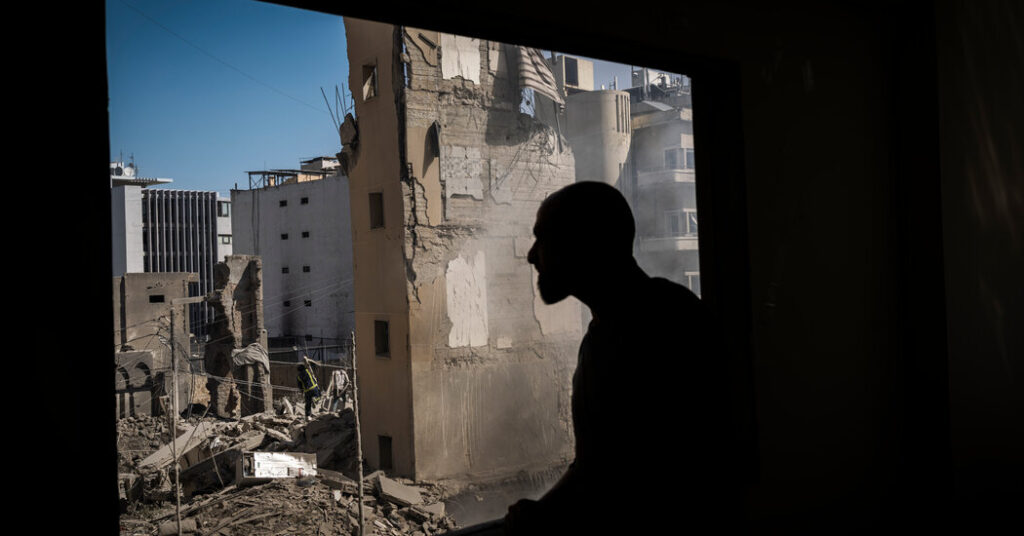
The Shehabs are among the more than 1,000 people, including at least 118 children, who have been killed this month in Lebanon, according to the health ministry, as airstrikes that Israel says are targeting the Iran-backed group Hezbollah pummel Lebanese towns and cities. More than a million people — one in six in the country — have been forced from their homes.
“My brother and his daughter are not just numbers,” said Ali Shehab, Mohamad’s brother. “They were people with a family, with loved ones who cared for them.”
Ms. Shehab’s Instagram account preserves glimpses of the family’s life together: weekend getaways, beach holidays in Turkey, photos of Taline as a newborn. In some videos, Mohamad and Taline dance together in their living room. In others, Taline unwraps toys under a Christmas tree.
The Israeli military said in response to questions about the killings that the strike on the apartment building had targeted another man, whom it called a Hezbollah commander, asserting that it “takes measures to mitigate harm to uninvolved civilians.” The strike, unlike many others Israel has carried out in Lebanon, was not preceded by an evacuation warning.
The same day as the Shehab family was killed, a few miles from their destroyed home, Hussein Bazzi, a chemistry professor at Lebanese University, was finalizing plans for distance learning after classes had moved online because of the war. Israeli airstrikes were pounding Beirut’s outskirts, but like many of his colleagues, Dr. Bazzi, director of the Faculty of Sciences, believed the campus would never be targeted.
“We all thought it was safe,” said Hala Chamieh, a fellow professor.
That afternoon, Dr. Bazzi sent a text message to colleagues, confirming everything was in place for online classes for the week ahead. Barely an hour later, he was killed by an Israeli airstrike, along with another professor, as they stepped out into a courtyard where he was known for tending to the plants.
The Israeli military later said that his colleague, Murtada Srour, was a Hezbollah operative, a claim that Ms. Chamieh denied. Israel made no such allegation about Dr. Bazzi and said in response to questions that he was not the target of the attack.
Early that Thursday evening in the southern town of Ain Ebel, the war upended another fragile sense of safety. For weeks, many residents had refused to leave the sleepy Christian village despite sweeping Israeli evacuation orders, hoping that they would be spared.
That was until an airstrike killed three young men in Ain Ebel. They had clambered onto the roof of a house to fix a satellite dish, trying to keep the village connected as the war closed in, residents said.
The Israeli military said in response to questions that it had struck Hezbollah operatives “while they were observed attempting to install surveillance equipment on a rooftop.” Residents of the village said the three men, who were Christians, had no affiliation with Hezbollah, a Shiite Muslim militant group.
“These are youth that have never picked up a gun — they were not a threat to anyone,” said Rakan Ashkar Diab, a friend of the men who lives in Ain Ebel.
One of them was Chadi Ammar, a 23-year-old aid worker with a Roman Catholic religious organization, the Order of Malta. He loved basketball and volunteered to decorate the streets of the town for Christmas.
“Wherever the village needed him, he was there,” said Mr. Diab, who played on the same basketball team.
Mr. Ammar was juggling several jobs and planning to start a business. He was eager to build a life beyond the cycles of crisis that define Lebanon’s southern borderlands with Israel, Mr. Diab said. When war erupted again this month, Mr. Ammar told his friend that those plans looked uncertain. But Mr. Diab reassured him.
Just give it a bit of time, he said, and things would get better.
Johnatan Reiss and Aaron Boxerman contributed reporting.
Euan Ward is a Times reporter covering Lebanon and Syria. He is based in Beirut.
The post Three of the Lives Lost in One Day of Israeli Strikes in Lebanon appeared first on New York Times.