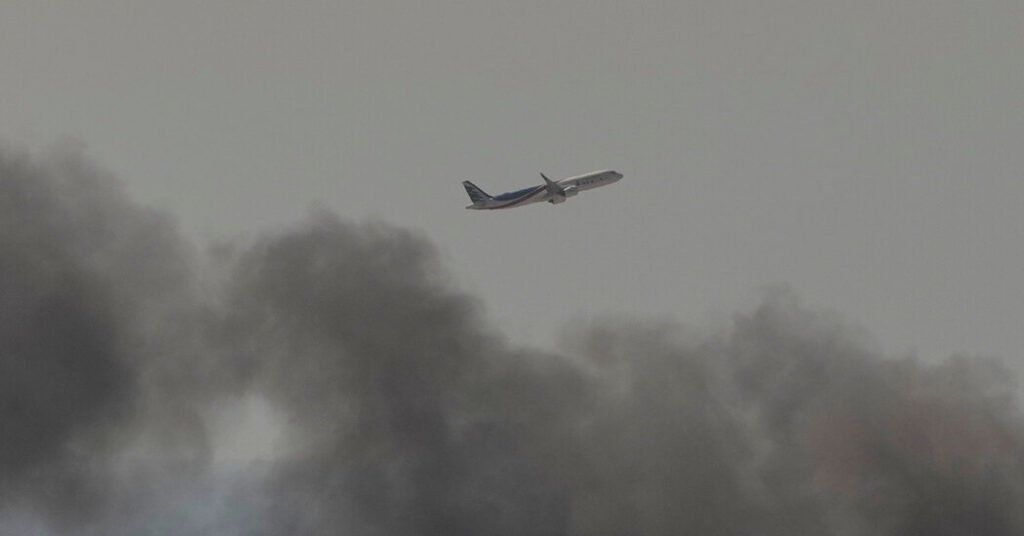
The war in Iran is disrupting air travel around the world, but airlines in regions like the Middle East and elsewhere in Asia are being hit much harder than those in the United States.
For weeks, Iran has blocked a substantial share of the global oil trade through a vital choke point, the Strait of Hormuz, causing the price of jet fuel to roughly double. Because fuel is a large part of the cost of flights, airlines are among the first businesses to feel the impact of the war.
But airlines and the countries they operate in are exposed in different ways to rising fuel costs, flight restrictions and weakening demand.
Across the world, airlines are raising prices and adding fuel surcharges. Air France and KLM have introduced a 50 euro ($58) increase on ticket prices for long-haul flights. Air India as well as the low-cost Indian airlines IndiGo and Akasa Air along with Cathay Pacific have also announced increased surcharges. Korean Air Cargo said it would implement an “urgent adjustment” to its fuel surcharge policy beginning April 1.
Air travel in the United States has been relatively insulated from the war because many Americans still have enough disposable income to pay higher fares and have generally continued flying. Demand is also strong in Europe, where many airlines have also locked in cheaper fuel prices in advance.
But carriers elsewhere are facing greater challenges. In the Middle East, airlines have canceled tens of thousands of flights in large part because governments there have had to close airports and limit flights for safety reasons.
In other parts of Asia and the South Pacific, the situation is more mixed. Some large airlines are managing well and even selling more tickets by catering to travelers who may have previously flown on Persian Gulf carriers. But some airlines are struggling because of surging fuel costs, ebbing demand and longer flight times. The war has forced airlines to avoid flying over the Gulf, which means planes burn a lot more fuel.
And in some places, jet fuel is in such short supply that some airports are rationing it.
“You can’t really pigeonhole everybody into the same basket like you can in Europe, or the Middle East, or America,” said Saj Ahmad, chief analyst at StrategicAero Research, an aviation consulting firm. “Asia is a bit more volatile.”
More than a quarter of all flights out of the Middle East have been canceled, according to Cirium, a flight data company. Air India has been among the hardest hit, with 16 of its 36 long-haul flights connecting the Middle East to India canceled on Monday.
The disruption has pushed some travelers to abandon their plans. Dheeraj Kommu, 34, a financial analyst in Bengaluru, waited 10 days after the war began on Feb. 28 to cancel a family trip to the country of Georgia.
“We waited to see if the war situation would get better,” he said, “and when it didn’t, we felt there was too much uncertainty.” He had worried about being stranded with his 4-year-old daughter, who will start school in June.
Airlines are also rethinking their plans.
Air New Zealand said it would begin trimming less popular routes over the next two months, citing the need to conserve fuel. “To help keep flying as affordable as possible and be as efficient with fuel as we can be, we have consolidated a small number of flights,” a company spokesperson said.
China Southern also pulled back at least one flight, announcing last week that the airline is dropping its three-times-a-week direct service between Guangzhou and Darwin, Australia. It will reroute those customers on connecting flights through Sydney, Australia. The airline did not respond to a request for comment.
Air Busan, a small South Korean airline, reduced April flights to the Philippines, Vietnam and Guam last week, according to a notice on its website. Cebu Pacific, a low-cost carrier in the Philippines, said on Monday that it will suspend five routes and reduce the frequency of an additional 10 routes starting the middle of next month.
In Europe, many carriers say they have avoided big increases in fares because they used futures contracts and other hedging techniques to lock in what they pay for jet fuel. But even European airline executives said at an event last week that they might have to raise ticket prices if the war lasted for months.
“We’re well hedged — therefore, we don’t expect any significant cost increases,” Michael O’Leary, the chief executive of Ryanair, said at the event held by Airlines for Europe, a trade group. “But if it was to drag on for six, eight, nine months, and the Strait of Hormuz remains closed, then there would be issues.”
At the same event, the chief executive of Lufthansa Group, Carsten Spohr, said the company’s profit margins were modest — about 10 euros per passenger on average — so it could not tolerate higher fuel costs for long once its current fuel hedges expired.
The conflict is also reshaping travel patterns. Many people are avoiding flying through the Middle East, creating opportunities for other airlines.
Qantas, Australia’s largest airline, said demand for its flights to and from Europe had been strong. Flights connecting Perth to London and Paris are more than 90 percent full this month, about 15 percentage points higher than normal, the airline said in a statement.
At the Airlines for Europe event, Benjamin Smith, the chief executive of Air France-KLM, said demand was “very healthy” on flights to Asia and Africa. Mr. Spohr said Lufthansa Group’s airlines had added dozens flights to and from Asia in response to the rising demand. Those flights were filled within days, he said.
U.S. airlines do not hedge the price of fuel like carriers elsewhere, and executives have expressed confidence that they will be able to pass on higher fuel costs to travelers. But some have acknowledged that their businesses could struggle if the hostilities don’t end soon.
In response to high oil prices, United Airlines is cutting about five percentage points of its capacity this year, trimming less-profitable red-eye and midweek flights, the company’s chief executive, Scott Kirby, told his staff in a letter last week.
But those flights represent “small dollars at best,” and Americans seem willing to pay more to travel, Mr. Kirby said. “For now at least, demand remains the strongest we’ve ever seen,” he said. “The 10 biggest booked revenue weeks in our history have been the last 10 weeks.”
Niraj Chokshi is a Times reporter who writes about aviation, rail and other transportation industries.
The post As War in Iran Disrupts Air Travel, Here’s Where It’s Hitting Hardest appeared first on New York Times.