It would seem absurd if a horror film followed a jump scare with an image of an audience screaming. But it’s accepted practice for comedy specials to regularly break the fourth wall, incorporating the response of the audience watching the work into the work itself. While the audience reaction shot helps capture the feel of a show, that doesn’t really explain its popularity and endurance as it infiltrates popular culture.
When Robert Klein released the first modern stand-up special in 1975 …
… he showed wide shots of the crowd from the perspective of the stage because he wanted to provide a contrast with sitcoms and their laugh tracks:
“The concept was a live theatrical performance in which the audience was seen as well as heard,” he told me. He added: “An audience of bright young faces laughing like crazy reinforced the overall effect and inclusiveness for the audience at home.”
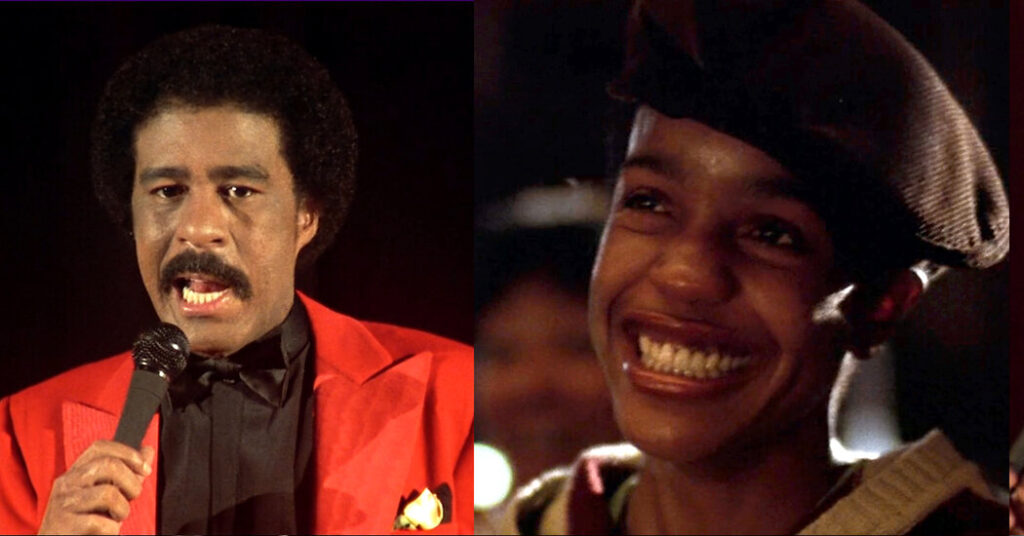
Cameras soon moved into the crowd. In the next decade, Richard Pryor repeatedly singled out audience members cracking up in “Live on the Sunset Strip” (1982) and isolated and amplified specific laughs to make a solo act feel more like a dialogue:
In the 1990s, cutaways to people bent over laughing became pervasive in televised stand-up as cable specials proliferated. In half-hour sets like those by Mitch Hedberg on Comedy Central …
… and Judy Gold on HBO …
… this device became as formulaic as the laugh track. To judge by the crowds viewers saw, no joke bombed. There was just a steady procession of audiences losing it.
Reaction shots were practical, allowing a segue for an edit from one section of the set to another, or one performance to another. But they are also manipulative. Laughter is social, and we laugh more in groups. And showing us the audience chortling models behavior for viewers at home. It’s designed to goose a response.
This is why I never liked these shots. If art is good, it speaks for itself. Telling the audience how to react distracts from the work. And yet, in the difficult task of transforming live stand-up to the screen, I am also convinced that the shot is effective and can be used gracefully.
The reaction shot has always been a distinctly powerful tool in comedy, which helps explain the boom in mockumentaries:
As specials have become more cinematic, comedians have become more strategic in using audiences to help put across a joke. When Kevin Hart began a bit in his 2019 special, “Irresponsible,” alluding to his own infidelity …
… he quickly pivoted to a reaction of a woman laughing to keep us on his side:
In Adam Sandler’s 2018 special, “100% Fresh,” he sings a song about a grandmother choking on a lamb chop:
The director Steve Brill keeps cutting to an elderly woman in the crowd, making the joke funnier:
Brill told me that initially he didn’t like reaction shots (they “felt like a laugh track, which I hate”) but that working on this special made him appreciate them: “It gives viewers permission to laugh as well as cues them.”
When Jo Koy told a joke about Taylor Swift in his monologue at the 2024 Golden Globe Awards, the opposite message was sent when the camera showed her stone-faced:
The momentum of his monologue stalled and never recovered.
In “The Dreamer” (2023), Dave Chappelle uses the crowd to help him navigate controversy. He tells a joke that calls back to criticism of his jokes about gay people, and the editor cuts to a group of people, all laughing with the exception of one man, eyes darting back and forth, unsure if he should chuckle:
He finally does:
This audience shot tells a story that gives permission: It’s OK to laugh.
The overuse of the reaction shot has inspired backlash. Many comics avoid them. Some use them only to spoof. In “One of the Greats” (2014), Chelsea Peretti included reaction shots of a couple making out, a man using a leaf blower in the audience and a dog:
Aparna Nancherla recently cut away to a shot of herself in the crowd:
Joe DeRosa mocked it by cutting from a punchline to faces not laughing:
In a moodier commentary on the artifice, Drew Michael ended “Red Blue Green” (2021) by zooming back to reveal that the crowd laughing was onstage with him the whole time:
Social media has shrunk the distance between artist and audience. Watching people react to art has become a huge genre on the internet
And the roots of the current vogue of crowd work online may be found in the long history of audience reaction shots.
Matt Rife rocketed to fame by riffing with audience members …
… and triggering reactions.
Is the success of crowd work linked to it conveying the illusion of spontaneity? Maybe.
It’s also the case that showing the audience laughing evokes a sense of community in a solo art form.
The appeal here may be simpler as well. The audience is a surrogate for us and we just like looking at ourselves.
Produced by Tala Safie
Videos: HBO (“An Evening with Robert Klein,” “HBO Comedy Half-Hour: Judy Gold,” “The Comeback” and “Drew Michael: Red Blue Green”); Columbia Pictures (“Richard Pryor: Live on the Sunset Strip”); Comedy Central (“Comedy Central Presents: Mitch Hedberg”); NBC (“Parks and Recreation” and “The Office”); ABC (“Abbott Elementary”); Netflix (“Kevin Hart: Irresponsible,” “Adam Sandler: 100% Fresh,” “Dave Chappelle: The Dreamer,” “Chelsea Peretti: One of the Greats” and “Matt Rife: Unwrapped – A Christmas Crowd Work Special”); CBS (The 2024 Golden Globes); Dropout (“Dropout Presents: Aparna Nancherla”); Joe DeRosa (“Joe DeRosa: I Never Promised You a Rose Garden”)
Jason Zinoman is a critic at large for the Culture section of The Times and writes a column about comedy.
The post Comedy’s Most Manipulative Shot … and Its Greatest Weapon appeared first on New York Times.