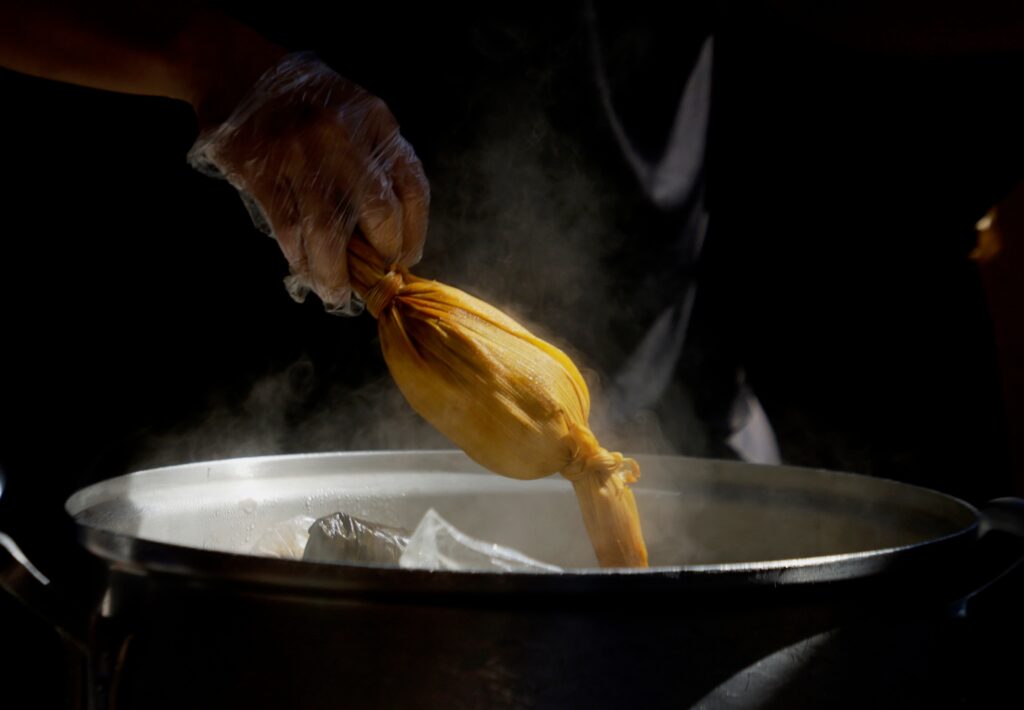
DENVER — Marina Zardate owned a restaurant and handful of other businesses in Mexico, before threats from violent gangs forced her to seek refuge in the United States a dozen years ago. Today, she ekes out a living off a single steamer pot, which she uses to make expertly seasoned tamales that she sells by the dozen to friends and relatives.
Zardate dreams of again serving her tamales in an eatery, though she would settle even for advertising them on fliers and Facebook. But she is afraid: Colorado prohibits the sale of homemade perishable foods, and violators face hundreds of dollars in fines.
That law is being considered for a second time by Colorado lawmakers, who last year rejected changes to regulations around the sale of “cottage foods” — products made in uninspected home kitchens, which are limited to breads, honey, spices and other shelf-stable items. Concerns about the public health risks of allowing foods that must be kept cold or hot — meat-filled tamales, but also fruit juices and buttercream-slathered cakes — won out.
Colorado’s Tamale Act is back again this session with an unusual coalition of backers who say the proposal is about far loftier notions than just bringing culinary creations to the masses: immigrant assistance, entrepreneurship, economic liberty and “food freedom” — a rising clarion call for the Make America Healthy Again movement. Among its champions this year is Colorado Gov. Jared Polis, a libertarian-leaning Democrat who recently called it “kind of the American Dream.”
“It transcends culture and party and ideology,” said state Rep. Ryan Gonzalez, the bill’s Republican sponsor, who this year enlisted the House majority leader, Democrat Monica Duran, as a co-sponsor. “We want to basically make it easy for the entrepreneur to succeed and thrive.”
If the bill passes, Colorado would join a growing number of states liberalizing their cottage foods laws, according to the Institute for Justice, a libertarian group that lobbies for deregulating sales of homemade food. The nicknames of the proposals vary by geography — a 2024 Virginia law was known as the “cake-pop bill,” and Wisconsin is considering a proposal dubbed the “cookie bill.” Two years ago, Arizona adopted its own “tamale bill.”
But the common practice of hawking tamales in parking lots or burritos at construction sites gives heartburn to public health authorities, who are also contending with pushes to legalize raw milk — a beverage favored by Health and Human Services Secretary Robert F. Kennedy Jr. — and other foods they view as unsafe. At the same time, many health departments are facing state and federal funding cuts that they say will limit their capacity to manage additional food safety risks. Public health agencies in Colorado, a state facing an estimated $850 million budget deficit this year, may see their funding slashed by $3 million, or 14 percent.
At a recent hearing at the Colorado Capitol over the Tamale Act, several public health officials raised the specter of foodborne illness outbreaks; one said managing an outbreak last year had taken 50 hours of her “bare-bones” county staff’s time.
“When something goes wrong, the news does not focus on the freedom of people to produce food and does focus on were there controls to keep people safe,” said Mike Solter, an environmental health manager for the city and county of Broomfield. Home kitchens, he said, “were not designed to produce large quantities of food safely.”
Proponents — including bakers, farmers market vendors and tamale sellers — countered that foodborne illnesses sometimes originate from restaurant kitchens, and that states that allow perishable cottage foods have not reported major outbreaks. The bill, they argued, added guardrails around an existing practice.
Allie Morgan, policy director for the Colorado Association of Local Public Health Officials, said her group’s main worry is foodborne illness — especially meat sold by vendors like an unlicensed taco stand that shot into the spotlight last fall after viral videos showed a Denver health inspector pouring bleach into its food containers. Critics saw a heavy-handed official blocking a business from selling its products. The health department said it had tried to work with the seller for months but was forced to take action when the inspector found the stand storing raw meat in cardboard boxes and serving cooked meat kept at unsafe temperatures.
After the tamale bill failed last year, the association was concerned enough that it convened a group to work with Gonzalez on the idea last fall, she said. After initially opposing this year’s proposal, Morgan said, amendments added by a House committee moved the association to a “neutral” position.
Among those amendments: Foods sold must be prepackaged and never touched by bare hands. Vendors, who must take a food-safety course, are limited to selling five different items and grossing $150,000 in a calendar year. Local health departments can recoup the cost of investigations from producers.
“Long live the tamale!” Republican state Rep. Larry Don Suckla, a rancher, said as the committee passed the bill in February. “This cowboy’s a yes.”
The main idea is to give home cooks a foundation to build their businesses to the point that they can move up to a food truck or a restaurant, Gonzalez said.
But it is also “about consumer choice rights,” said Angel Merlos, a Colorado-based strategic director for the LIBRE Initiative, a Koch-brothers backed group that advocates free-market policies among Latinos. He pitched the idea for the Tamale Act to Gonzalez. “If I want to be able to buy from someone, I should be able to buy from someone. There’s nothing harmful about a burrito.”
Despite its focus on tamales, the proposal is good news for Heather Wilder, a part-time dog groomer and part-time baker from the Denver suburb of Aurora. She sells cookies and brownies made only with organic, non-GMO ingredients, and she’d like to expand to cupcakes. But the current cottage foods law prohibits buttercream, and “the frostings that we are allowed to use are highly processed,” based on oil or shortening, Wilder said.
Wilder said she takes food safety and kitchen cleanliness very seriously. “With how social media is,” she said, “we could literally get canceled with one bad thing.”
Zardate said her meager tamale trade mixes two of her passions: business and cooking, which she calls an art. But it started out of desperation. The day after arriving in Denver with nothing, she decided to buy a steamer pot. “I will go door to door, no problem,” she recalled telling a friend. “And I began selling tamales.”
Once, Zardate, 65, tried hawking them in the parking lot of a Save A Lot supermarket, but a police officer sent her away with a warning. After saving enough, she rented a small food truck, but she gave it up during a long illness.
Now recovered, Zardate sells her tamales — pork, chicken, roasted peppers or sweet — for $25 a dozen. The earnings amount to nowhere near enough to pay to use a commercial kitchen, which the current law permits. Knowing she could freely sell more would allow her to grow the operation, she said.
“Above all, work without fear, and publicize it far and wide,” Zardate said. “Even set up a small tent and sell tamales outside.”
Carmen Marisela Bravo also hopes the bill passes. She came to Denver from Mexico 25 years ago and quickly set about selling water outside Colorado Rockies baseball games and tamales outside Latin dance halls. Eventually, with the help of her father, who owned a restaurant, she acquired a food truck.
Today, Bravo drives the small white truck, which she said is regularly inspected by city health officials, from one bustling construction site to another. She pays to use a shared commercial kitchen to make her tamales and burritos, each of which she sells 60 a day.
On a recent afternoon, she finished up her workday next to a gleaming high-rise where workers in neon vests — her customers — balanced on scaffolding that swayed in fierce winter winds. Just a few burritos and tamales, wrapped in foil, remained in a warmer in the back of the truck. Shelves on the side held imported Mexican snacks.
Bravo, 54, said she sees many vendors selling tamales and other prohibited items around the city, and she thinks the Tamale Act would level the playing field — they, too, would be working within the system. It would also let her save money by cooking in her own kitchen.
She does not worry a bit about her food making someone sick. She has customers who have been buying from her for 20 years, she said.
“When you make something to sell, you do it well,” Bravo said. “Because you want someone who eats a tamale or a burrito to say, ‘Ay, how delicious! Tomorrow, I’ll come find you again.’”
The post Colorado’s Tamale Act may decide whether home cooks can build a business appeared first on Washington Post.