The Supreme Court on Monday appeared likely to embrace a conservative challenge to tallying mail-in ballots that arrive after Election Day, a move that could upend election procedures in states across the country as voters prepare to cast ballots in the midterm elections.
A majority of justices seemed ready to side with arguments by Republicans and Libertarians who told the court that federal election law preempts Mississippi from counting ballots that arrive up to five days after polls close as long as they are postmarked by Election Day.
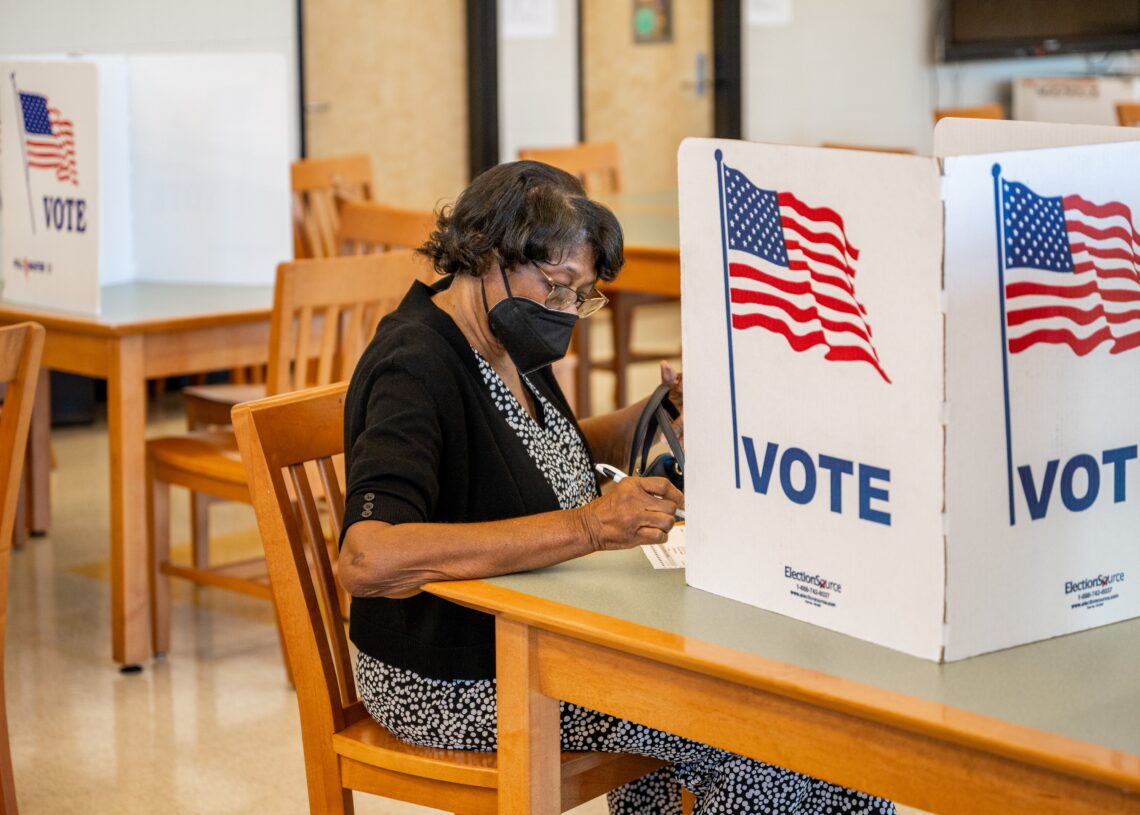
Most states require mail-in ballots to arrive by Election Day, but Mississippi is one 14 states that allow grace periods of days or weeks. A ruling against Mississippi could open the door to challenges to similar provisions in other states.
President Donald Trump and some conservatives have attacked mail-in balloting, asserting without evidence that it is riddled with fraud. Trump and his supporters called for halting the count of mail-in ballots after the 2020 presidential election. Trump blamed the votes for his loss in the contest.
Conservative Justice Samuel A. Alito Jr. on Monday told Mississippi Solicitor General Scott G. Stewart that allowing officials to receive ballots that arrive after Election Day raises a host of thorny policy questions: How do you consider a ballot officially submitted? How long after Election Day can a ballot be received? Does it have to be postmarked to count?
He and other conservative justices suggested it would be easier and cleaner to set Election Day as a deadline for ballots to be received.
“Your position requires some difficult line-drawing problems,” Alito said.
At least five of the six conservative justices on the court asked skeptical questions of Stewart, while the three liberals directed their sharpest queries at Paul D. Clement, an attorney for conservative groups. Supreme Court Chief Justice John G. Roberts Jr. was more difficult to read, while Justice Amy Coney Barrett also posed difficult questions of both sides.
Liberal Justice Ketanji Brown Jackson said there was nothing to limit states from counting ballots postmarked by Election Day that arrive later. The Constitution give states and local officials authority to determine the “time, place and manner” of elections, while Congress is allowed to amend those rules.
“Congress has not indicated, at least thus far, that it intended ever to preempt this,” Jackson said.
The Republican National Committee, the Mississippi Republican Party, a Mississippi voter and a county election commissioner filed a lawsuit against Mississippi in 2024 contending that it was illegal to count mail-in ballots that arrived after polls close because federal law sets a particular day for the election. The Libertarian Party of Mississippi later filed a similar suit.
A federal judge consolidated the cases and allowed groups made up of veterans and retirees to intervene in the case on behalf of Mississippi. The judge dismissed the case, before the 5th Circuit Court of Appeals reversed that ruling. Mississippi then appealed to the Supreme Court.
Clement told the justices that the idea of casting and counting ballots at the same time has long been “intertwined” and that federal law clearly sets elections on a particular day. He also argued that receiving ballots after Election Day could increase the prospect of voter fraud and undermine faith in elections, especially if the candidate who ultimately wins is not the one who was ahead on Election Day.
“The losers are going to doubt the result, full stop,” Clement said. “That is bad for our system.”
Stewart countered that existing law simply requires voters to fill out their ballots and put them in the mail by Election Day, even if the ballot arrives at a later time. He also told the justices that the practice has deep roots in American history, pointing to field voting that occurred during the Civil War and other laws in the early 1900s.
“States have allowed it for over a century, and Congress has respected it,” Stewart said.
The conservative justices peppered Stewart with hypotheticals. Justice Neil M. Gorsuch asked whether voters could ask the Postal Service to recall their ballots after Election Day to change a vote if a late-breaking scandal about a candidate emerged. Alito asked whether Republican or Democratic party officials or notaries could be designated by states to collect ballots, instead of the Postal Service.
The Supreme Court is expected to issue a ruling by June or July, months before voters head to the polls to vote in the November elections.
Justice Brett M. Kavanaugh asked Clement whether a June ruling might violate the Purcell principle, a doctrine that federal courts should not change election procedures too close to elections because it could create confusion among voters and complicate election planning by states.
Clement replied that a summer decision would not implicate Purcell because states would still have months to change election procedures and update voters before ballots are cast in November.
Several of the justices also expressed concerns that requiring votes to be received and tallied on Election Day might also bar states from conducting early voting that is popular with voters.
“Is there any limit to how early people can vote?” Roberts asked.
Clement said early voting was less problematic than accepting ballots after Election Day and operated under different rules so it would not be prohibited.
The arguments came after Republicans introduced a bill that would require all mail-in ballots to be received by Election Day, along with other voting restrictions.
This Supreme Court term features a number of cases dealing with elections and voting. Last month, the justices allowed an effort to redraw California’s voting maps to give Democrats up to five additional seats in the House of Representatives, months after approving a similar push in Texas that could net Republicans a similar number of seats.
In January, the Supreme Court allowed a Republican congressman from Illinois and other officials to move forward with a lawsuit challenging the state’s mail-in balloting law. The court ruled 7-2 that candidates have standing to sue over rules governing voting.
The court appeared ready to limit or strike down the last remaining pillar of the landmark Voting Rights Act last October, during arguments in another case. Section 2 of the act requires states to craft voting districts under certain circumstances to ensure minority voters have the chance to elect candidates of their choice.
A ruling undermining Section 2 could touch off a scramble by Republican-led states to draw new districts ahead of this year’s midterms. That could result in a number of Black Democrats losing their seats, particular in Southern states.
Republican leaders have also asked the high court to strike down limits on how much political parties can spend in coordination with candidates, a case that could shift the balance of power between the parties and super PACs.
The post Supreme Court appears ready to limit mail-in balloting ahead of midterms appeared first on Washington Post.