The Trump administration said on Monday that it intended to create a consortium to invest $4 trillion into energy projects, minerals and semiconductors in an effort to create a new source for critical goods controlled by the United States.
The voluntary consortium will include countries like Singapore, the United Arab Emirates, Qatar and Sweden, in addition to the United States, which will contribute $250 million toward the investment, Jacob Helberg, the under secretary of state for economic affairs, said in Washington on Monday.
“The fund will serve as a catalyst, a credible call to action for partners around the world to put serious capital behind shared strategic objectives,” Mr. Helberg said at a breakfast for the Hill and Valley Forum, which he co-founded.
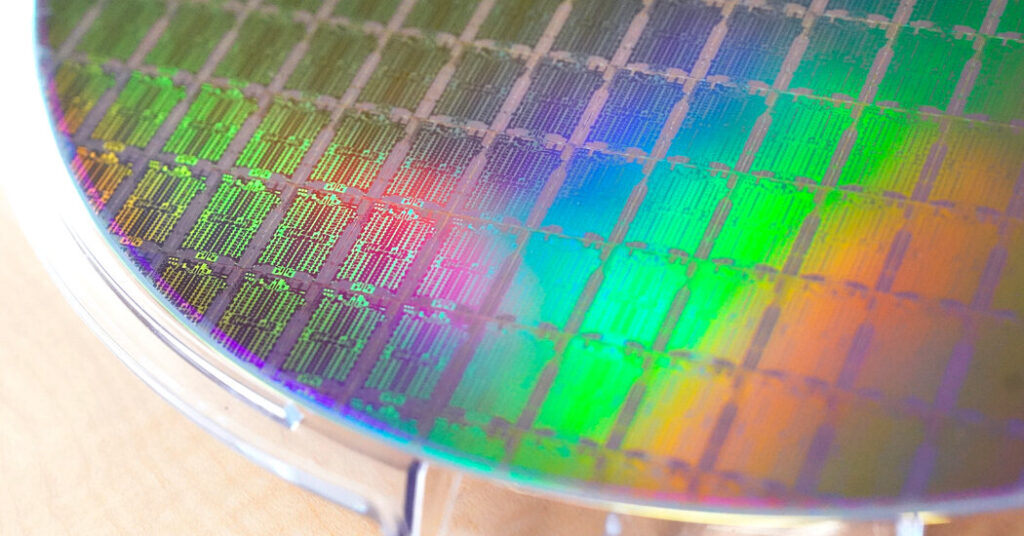
The investment is intended to grow out of the administration’s “Pax Silica” initiative, an economic security program established in December aimed at building out a secure global supply chain for semiconductors.
While some details about the consortium remain unclear, U.S. officials have said Pax Silica would lead to more cooperative agreements across the artificial intelligence industries of the partner countries, which include Japan, Korea, Singapore, the Netherlands, Israel, the United Arab Emirates, Britain, Australia and Sweden. Many of the most important companies powering the global A.I. supply chain are based in those countries, the U.S. officials said.
Mr. Helberg said on Monday that, in light of the threats to the global economy from the war in Iran, the administration was expanding the effort to include energy security. He described the investor consortium as a “coalition of sovereign wealth funds and institutional investors joining forces around a single strategic imperative.” He said the goal was to ensure “that the minerals, ports, corridors, factories and energy assets powering global semiconductor and technology supply chain stay in trusted hands.”
It’s not clear how the Trump administration came to the $4 trillion total, and it seems unclear how such a sum would actually materialize. Total foreign direct investment globally last year was just $1.6 trillion, according to United Nations statistics.
President Trump has also highlighted trillions of dollars of investment in the U.S. economy as part of his trade deals, figures that experts have also questioned.
Mr. Helberg mentioned that SoftBank, a Japanese investment bank, and Temasek, a Singaporean investment fund, would be among a group of founding members with more than $1 trillion in combined assets under management.
The Trump administration has been trying to shore up U.S. manufacturing of semiconductors amid concerns about the U.S. reliance on Taiwan. A.I. data centers and the global electronics supply chain more broadly are deeply reliant on the island, which China considers to be part of its territory.
China’s export controls on rare earth minerals and magnets last year set off anxiety among chip companies and other manufacturers that depend on those supplies. The administration has been trying to secure new mineral supplies both domestically and in partnership with foreign allies, though the supply chains will most likely take years to stand up.
Speaking at a conference in Washington on Monday, Mr. Helberg called the situation unfolding in the Strait of Hormuz, where shipping traffic has been largely blocked, “a blessing.”
“The lesson here is not only about oil, it’s about dependency,” he said, warning that physical infrastructure like cables, ports and corridors could become part of the battlefield. He said the United States would not let that calculus “metastasize into the technology and semiconductor supply chains that underpin our entire economy.”
Mr. Helberg said he had begun forming the ideas for the “Pax Silica” initiative before he was confirmed to office. When the initiative was announced in December, nine countries including Japan, South Korea, Israel, Britain and Australia signed a declaration to secure global supply chain routes around semiconductors, A.I. technology and critical minerals.
The next step, which is the voluntary wealth fund, would allow the group to invest in projects, Mr. Helberg said.
Ana Swanson covers trade and international economics for The Times and is based in Washington. She has been a journalist for more than a decade.
The post Trump Sets Up ‘Pax Silica’ Fund to Reduce Global Dependencies appeared first on New York Times.