Some famous writers were enjoying themselves at a party hosted by Michael Lewis in a lovely old house on the edge of Audubon Park. Susan Orlean was beginning to say her goodbyes. Anderson Cooper was milling about. Others gathered in clusters, talking shop over cocktails.
The author Nancy Lemann preferred to be a bit apart from the din. She was sitting in a high-backed chair on the veranda, a glass of white wine beside her, watching night fall on the oaks. A few mosquitoes sailed in on a gentle March breeze.
Born and raised in New Orleans, Ms. Lemann knew Mr. Lewis and many of his guests from her youth. But this was not quite her scene.
Walter Isaacson, the biographer of Steve Jobs and Elon Musk, floated over in a navy sport coat with a fleur-de-lis pin on the lapel. “I had to pay my respects,” he told her.
A bit later, nudged by her daughter, the writer Emmeline Clein, Ms. Lemann left her spot to say hello to her brother, Nicholas Lemann, a New Yorker staff writer and the former dean of the Graduate School of Journalism at Columbia University.
He was standing in a circle of other male writers who were talking about their work. Ms. Lemann (pronounced like the fruit) perked up when a man in a gray sweater named Joshua Steiner told her the subject of his latest book: mistakes, and how they “reveal aspects of our personalities.”
“Oh, that’s interesting,” she said.
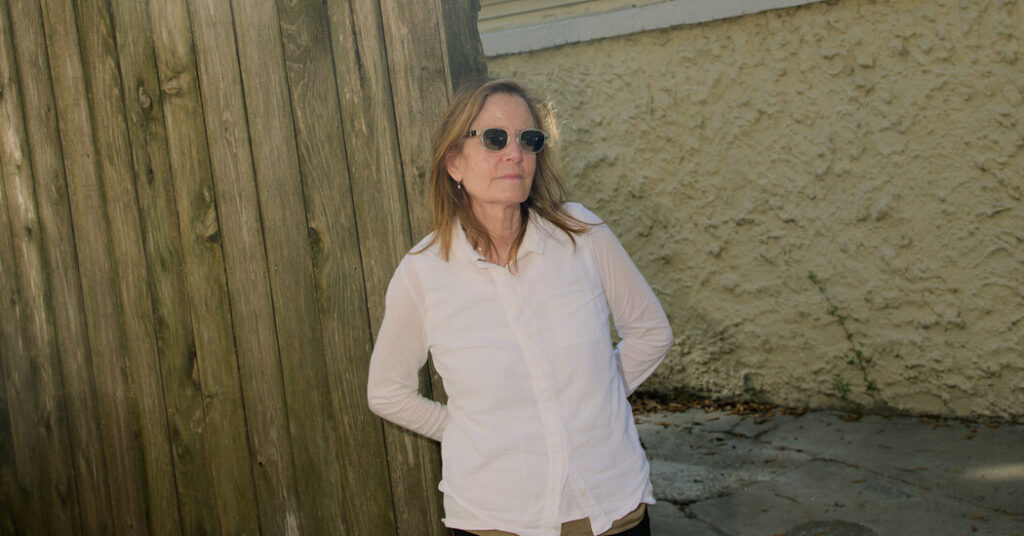
Ms. Lemann, 70, didn’t mention it just then, but she had a new book to talk about, too. In fact, she had come back to New Orleans from her longtime home in Chevy Chase, Md., to take part in the city’s annual literary festival.
Her new novel, backed by a prestigious publisher, comes out next month. Two of her old books — idiosyncratic works, mainly about the peculiar characters of her hometown — are on their way back to bookstores in handsome new editions. Still, she was more inclined to discuss almost anything but her comeback.
“It’s much easier to talk about regret and bitterness and failure for some reason than it is to talk about, you know, the tributes,” Ms. Lemann told me. “I mean, what are you going to say?”
There are writers. Then there are writer’s writers. Ms. Lemann is perhaps one turn beyond that, meaning that even when she published five books between the mid-1980s and the early 2000s, her success was of the quieter sort.
She always had admirers. “Lives of the Saints,” a slim, atmospheric novel published in 1985, won her a few stellar reviews and a following of people who prize fiction’s subtler qualities: delicate prose, unexpected word choices, a sense of place. The book also doesn’t shy away from strong emotion.
“She’s always writing from this slashed-open vein of sentiment,” said Krithika Varagur, an editor at The Drift.
Ms. Varagur is among a new generation of fans who have pressed used copies of Ms. Lemann’s books into friends’ hands in recent years. The steady enthusiasm of discerning readers has led New York Review Books to reissue “Lives of the Saints” and to publish her new novel, “The Oyster Diaries.” Lately, there have been odes to Ms. Lemann in literary magazines, and young women in book clubs are coming up with fresh interpretations of her work.
Even her only nonfiction book, “The Ritz of the Bayou,” is being reissued by Hub City Press, a small publisher. It grew out of a Vanity Fair assignment from Tina Brown in 1986, though Ms. Brown never ran it. (Ms. Lemann prioritized mood over hard facts.) Hub City is billing it as an “unjustly neglected masterpiece.”
All this good fortune has come after a period Ms. Lemann calls “the doom,” the two decades she spent generating reams of writing that were met with shrugs from publishers who squinted at her old sales numbers.
During the long weekend in New Orleans, Ms. Clein, the eldest of Ms. Lemann’s two daughters, was trying to encourage her mother to embrace at least a crescent of the spotlight. Over dinner at a French restaurant in the Bywater neighborhood, Ms. Clein, 31, said she had absorbed the Lemann oeuvre in much the same way as others who have discovered her — slowly at first, and then obsessively.
“I recognized many of the characters — whether they were friends from her childhood I knew, or relatives — though a lot of them are composites,” she said. “So then I realized this was a delicacy akin to the steak we’re eating, and I should savor it.”
Ms. Lemann asked her daughter if she had read an article classifying two modes of being: There are “continuers,” she said, people who remain the person they always were, and “dividers,” those who constantly reinvent themselves.
“Is it like a ‘there’s-two-types-of-people-in-the-world’ thing?” Ms. Clein asked.
“Yeah,” her mother said. “And I feel like I’m a continuer. What about you, Emma? I think you’re also a continuer.”
“I think I’m largely a continuer, but I’ve zagged a couple times,” Ms. Clein said. “Do you think you got that from your father, Mom? He was an extreme iteration of a continuer.”
Ms. Lemann is the child of Thomas Lemann, a lawyer from New Orleans, and Barbara London, a clinical psychologist from New Jersey who took pains to learn the customs of Southern hospitality. The Lemanns were a Jewish family in a largely Catholic city who kept a book-lined household.
Ms. Lemann was rebellious and conducted what she described as a “wastrel youth.” There were boat parties in hurricanes, debaucherous nights at F&M Patio Bar near the train tracks along the Mississippi.
A continuer at heart, Ms. Lemann might have never left, except she dreamed of the Ivy League. She went to Brown University, where she met a fellow future author, Susan Minot, and wrote term papers that drew comments from professors to the effect of: “Why are you torturing me?” and “Who are you, Blanche DuBois?”
That was because she had already found her voice as a writer. And already she could see it was not for everyone. She liked to be colloquial, digressive, repetitive. Then, as now, she was preoccupied with what she calls the “verities”: honor, nobility, humility.
She says she inherited her worldview and style from New Orleans, whose “remoteness” lent itself to eccentricity. “That’s the only thing I can think of for how I got that, my voice,” she said. “But I was very sure of it.”
She returned home after graduation and rented an apartment on St. Charles Avenue. She set up a writing desk on the front porch and wrote “Lives of the Saints” in three months. She spent the next seven years trying to publish it.
In this dialectic of north and south, Ms. Lemann figured she had to go north to do business. During the course of a prolific correspondence, Ms. Minot, who was then a student in Columbia University’s graduate writing program, tried to persuade Ms. Lemann to come to New York.
“I don’t want to say high-minded, but she’s profound,” Ms. Minot said. “Dare I say that most of things people read today are sort of topical. She’s deeper than that.”
In New York, Ms. Lemann attended at a lecture give by Gordon Lish, a mythical writing teacher and an editor at Alfred A. Knopf.
“When I heard him speak, I just smote my forehead and said, That’s the only guy who would take a chance on me,” Ms. Lemann recalled.
“So then I literally went to Knopf in person with my manuscript,” she continued. “I went to reception and I said, ‘Is Gordon Lish here?’ And he said, ‘I’m racing, babe, what is it?’” She extended her draft of “Lives of the Saints.” “I said, ‘Well, this is my heart’s blood,’” she recalled. “And I gave it to him.”
As Ms. Lemann tells it, that encounter took place on a Friday. Mr. Lish called her on Monday with an offer to publish “Lives of the Saints” at Knopf.
Now 92, Mr. Lish noted that some of his recollections had been lost to age. “But I do feel my feet are on firm enough ground when I dredge from the very considerable past that Nancy easily outscored her rivals in charm,” he wrote in an email. “Charm, charm, charm — or, to put the matter at its best, charmant, Nancy had it in spades. Doubtless, she still does.”
Relying on the same editing style that had led him to cut whole chunks from the work of Raymond Carver, Mr. Lish slashed through entire pages with his red pen.
In particular, Ms. Lemann said, he wanted to cut much of the narrator’s “rhapsodizing” about Claude Collier, the rumpled love interest in “Lives of the Saints,” a character who recurs in “Sportsman’s Paradise,” her 1992 novel, and in her latest. His “dazzling blue eyes” and “benevolent” gaze are like Homeric epithets. These were also attributes of her literary hometown hero, Walker Percy, who became her friend and professional lodestar.
“The narrator is just constantly talking about how great this guy is,” Ms. Lemann told me. “Now I think, Methinks the lady doth protest too much.”
In “The Oyster Diaries,” Ms. Lemann applies her distinctive voice to a story of disillusionment in which the narrator, a woman in middle age, learns of her husband’s extramarital affair. A more market-driven writer might have gone all in on that plot point. In Ms. Lemann’s free-floating narrative, the revelation drifts in midway through and then falls away.
In an interview at her home in Maryland, Ms. Lemann told me that a version of this family upheaval had transpired in her own life. Did that mean “The Oyster Diaries” was more fact than fiction? The subject came up at the French restaurant.
“I mean, it’s your interview,” Ms. Clein said to her mother across the table. “Is it a novel?”
Ms. Lemann, a former smoker, popped a piece of nicotine gum. Blowing past her daughter’s question, she said, “How about that adorable line where Emma says she never wants to talk to him again unless it’s about ‘logistics.’” Here, Ms. Lemann was quoting not Ms. Clein, but her “Oyster Diaries” counterpart, Adelaide. “That’s so you,” she added. Ms. Clein laughed.
Ms. Lemann’s husband, Mark Clein, seemed unruffled by any private revelations that might appear in the new book. “I like to think of this as a work of fiction,” he said by phone from the family home.
Ms. Clein, who has included Ms. Lemann in some of her nonfiction, said it had never occurred to her to question her mother’s tendency to draw from life.
“She’s a fiction writer, but even during the years she wasn’t publishing, she would give me things she wanted me to read that different members of our family would be in,” she said. “I’ve never lived in a world where I’ve not seen these iterations of myself appear periodically, and I would never want the world to be denied her genius and style.”
Ms. Lemann stared at her child beatifically.
“Emma,” she said, “you’re being so courtly right now.”
Comebacks don’t come from nowhere. Ms. Lemann’s traces back to Kaitlin Phillips, an arbiter of taste for the literary set in New York. Ms. Phillips came across “Lives of the Saints” during her student days at Bard College. She was so taken with it that she made a convert of her then-boyfriend, the critic Christian Lorentzen.
Many years later, Mr. Lorentzen ran into Ms. Clein, who was serving him at a restaurant in Brooklyn. A cascade of connections followed: He introduced Ms. Phillips to Ms. Clein; Ms. Clein put Ms. Phillips in touch with her mother; Ms. Phillips included “Lives of the Saints” in a list of recommendations on the website of the luxury fashion retailer Ssense.
Ms. Phillips, at this point a writer and publicist, encouraged Ms. Lemann to show her work to Emily Stokes, the editor of The Paris Review. Ms. Lemann sent a few pages that began with this line: “I was plagued by remorse, but my remorse seemed inspired by insignificant dumb things — things not really worthy of bona fide remorse.”
“It’s one of those pieces of writing that you can’t analyze too much,” said Ms. Stokes, who published the story in the Fall 2022 issue. “The feeling was of suddenly having a new intimate friend who had invited me into her world of hilarious laments and entrenched obsessions.”
The morning after the steak dinner, Ms. Lemann took her place on the stage of a bright lecture hall on the Tulane University campus. Seated between the writers Patricia Lockwood and Danzy Senna before an audience of about 150 people, she didn’t look all that comfortable.
Ms. Clein, snapping photos from her seat in the crowd, imagined her mother’s inner monologue: “‘My mind is blank, but everything is comedy.’”
The moderator, a cheerful man who at one point cut in to read from his own work, asked if there was anything Ms. Lemann would have changed about her debut novel.
“I struggle with it,” she said. “I think it’s a little sappy, but I also think it’s pithy. It also has some zingers.”
That night, at the party hosted by Mr. Lewis, she told her brother that her book festival appearance had been a “total disaster.” He and the other writers in the circle chimed in with murmurs of reassurance.
Later, in a text message, Ms. Lemann considered why she was not more effusive about her work. She thought about an essay she had written recently and hoped to publish somewhere.
Her goal, she wrote, was “not to be excited but to have equanimity. Lately I think it is in contrast to the doom.”
The post What’s It Like to Be Back in Print After 20 Years? A Bit Odd. appeared first on New York Times.