Canada’s military ambitions in the Arctic hinged on a frozen door that wouldn’t open.
Hundreds of troops landing on an island in the High Arctic last month were confronted with wind chill temperatures of minus 80 degrees Fahrenheit, frigid even by the area’s standards. The cold kept the locals in the Victoria Island hamlet of Cambridge Bay indoors, suffused the air with tiny ice crystals called diamond dust, and sealed a 30-foot-tall door at an airport hangar.
“It’s frozen,” said an air force detachment commander, “frozen shut.”
That left the force’s Chinook helicopter out in the cold. As Canada’s armed forces launched their biggest-ever Arctic exercise, soldiers blasted mobile heaters in an effort to open the hangar door and haul in the Chinook, which had been grounded by a mechanical problem and the extreme temperatures.
If the frozen door showed the unforgiving difficulties of operating militarily in the Arctic, it also underscored how far behind Canada is compared with bigger Arctic powers jostling for power at the top of the globe.
A lot depended on the Chinook flying.
In a few days, it was supposed to airlift two four-and-a-half ton M777 howitzers so that they could be fired in front of a V.I.P. delegation of military officials. The firing of the howitzers — for the first time this far up north — was meant to send a strong message that Canada was ready to wage war in the Arctic.
“We have to deploy to, and operate, like in any part of Canada in order to exert our sovereignty,” said Warrant Officer Thomas Hughes, a leader of a 33-soldier snowmobile patrol whose members pitched tents on frozen waters the night before their departure from Cambridge Bay.
They had planned to push along a lonely stretch of Victoria Island for five days, with the Chinook as backup to evacuate anyone injured. But if the helicopter couldn’t take off, it was not clear how far they would be able to go.
In mid-February, 1,300 members of Canada’s armed forces embarked on Operation Nanook-Nunalivut, the nation’s annual Arctic training exercise. This was the biggest number of troops participating since the first one in 2007, and three times as many as last year.
It was part of Canada’s drive to rebuild its military, left to atrophy after the end of the Cold War. Prime Minister Mark Carney recently unveiled a multibillion-dollar plan to beef up Canada’s military capacity in the Arctic, part of the largest military spending surge in decades. Mr. Carney has vowed to revive Canada’s defense industry to make the nation less dependent on the United States.
The exercise was to take place over two months across all three northern Canadian territories, including on Victoria Island, part of Canada’s immense Arctic Archipelago and home to Cambridge Bay, where 1,800 people live, most of them Inuit. It was also going to get off to a loud start with the howitzers, the weapons used by Canadian soldiers in Afghanistan.
“As the rules-based international order is changing and there’s definitely an interest in an opening North, we need to be prepared,” Col. Sean French, the leader of the deployment on Victoria Island, said, echoing a recent speech by Mr. Carney that described a “rupture” in the “rules-based” order underpinned by the United States.
Under President Trump, the United States has threatened to annex Canada and pushed Denmark to hand over Greenland. As a warming climate opens up the Arctic, the United States has continued strengthening its military capabilities in Alaska in response to Russia’s two-decade long, enormous military buildup of its Arctic territory.
By contrast, Canada’s Far North — the world’s largest Arctic landmass after Russia’s — remains sparsely defended, with no permanent military base. It has few roads, deepwater ports or large airports.
With no facility for the armed forces in Cambridge Bay, they set up command at an Arctic research center. Soldiers were housed in lodges, private homes and even a senior center.
“What we’ve learned is we need some more infrastructure in the North, pre-positioned, like hangars,” said Lieut. Col. Jordan Beatty, the operation’s Land Task Force commander.
The hangar with the frozen door belonged to NORAD, the North American air defense system operated jointly by Canada and the United States, and was made available to house the Chinook. The problem: Only half the hangar was heated, and it was occupied by NORAD’s own helicopter, separated by a wall; the other half was unheated, and its door could not slide open.
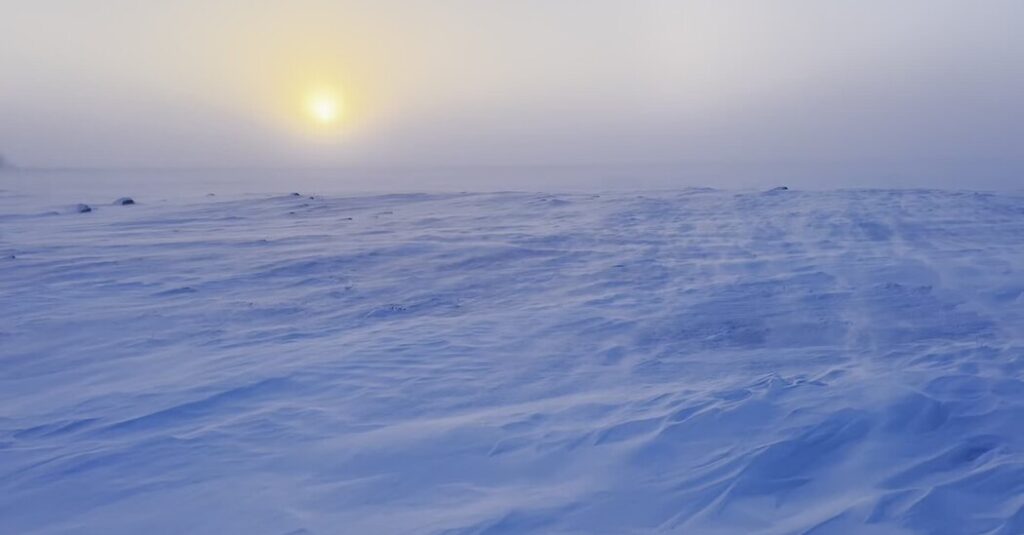
The door froze shut every winter, but the problem was perhaps made worse by the unusual cold. Three days before the V.I.P. visit, ambient temperatures hovered around minus 40 degrees Fahrenheit. As the sun hung low over the hamlet, diamond dust drifted above the hardpacked snow, which squeaked like Styrofoam beneath each footstep.
But nearly perfect weather — clear skies and a sudden rise in temperatures to around minus 10 Fahrenheit — was forecast for the V.I.P visit.
The howitzers had been towed north about 1,000 miles and then flown aboard a C‑130 Hercules aircraft to Cambridge Bay. On the big day, the plan called for the Chinook to airlift the howitzers to a firing range about six miles west of the hamlet.
The howitzers would “show that we can win in a fight anywhere,” Colonel Beatty said.
Deploying the howitzers for the first time in the Arctic was practice for Canada’s evolving defense of its Far North. Canada recently announced it would purchase the United States’ satellite-guide rocket launchers known as HIMARS, which could be transported by aircraft to far-flung Arctic positions, fired and flown out quickly before a return strike.
The Chinook’s grounding was also affecting the long-range snowmobile patrol.
At the Elders Palace, the small senior center where members of the patrol were working and sleeping, some of the patrol’s leaders kept track of its slow progress. They showed Colonel French, the leader of the Victoria Island deployment, the list of participants, which was written on a large whiteboard near photos of elderly Inuit and colorful “Happy Birthday” banners.
The colonel then drove to the airport, where the washed-out sun hung just over the hangar and the inert Chinook.
Inside the hangar, air force members voiced other frustrations.
“The big question we want to ask ourselves is: Can we operate up here?” the air force detachment commander said to Colonel French. “The answer might be no, but we’re at least going to try and find out.”
The Chinook cannot fly in temperatures lower than minus 40 degrees Fahrenheit. But the frozen door had added to the problems, reducing the likelihood that the helicopter would be serviceable on V.I.P. day.
The extreme cold had caused a break in a landing gear seal — and it was simply too cold for mechanics to try to repair it outside.
“Any questions or comments from the rest of you here?” Colonel French asked the pilots in the hangar’s heated half. “Everybody happy?”
“If we were flying, it’d be better,” one pilot said.
“I’d love to fly,” another said. “That’s what I want to do.”
“I get it,” Colonel French said.
The detachment commander said later that whenever he had flown with his American counterparts in Alaska, he had noticed many heated hangars — “tons,” he said.
Word spread the next day that the Chinook would not be part of the V.I.P. day’s events. Instead of being airlifted, the howitzers would be towed to the firing range.
“Something as simple as the lack of a staging area will affect the operational reach we have,” Colonel Beatty said at the firing range.
There, as artillerymen used picks and jackhammers to dig holes in the frozen ground to anchor the howitzers, the light from the low-hanging sun hit millions of specks of diamond dust drifting in the Arctic air. The light bent as it went through the ice crystals, creating an optical phenomenon called a sun dog — the sun, flanked by two smaller, illusory suns.
A sun dog, or a parhelion, usually portended a coming storm — though the weather forecast still called for clear skies during the V.I.P. visit..
On the morning of the big day, the artillery towed one howitzer to the firing range, leaving the second behind with mechanical problems. The temperature had shot up, to minus 11 degrees Fahrenheit — “nice and balmy,” an artilleryman said.
A plane landed with V.I.P. delegation members, who were taken to the firing range, some inside a yellow school bus.
But it had already started snowing, gently at first. Then, as the visitors gathered around the howitzer, objects a few hundred yards away vanished into the enveloping whiteness.
The bad weather shut down other airports in the region. As Cambridge Bay’s airport remained open for possible flight diversions, the howitzer firing was canceled abruptly to keep the airspace open.
The howitzers were sent home a couple of days later, unfired. With the Chinook grounded, the long-range snowmobile patrol was forced to significantly shorten its journey.
At the airport, a thin coat of snow lay across the Chinook outside the frozen door.
Norimitsu Onishi reports on life, society and culture in Canada. He is based in Montreal.
The post In Canada’s Frozen North, With Canada’s Frozen Soldiers appeared first on New York Times.