Maybe most Americans haven’t viewed President Trump’s threats to take over Greenland, Denmark’s overseas territory, as terribly serious. But for at least a few intense days in January, many Danes, Greenlanders and Europeans did.
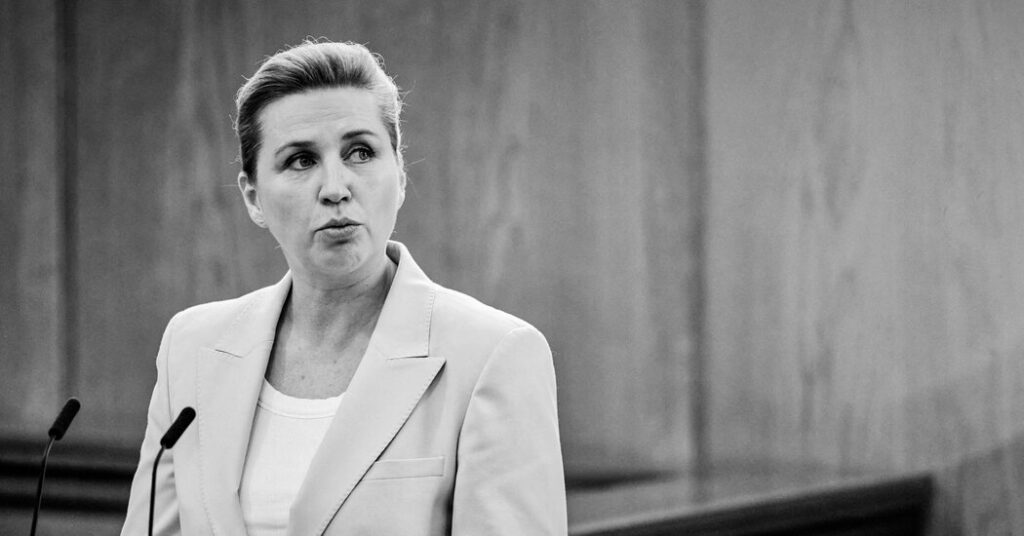
Prime Minister Mette Frederiksen of Denmark repeatedly, carefully pushed back. No, Greenland was not for sale. No, the U.S. could not annex part of another country. No, Europe would not be blackmailed. She seemed to emerge victorious: Mr. Trump beat a kind of retreat and moved on to other territorial pursuits. Ms. Frederiksen’s popularity, which had been declining, improved at home and surged in Europe — she was even second in a ranking by Politico of the most influential people in Europe, after Mr. Trump. Ms. Frederiksen called a snap election for March 24.
And the result? Many polls predict that her party, the Social Democrats, is headed for its weakest result in about a century — though, in the Danish multiparty system, Ms. Frederiksen should still manage to form a coalition and serve as prime minister for a third term. Since taking office in 2019, Ms. Frederiksen has transformed Denmark, greatly increasing military spending and establishing the country as a leader in the region. So why aren’t Danish voters ready to hand a sweeping victory to the woman who took on Mr. Trump?
Until very recently, Denmark was a close U.S. ally, a trans-Atlantic brother in arms, punching above our weight on military missions in Iraq and Afghanistan. Denmark is a member of the European Union, but a longstanding Euroskeptic. Faced with a choice between joining the eurozone and becoming a small American state — so the joke went — Danes would choose America every time.
We have been doing our best to ignore where we are, geographically speaking, since 1864, when Denmark was forced to cede large swaths of territory to Prussia. After World War II, we welcomed our American protectors with open arms. Denmark was one of the original 12 NATO signatories, and joined the E.E.C., the precursor of the European Union, with a lot of convoluted provisos, in the 1970s. Military spending ticked downward for decades, G.D.P. trended upward, and in recent years we were perhaps best known for hygge, Legos and Ozempic. The Pax Americana, in short, has been very, very good to us.
If war is how Americans learn geography, it has also reminded Danes of our place on the map. Russia’s full-scale invasion of Ukraine and Mr. Trump’s repeated claims about the necessity of controlling Greenland revealed just how vulnerable we had allowed ourselves to become. Denmark is a small, low-lying nation of sand, gravel and chalk — a northern outcrop of Germany and a natural lock at the mouth of the Baltic. To observe that it’s a straight run of a little over 200 miles from Bornholm, a small Danish island southeast of Copenhagen that is popular with tourists, to the Russian exclave of Kaliningrad, is sobering.
In just under seven years as prime minister, Ms. Frederiksen has overseen a rearmament that was as much about a political and cultural shift as it was about military procurement. The process accelerated after Russia’s invasion of Ukraine in 2022, and again when Mr. Trump’s second term began. Her government dramatically increased spending on defense in 2025, expanded conscription to include women and lengthened the period of service from four to 11 months.
Many of Ms. Frederiksen’s reforms had widespread popular support, but by late last year, her party was polling at one of its lowest levels in years with voters who were unhappy about the cost of living and an unpopular decision to abolish a public holiday to pay for further defense spending.
The bump after her standoff with Mr. Trump created an opportunity, which she seized. But neither Mr. Trump, Denmark’s complicated relationship with Greenland nor the increasingly perilous world in which we live has been what voters want to talk about. Instead, they have repeatedly returned to the future of agriculture, climate, education, gas prices and taxing the wealthy. And gossip: Earlier this month one prominent politician — a rising young star on the right — admitted to snorting cocaine, and that became the primary topic of conversation for days.
Ms. Frederiksen has often seemed like the leader of a party with a tired message about higher welfare in a coalition whose members bicker among themselves. Maybe that’s the crux of it: Denmark has undergone such a vibe shift that almost everybody accepts that we have to be ready to defend ourselves, and we’re free to wonder what else our politicians stand for.
Ms. Frederiksen will most likely have her third term, and an opportunity to complete what she has started. After that, many assume she will move on to a diplomatic job in Europe, or perhaps the top job at NATO. Whatever she does next, Denmark that has changed fundamentally, and is better prepared for a world that lurches from one crisis to the next.
Martin Krasnik is the editor in chief of Weekendavisen, a Danish newspaper. This essay was translated from the Danish by Caroline Waight.
The Times is committed to publishing a diversity of letters to the editor. We’d like to hear what you think about this or any of our articles. Here are some tips. And here’s our email: [email protected].
Follow the New York Times Opinion section on Facebook, Instagram, TikTok, Bluesky, WhatsApp and Threads.
The post She Transformed Denmark, but What Else Does She Stand For? appeared first on New York Times.