President Trump’s threat to strike power plants in Iran, which could plunge much of the country of 90 million people into darkness, has set off widespread fear and anxiety among Iranians at home and abroad.
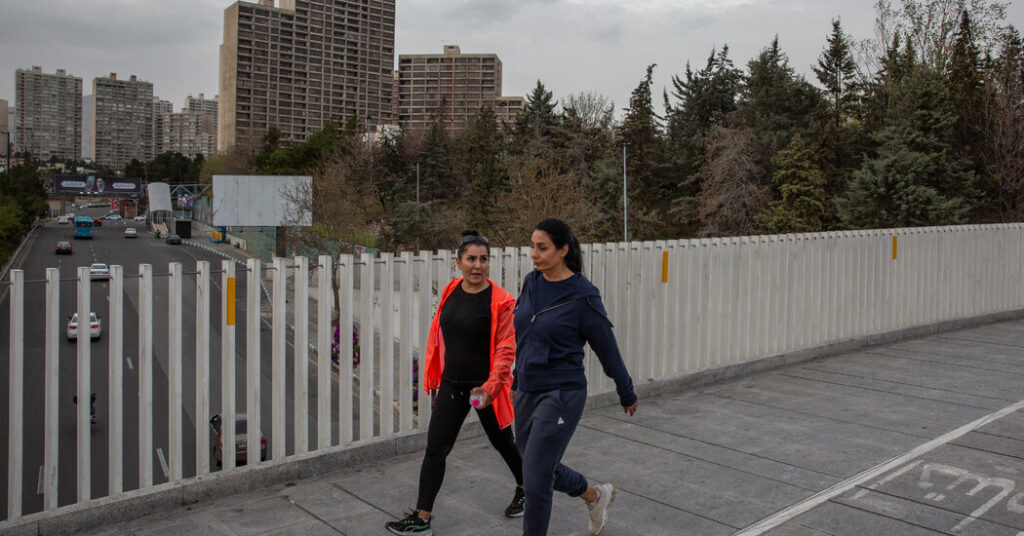
Threatened counterstrikes by Iranian officials on power and desalination plants in the region did not help ease jittery nerves. Many Iranians — on social media, in text messages and phone interviews — expressed growing dread about the war rapidly escalating.
Some also said they were confused about the messaging from the U.S. president.
At the onset of the U.S. and Israeli attacks on Iran last month, Mr. Trump told the Iranian people that “help” was on the way and encouraged them to rise up against the government. Now, some say, he seems to be threatening to set them back to the Stone Age.
“Cutting off electricity means cutting off the lifeline,” Golshan Fathi, an activist in Tehran, said in a social media post. “Gasoline, banks, water, health care, mobile phones, disruption to vital devices like ventilators and dialysis machines, home patients (with oxygen generators, medical devices), cold storage and everything.”
Every Iranian city, town and village is connected to the power grid, clean water and gas for cooking and heat. The country has a robust industrial sector that meets most of its citizens’ needs, from pharmaceuticals to steel, household items to food.
The United States will win no friends if erodes that, said Iranians reached on Sunday.
“An attack on power plants will backfire, and strengthen the antiwar camp and government,” Mohsen Borhani, a lawyer in Tehran, said in a text message. “It will bring more people to the side of defending the country.”
Writing on social media on Sunday, Mr. Trump gave the Iranian government 48 hours to allow shipping to resume through the Strait of Hormuz, or the United States would “obliterate” its power plants. He said the biggest one — which he did not name — would be hit first.
One of the largest, the Damavand power plant, provides more than a third of the electricity for the province of Tehran. An attack on Damavand is likely to create significant chaos in the capital, not just for the government, but also for the more than 10 million people who live there.
“As a doctor, I warn the organizers of the imposed war against Iran, that attacking the infrastructure of my country, including water and electricity, means the indirect killing of thousands of innocent people lying on Iranian hospital beds,” Hossein Kermanpour, the spokesman for Iran’s Ministry of Health, said in a social media post.
Ruhollah, a 35-year-old Tehran resident, said in a text message that his family was watching the news closely and hoping that Iranian officials’ threats of retaliation would prompt Arab countries to pressure Mr. Trump to back off.
“As far as I can tell, everyone is extremely worried, “ said Ruhollah, who asked that his last name not be published out of fear of retribution. “We are sitting and waiting to see what will happen to us in 48 hours. Everyone will suffer: We will lose power, the Arabs will lose power and water.”
Iranians outside the country expressed fury that a war presented in part as a fight on behalf of the Iranian people was not only killing civilians and infrastructure, but might also expand to disrupting refineries and electricity.
“Targeting power plants for dual use follows the same logic as killing mothers because they might bear future soldiers,” said Ahmad Kiarostami, an Iranian American entrepreneur in the San Francisco Bay Area and the son of renowned director Abbas Kiarostami. “It pains me to see my adopted country apply it to my motherland.”
In an online town hall discussion with more than a thousand participants on the Clubhouse application on Sunday evening, moderators offered instructions for how to prepare for a loss of power. The Iranian government has not provided its citizens with any guidance on surviving the war, and citizens say they are left to fend for themselves.
“Life is becoming scarier every day,” an artist in Tehran who goes by the name Afsoon said in a text message. “We are being threatened every day from all sides, from Israel and America and from the regime, and we have no idea what will happen to us.”
Parin Behroozcontributed reporting.
Farnaz Fassihi is the United Nations bureau chief for The Times, leading coverage of the organization. She also covers Iran and has written about conflict in the Middle East for 15 years.
The post As Trump’s Deadline Nears, Iranians Dread the Darkness appeared first on New York Times.