Trump’s ultimatum and shifting U.S. war aims
When Israel launched a major attack on an Iranian gas field last week and sent oil prices soaring, the U.S. seemed unhappy with its ally.
First, Trump insisted he “knew nothing about” it. Then he backtracked and said he’d warned Israel’s prime minister, Benjamin Netanyahu, against the move: “I told him don’t do that,” Trump said. The attack, and Trump’s attempt to distance himself from it, my colleagues wrote at the time, highlighted the ways in which the U.S. and Israel’s goals for the war sometimes diverge.
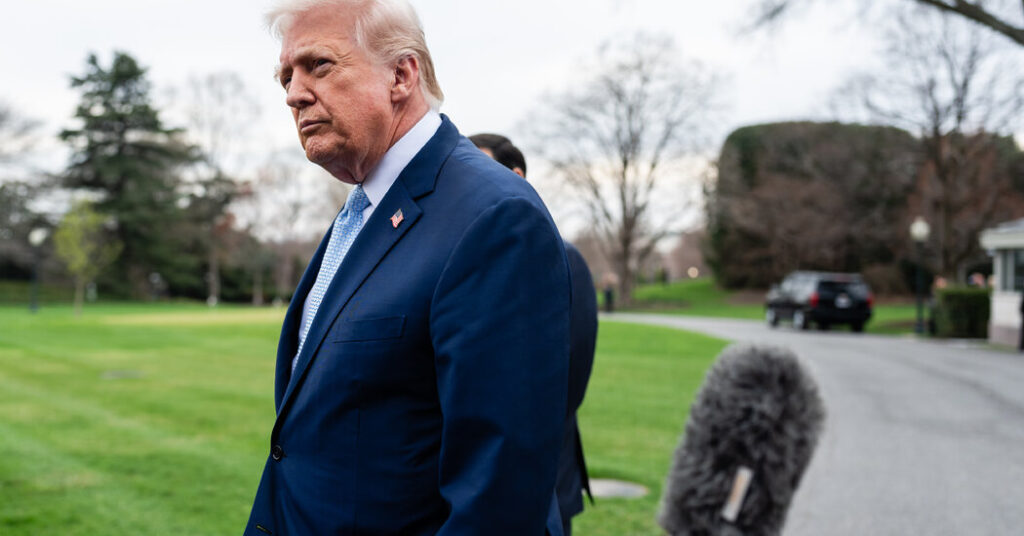
But by Saturday, Trump was threatening to bomb Iran’s power plants himself. In a social media post that evening, Trump threatened to “obliterate” the plants — on which millions of Iranians depend — if Iran did not fully open the Strait of Hormuz within 48 hours. Iran responded with defiance, saying it would retaliate with its own strikes on energy infrastructure.
We still don’t know if Trump will follow through; it was only a day earlier that he’d talked about potentially “winding down” operations in Iran.
But if the attack on the gas field, known as South Pars, pointed to the daylight between Israel and America, with his announcement this weekend Trump seemed to be threatening to do the very thing he’d warned Israel against.
America First meets Israel First
When the U.S. and Israel initially attacked, it seemed as if they were on the same page.
Both Trump and Netanyahu appeared to be pushing for regime change, encouraging Iranians to rise up against their own government. Both vowed to destroy what’s left of Iran’s nuclear program and the long-range missiles capable of hitting Israel.
But just a few days into the war, Trump effectively dropped the regime change language from his public statements. What he wants is still not clear, though most reporting to this point has indicated his ideal outcome is more like regime-change lite — the same style of government in Iran, led by a more compliant counterpart — that ends in a nuclear deal.
Netanyahu, by contrast, has remained unwavering: He sees the Islamic republic as a threat to Israel’s existence. He’s still hoping the war leads to regime change. But if it doesn’t, he wants it to leave Iran as battered as possible.
Their different priorities have — up until this weekend, at least — resulted in different strategies on the battlefield.
Analysts say the Israeli attacks on energy facilities, and the targeted killings thinning out the ranks of the Iranian government, seem to be aimed at weakening the regime so thoroughly that it leads to what some are calling “state collapse.”
It’s an approach that might make sense from Israel’s perspective — if the goal is to facilitate an uprising, or if the regime seems so dangerous that even collapse and chaos look like better options.
But targeted killings can work against the goal of regime-change lite, by hardening the resolve of those who are left. And the U.S. has balked at the strikes on energy facilities, which are part of a pattern of attacks and counterattacks on oil and gas infrastructure that have sent prices soaring.
An inevitable divergence, or not?
That brings me to this weekend.
Should Trump follow through on targeting Iran’s civilian energy infrastructure, it would be an attack that seems more of a piece with Israel’s approach to the war to date than the U.S.’s.
So how should we think about this?
Before Trump’s latest threat, my colleague Steven Erlanger, our chief diplomatic correspondent in Europe, wrote that some divergence between the U.S. and Israel was inevitable.
Israel has higher stakes and more narrow concerns. Its position is that an Iran run by the current theocracy, which has vowed to destroy the state of Israel, is intolerable, and that almost any change would be preferable.
Trump’s concerns are more global. He sees Iran as a bad actor, but the war is hurting strategic allies in the Gulf and helping adversaries like Russia. And it’s unpopular at home: The price of gas is rising, and this is an election year.
Over the last three weeks, Iran has exploited its leverage over the Strait of Hormuz so effectively that it now looks like a fundamental threat not just to Israel, but to the global economy — not to mention Trump’s midterm elections prospects.
We should be cautious about reading too much into the words of a president who has offered notably muddled messages around the war. Still, Trump’s latest threat might be a sign that if Iran can’t be persuaded to open the strait, he could begin to view the war from something more akin to an Israeli perspective: That there is no negotiating with Iran’s current regime, only battering it until it changes.
“Netanyahu has been talking about how the regime in Tehran needs to go throughout the war, and increasingly in English,” David Halbfinger, our Jerusalem bureau chief, told me yesterday. “You get the feeling that his message is getting through — at least to the proverbial audience of one.”
More news about the war:
-
Israel’s defense minister ordered the military to step up its destruction of bridges and houses in southern Lebanon.
-
About 175 people were injured in Iranian strikes on two cities close to Israel’s main nuclear research site.
-
The U.S.-Israeli war on Iran is a perfect storm for India’s economy.
-
Many countries want nothing to do with the war. See how they are getting pulled in anyway in the graphic below.
MORE TOP NEWS
What France’s mayoral races tell us about the far right
France’s municipal elections are being scrutinized for what they may foreshadow about the country’s presidential elections next year.
The far right performed strongly in a first round of voting last week. But early results from runoffs held yesterday showed that the far-right candidates lost in two major southern cities, Toulon and Nîmes, and another was on track to lose in Marseille, France’s second-largest city. Still, the outcome left the far-right National Rally as a force to be reckoned with 13 months before the presidential election.
One of the most influential players in the elections who was not on the ballot was the billionaire Pierre-Édouard Stérin. He has steered money toward projects aimed at accelerating France’s rightward shift.
OTHER NEWS
-
At least 64 people were killed in an attack on a teaching hospital in the Darfur region in western Sudan, according to the W.H.O.
-
Italians are holding a second day of voting today in a referendum on changes to the judiciary. The result could weaken Prime Minister Giorgia Meloni.
-
News outlets are pressuring the Pentagon to restore press access after a federal judge ruled that key parts of its media policy were unconstitutional.
-
Robert Mueller, who led the F.B.I. for 12 years and directed the investigation into Russia’s efforts to meddle in the 2016 election, died at 81.
Top of The World
The most clicked link in your newsletter on Friday was about Trump’s Pearl Harbor joke during his meeting with Japan’s prime minister.
SPORTS
Football: Manchester City beat Arsenal to win the Carabao Cup. Here are the highlights.
Basketball: LeBron James set a new N.B.A. record for most regular season games played after winning his 1,612th career game.
Cycling: Tadej Pogacar won an epic duel with Tom Pidcock to finally land an elusive Milan-Sanremo victory.
APPLE OF THE DAY
The Sunflare
— A new variety of apple created by American agronomists in Washington State. The Sunflare is bred to survive the wild weather of the climate change era and retain its crispness during months in storage, at a time when China produces 60 percent of the world’s apple supply.
MORNING READ
The celebration was especially poignant when Nazar Daletskyi, a Ukrainian soldier, was freed in a prisoner exchange after nearly four years in Russian captivity. A DNA mistake had led his relatives to bury remains that they thought were his.
After his release, he returned to his home village. When his mother saw him, she burst into tears and rushed to him. Others asked if he still remembered them. “Come on, I was away for only four years,” he said, and the crowd laughed. Read more about the soldier who saw his own grave.
AROUND THE WORLD
BTS is back. And Seoul is into it.
The excitement over the return of BTS — the seven-member boy band that made K-pop a global phenomenon, and then spent nearly four years on hiatus — was palpable in Seoul in the days leading up to its reunion concert on Saturday.
Restaurants were decked out in purple, the color of the group’s Army, as its enormous fan base is known. BTS songs were even more ubiquitous than usual: They were playing at my gym, hair salon and favorite neighborhood cafe.
On the day of the concert, it felt as if the entire city was holding its breath. The free outdoor show was taking place in Gwanghwamun Square, in the heart of Seoul. By morning, crowd control and security patrols were already out directing early arrivals. Streets and train stations nearby were closed. The government and even BTS members themselves emphasized repeatedly that safety should be the first priority. South Korea has recent memories of just how dangerous large crowds can be. No one was taking chances.
In the end, it all went smoothly. During the concert, the audience of 22,000 was calm and respectful. It was a tribute, perhaps, to BTS’s standing in the world of K-pop and the sense that the reunion was a momentous occasion. There were no slip-ups, no technical issues. The biggest question looming over the fans — whether the group’s star power was still indisputable — had been decidedly answered, and Seoul itself seemed to breathe a collective sigh of relief. Read more on BTS’s comeback. — Jin Yu Young, a reporter in Seoul.
RECOMMENDATIONS
Watch: The documentary “Spacewoman” traces Eileen Collins’s journey to become the first female space shuttle pilot and commander.
Train: Did winter wreck your running routine? Here’s how to ease back in.
RECIPE
These rice bowls apply the flavor of classic gyros to tender, buttery salmon. The fish is paired with a roasted-onion-and-tomato mixture, a simple cucumber salad and a feta-flavored yogurt.
WHERE IS THIS?
Where is this street?
TIME TO PLAY
Here are today’s Spelling Bee, Mini Crossword, Wordle and Sudoku. Find all our games here.
You’re done for today. See you tomorrow! — Katrin
We welcome your feedback. Send us your suggestions at [email protected].
Katrin Bennhold is the host of The World, the flagship global newsletter of The New York Times.
The post Trump’s Ultimatum to Iran appeared first on New York Times.