As the United States and Israel prepared to go to war with Iran, the head of Mossad, Israel’s foreign intelligence service, went to Prime Minister Benjamin Netanyahu with a plan.
Within days of the war’s beginning, said David Barnea, the Mossad chief, his service would likely be able to galvanize the Iranian opposition — igniting riots and other acts of rebellion that could even lead to the collapse of Iran’s government. Mr. Barnea also presented the proposal to senior Trump administration officials during a visit to Washington in mid-January.
Mr. Netanyahu adopted the plan. Despite doubts about its viability among senior American officials and some officials in other Israeli intelligence agencies, both he and President Trump seemed to embrace an optimistic outlook. Killing Iran’s leaders at the outset of the conflict, followed by a series of intelligence operations intended to encourage regime change, they thought, could lead to a mass uprising that might bring about a swift end to the war.
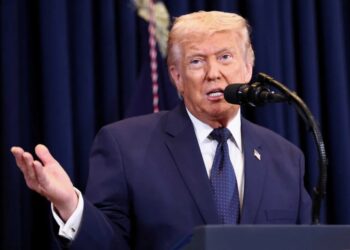
“Take over your government: It will be yours to take,” Mr. Trump told Iranians in his initial address at the war’s start, after saying they should first seek shelter from the bombing.
Three weeks into the war, an Iranian uprising has not yet materialized. American and Israeli intelligence assessments have concluded that the theocratic Iranian government is weakened but intact, and that widespread fear of Iran’s military and police forces has dampened prospects both for nascent rebellion in the country and for ethnic militias outside of Iran to launch cross-border incursions.
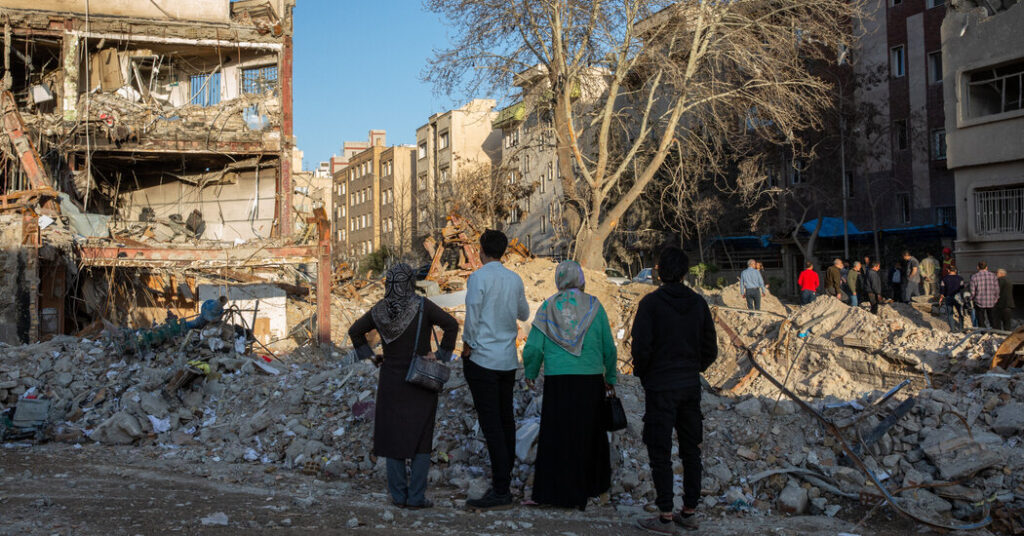
The belief that Israel and the United States could help instigate widespread revolt was a foundational flaw in the preparations for a war that has spread across the Middle East. Instead of imploding from within, Iran’s government has dug in and escalated the conflict, striking blows and counterblows against military bases, cities, ships in the Persian Gulf, and against vulnerable oil and gas installations.
This account is based on interviews with more than a dozen current and former American, Israeli and other foreign officials, most of whom spoke on the condition of anonymity to discuss national security and intelligence issues during a war. The New York Times interviewed officials with a variety of views on the likelihood of an uprising.
Since Mr. Trump’s first speech, American officials have largely abandoned speaking publicly about the prospects for revolt inside of Iran, yet some remain hopeful that one could materialize. Though his rhetoric has become more tempered, Mr. Netanyahu still says the American and Israeli air campaign will be aided by forces on the ground.
“You can’t do revolutions from the air,” he said during a news conference on Thursday. He added: “There has to be a ground component as well. There are many possibilities for this ground component, and I take the liberty of not sharing with you all those possibilities.”
Mr. Netanyahu also added that “it is too early to tell if the Iranian people will exploit the conditions we are creating for them to take to the streets. I hope that will be the case. We are working toward that end, but ultimately, it will depend only on them.”
Behind the scenes, however, Mr. Netanyahu has expressed frustration that Mossad’s promises to foment revolt in Iran have not materialized. In one security meeting days after the war began, the prime minister vented that Mr. Trump might decide to end the war any day and that Mossad’s operations had yet to bear fruit.
In the run-up to the war, current and former American and Israeli officials said, Mr. Netanyahu invoked Mossad’s optimism about a possibility of an Iranian uprising to help convince Mr. Trump that bringing about the collapse of the Iranian government was a realistic goal.
Many senior American officials, as well as intelligence analysts at the Israel Defense Forces military intelligence agency, AMAN, viewed the Israeli plan for a mass uprising during the conflict with skepticism. U.S. military leaders told Mr. Trump that Iranians would not come out to protest while the U.S. and Israel were dropping bombs. Intelligence officials had assessed that the possibility of a mass uprising threatening the theocratic government were low, and doubted that the U.S.-Israeli attack would ignite any kind of civil war.
The White House did not respond to a request for comment. But a senior administration official noted that in Mr. Trump’s initial remarks after the beginning of the war he told Iranians to remain in their homes and urged them to take to the streets only after the air campaign was over.
“When we are finished, take over your government,” Mr. Trump said at the time.
Nate Swanson, a former State Department and White House official who was on the Trump administration’s Iran negotiating team led by Steve Witkoff until July, said he had never seen a “serious plan” to promote an uprising in Iran within the U.S. government in his many years working on Iran policy.
“A lot of protesters are not coming into the street because they’ll get shot,” said Mr. Swanson, now at the Atlantic Council. “They’re going to get slaughtered. That’s one thing. But the second thing is that there’s a good chunk of people who just want a better life, and they’re just sidelined right now. They don’t like the regime, but they don’t want to die opposing it. That 60 percent is going to stay home.”
He added, “You still have fervent anti-regime folks, but they’re not armed, and they’re not bringing the majority of the population into the streets.”
Mr. Trump appeared to have arrived at the same conclusion two weeks into the war. On March 12, he noted that Iran has security forces in the streets “machine-gunning people down if they want to protest.”
“So I really think that’s a big hurdle to climb for people that don’t have weapons,” he said on Fox News Radio. “I think that’s a very big hurdle. So it’ll happen, but it probably will be maybe not immediately.”
The Kurdish Option
While many of the specifics of Mossad’s plans remain secret, one element included supporting an invasion by Iranian Kurdish militia groups based in northern Iraq.
Mossad has longstanding ties with Kurdish groups, and American officials have said that both the C.I.A. and Mossad have given arms and other support to Kurdish forces in recent years. The C.I.A. had existing authorities to support Iranian Kurdish fighters, and had provided arms and advice well before the current war.
During the first days of the war, Israeli jets and bombers pounded Iranian military and police targets in northwest Iran in part to help pave the way for the Kurdish forces.
During a telephone briefing on March 4, an Israeli military spokesman was asked whether Israel was carrying out intense bombings in western Iran to help a Kurdish invasion. The spokesman, Lt. Col. Nadav Shoshani, said, “We’ve been operating very heavily in western Iran to degrade the Iranian regime’s capabilities and to open up the way to Tehran, and to create freedom of operations. That’s been our focus there.”
But American officials are no longer enthusiastic about their idea from well before the war of using the Kurds as a proxy force, a shift that has created tension with their Israeli counterparts.
A week into the war, on March 7, Mr. Trump said he had explicitly told Kurdish leaders not to send militias into the country. “I don’t want the Kurds going in,” he told reporters. “I don’t want to see the Kurds get hurt, get killed.”
Soon after reports emerged that Kurdish militias might join the campaign, Bafel Talabani, the president of the Patriotic Union of Kurdistan, one of the main Iraqi Kurdish political parties, said in an interview on Fox News that no such plans were in the works. A Kurdish advance, he added, might have the opposite of its intended effect.
“You could argue that that’s actually a detriment,” he said, adding that Iranians are very nationalistic. “I believe if they fear that Kurds coming in from elsewhere will cause a split or a splintering of their country, this may actually unify the people against this separatist movement.”
Turkey has warned the Trump administration not to support any Kurdish action. The message was delivered by the Turkish foreign minister, Hakan Fidan, to Secretary of State Marco Rubio in a recent conversation, a Turkish diplomat said. Turkey, a NATO ally, has long been opposed to any operations by armed Kurds since it is grappling with Kurdish separatists inside its own borders.
The Uprising That Has Yet to Come
American officials briefed on intelligence assessments before the war said the C.I.A. evaluated a variety of possible developments inside Iran once the conflict began. Intelligence agencies considered a full collapse of the Iranian government to be a relatively unlikely outcome.
Other U.S. officials familiar with the intelligence said that even when the government is under pressure, as it was during mass protests in the country in January, it managed to quell uprisings relatively quickly.
The American intelligence assessments have suggested that armed elements of the Iranian government could turn on one another, or take action that might spark a civil war. But those factions are more likely to back rival groups of religious leaders, rather than represent any sort of democratic movement, the reports concluded.
The most likely outcome, however, was that hard-line elements of the existing government would maintain control over the levers of power, the reports said.
A spokeswoman for the C.I.A. declined to comment. The Mossad and the I.D.F. declined to comment
Israeli intelligence agencies have long examined the possibility of instigating revolt inside Iran as its own operation or shortly after the beginning of a military campaign, but until very recently dismissed the prospects.
As Israel’s main service responsible for foreign operations, Mossad was in charge of the planning.
Shahar Koifman, a former head of the Iran desk at the I.D.F.’s Military Intelligence Research Division, said Israel had explored various ideas to try to undermine or topple the Iranian government, but that in his opinion they were doomed to fail from the start. He said he did not believe that bringing down the Iranian government was an achievable goal of the current conflict.
Mr. Barnea’s predecessor at Mossad, Yossi Cohen, decided that trying to foment rebellion inside Iran was a waste of time and ordered that the resources devoted to the matter be reduced to a minimum. During Mr. Cohen’s tenure, which ended in 2021, Mossad calculated how many of the country’s citizens would need to participate in protests for them to truly threaten the Iranian government, comparing the estimates to the size of actual protests since the 1979 Iranian revolution.
“We wondered if we could bridge this gap,” Mr. Cohen said in 2018, “and we came to the conclusion that we couldn’t.”
Instead, Mossad’s strategy during that period was to try to weaken the government until it essentially surrendered to Israeli and American demands — using a combination of crippling economic sanctions and operations to assassinate Iranian nuclear scientists and military leaders and sabotage nuclear facilities.
Over the past year, as the prospect of Israeli military action against Iran became more likely, Mr. Barnea reversed Mossad’s approach, devoting the agency’s resources to plans that could lead to toppling the government in Tehran in the event of a war.
In recent months, according to officials, Mr. Barnea came to believe that Mossad could potentially begin igniting riots around Iran after several days of intense Israeli and American airstrikes and the assassination of senior Iranian leaders.
After the strikes and assassinations of the war’s earliest days, the uprising did not come. But Israeli officials say they have yet to give up hope.
“I think that we need boots on the ground, but they’ve got to be Iranian boots,” Yechiel Leiter, Israel’s ambassador to the United States, said on CNN on Sunday, when asked how the war will end. “And I think they’re coming.”
Mark Mazzetti is an investigative reporter based in Washington, D.C., focusing on national security, intelligence, and foreign affairs. He has written a book about the C.I.A.
The post Israel Thought It Could Spur Rebellion Inside Iran. That Hasn’t Happened. appeared first on New York Times.