The International Atomic Energy Agency said it is looking into reports from Iran that a nuclear site was attacked on Saturday, as its director Rafael Mariano Grossi called for “military restraint to avoid any risk of a nuclear accident.”
The warning comes as human rights organizations say they fear Iran will carry out mass executions of its citizens who took part in wide-scale anti-government demonstrations earlier this year, following public hangings this week of three men, including a 19-year-old wrestler. Human rights groups said more than two dozen people faced the death penalty in relation to the protests — and that potentially hundreds are facing charges.
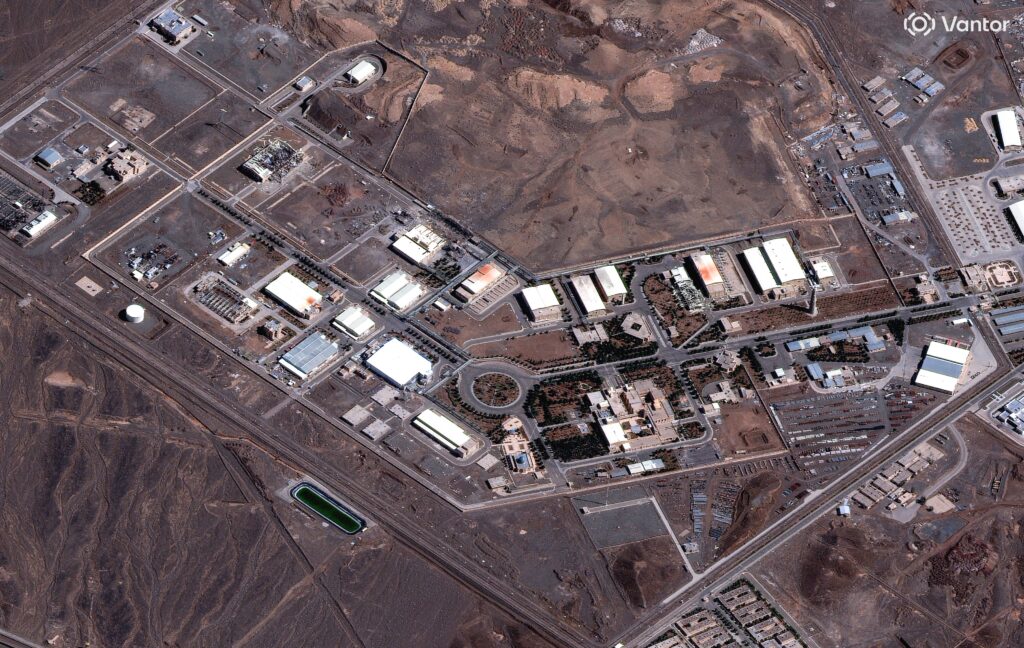
The IAEA said Saturday that Iran reported an attack on the Natanz nuclear site south of Tehran, which is one of Iran’s main enrichment facilities. There was no increase in off-site radiation levels so far at Natanz, it said.
The Israel Defense Forces said in a message Saturday that it was “not aware of an IDF strike on the location.” The Pentagon did not immediately respond to a request for comment. Claims of a strike could not be independently verified by The Washington Post.
Satellite images appear to show Natanz was targeted earlier this month, after strikes carried out in June 2025 by the U.S. and Israel. President Donald Trump’s administration said after last summer’s attacks that Iran’s nuclear capabilities had been “obliterated” and that suggestions otherwise were “fake news.” U.S. intelligence reports assessed the strikes set Tehran’s nuclear program back by months but did not eliminate it.
Strikes across the region continued on Saturday. The IDF announced it struck dozens of targets in Tehran, including missile production sites.
Adm. Brad Cooper, the head of Central Command, said that Iran has “lost the ability to launch missiles and drones at the high rates seen at the beginning of the conflict.” In a Saturday video statement, he said the U.S. is “on plan to eliminate Iran’s ability to project meaningful power outside its borders.”
In Iran, on the eve of Nowruz, the Persian new year, state media announced Friday the hanging of three men who were accused of participating in the killing of two police officers. The men, named as Saeed Davodi, Mehdi Ghasemi and Saleh Mohammadi, a 19-year-old who represented Iran internationally in wrestling competitions, were arrested during anti-government demonstrations earlier this year, according to human rights groups.
The New York-based Center for Human Rights in Iran saidFriday’s executions followed “grossly unfair trials without any semblance of due process, with forced ‘confessions’ obtained under torture.”
Iran responded to the mass protests, which largely took place in January, with overwhelming violence, killing more than 7,000 people, more than 6,500 of them protesters, according to the Human Rights Activists News Agency, a U.S.-based advocacy organization for rights in Iran. The number of casualties is expected to climb, with many more thousands of cases under investigation.
U.S. and Israeli leaders have publicly called for Iranians to rise up against their government. Privately, senior Israeli officials told U.S. diplomats that Iranian protesters will “get slaughtered” if they take to the streets against their government, Washington Post reporting about a State Department cable showed. That is because Iran’s principal military force, the Islamic Revolutionary Guard Corps, “has the upper hand,” the cable said.
Bahar Ghandehari, director of advocacy at the Center for Human Rights in Iran, on Saturday called the executions “a calculated effort during wartime” to use three young people who were arrested only two months ago “to instill fear and deter further protests.”
She said Iran uses executions as a “tool of terror” to send a message to the entire population. “This is an existential moment for the regime, and Iranian authorities when they’re in crisis mode, they escalate domestic oppression,” she said, warning that dozens of others who were arrested during the protests could be executed under similar terms. Last year, Iran executed an estimated 1,500 people — double the amount of the year prior, according to the nonprofit Iran Human Rights.
Mahmood Amiry-Moghaddam, the director of Iran Human Rights, saidin a statement there is a “very real and imminent risk of mass executions of protesters,” and urged the international community to “act with urgency.”
“We consider these executions to constitute extrajudicial killings, carried out with the intent of creating terror to suppress political dissent,” he said. “The Islamic Republic is fighting for its survival and knows that the greatest threat to its existence comes from the Iranian people who demand fundamental change.”
Reza Pahlavi, Iran’s exiled crown prince, who has called for Iranians to protest, described the executions on Xas “the latest desperate killing spree” from the regime. He named those killed, saying “their names will be spoken alongside all those who refused to kneel before tyranny.”
“Their dream will not die. Iran will be free,” he wrote.
The post IAEA looking into Iran’s report that Natanz nuclear site hit in strikes appeared first on Washington Post.