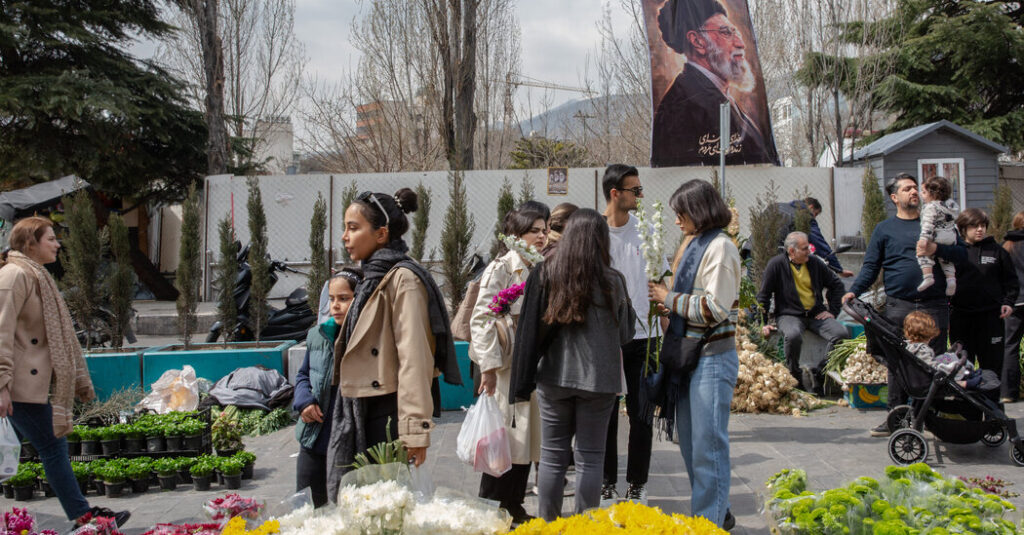
Nowruz, the Persian New Year, is a time of renewal and family celebration. But for many Iranians, that joy will be out of reach this year. The war in Iran has curtailed travel, and an internet blackout has compounded the separation, preventing families from connecting.
Three weeks have passed since Iran’s internet blackout came into effect, according to the watchdog organization NetBlocks. The group said in a social media post on Saturday that only a few circumvention tools were still functioning, as authorities intensify the crackdown on satellite use and virtual private networks designed to bypass restrictions.
For the country’s more than 90 million people, this digital blackout means being unable to see messages from loved ones, share greetings or stay informed about unfolding events.
“The lack of accurate information and the absence of collective and immediate public communication have caused us to feel trapped in suffocation and silence,” said Saeed Souzangar, a tech entrepreneur and digital rights activist from the capital, Tehran, who responded to text messages from a New York Times reporter.
Iran has a history of shutting down the internet. In January, the government imposed a nationwide blackout as it sought to suppress massive anti-government protests. Now, the current blackout has left Iranians isolated, blocking access to essential information and restricting communication, as authorities seek to assert control amid the ongoing conflict.
Iran’s foreign minister, Abbas Araghchi, defended the blackout in an interview with CBS News this month, saying that the internet had been shut down because of “security reasons” and that it was part of “urgent measures” taken “for the sake of war.”
Alp Toker, director of NetBlocks, said this was the first time an internet shutdown had coincided with Nowruz celebrations in Iran.
“The internet blackout has already broken Iran’s own record set weeks ago in January and is on track to become the most severe digital blackout globally,” Mr. Toker told The Times.
The blackout’s impact has only intensified public anger, both inside Iran and among the diaspora. Many are especially frustrated by officials who appear to retain internet access and try to share their own messages online, said Amir Rashidi, a cybersecurity expert with Miaan, a digital-rights group based in the United States.
“Internet shutdowns during Nowruz cut people off from their most basic need: connection,” Mr. Rashidi said in an interview. “At a time when families should be sharing joy across distances, they are instead left isolated and uncertain.”
Abdi Latif Dahir is a Middle East correspondent for The Times, covering Lebanon and Syria. He is based in Beirut.
The post Internet Blackout Keeps Iranians From Reaching Loved Ones During New Year Holiday appeared first on New York Times.