Samuel Johnson, the 18th-century man of letters, may have suffered from it, counting steps as he walked through the streets of London, compulsively touching every post he passed. Howard Hughes, the germ-averse aviation tycoon, is believed to have had it, too.
Yet for years, few Americans had ever heard of obsessive-compulsive disorder, in which patients find their lives upended by intrusive thoughts and repetitive behaviors — washing and counting, looking and hoarding — that they feel compelled to repeat over and over, again and again.
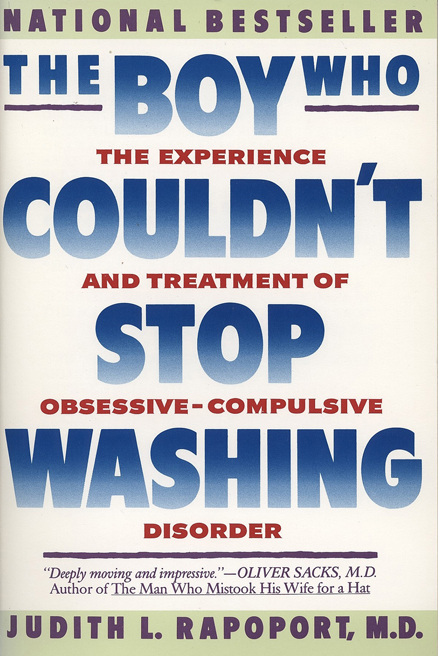
For many sufferers, the condition was both agonizing and isolating, something to be hidden from friends and family. The fact that it could be treated through behavioral therapy and medication, or that it even had a name at all, was little known to the public until 1989, when Judith L. Rapoport, the head of child psychiatry at the National Institute of Mental Health, published “The Boy Who Couldn’t Stop Washing,” a best-selling book that helped bring wide attention to OCD.
Dr. Rapoport, who died March 7 at the age of 92, “essentially brought that disorder to light in the United States and around the world,” said John Walkup, the president of the American Academy of Child & Adolescent Psychiatry.
Writing without technical jargon — and with no shortage of empathy — Dr. Rapoport recounted the stories of children and adults she described as “tortured souls.” When they sought her out for treatment, their refrain was almost always the same: “I thought I was the only one in the world with these crazy symptoms, and I didn’t want anybody to know about them.”
Modeled after “The Man Who Mistook His Wife For a Hat,” neurologist Oliver Sacks’s 1985 book of clinical tales, “The Boy Who Couldn’t Stop Washing” presented the case studies of patients including the pseudonymous “David,” a boy who spent three hours showering each day, plus another two hours getting dressed.
Dr. Rapoport recounted the experience of other patients who were “checkers,” checking on lights, doors or locks for “ten, twenty, or one hundred times,” as well as those whose lives were ruled by symmetry: “Shoelaces must be exactly even, eyebrows identical to a hair.”
“By writing the book, she kind of reduced the stigma for these kids,” said Gabrielle L. Shapiro, a professor of clinical psychiatry at the Icahn School of Medicine at Mount Sinai in New York.
Translated into some two-dozen languages, “The Boy Who Couldn’t Stop Washing” was praised by psychiatrists including Leon Eisenberg, who hailed its “first-rate meticulous clinical observation,” as well as physician-writers like Sacks, who called it “deeply moving and impressive.” (The two authors became friends, bonding over the fact that they were born three days apart.)
After the news program “20/20” ran a segment on the book, 250,000 parents called in, worried that their children might have OCD, the New York Times later reported. Some of their concerns were unfounded, but a good number were right, said Dr. Rapoport, who found in her research that the condition was far more prevalent than previously believed. She estimated that more than 4 million people in the United States had OCD, though most kept it hidden.
The NIMH, where she worked for more than four decades, cites data on its website suggesting that about 1.2 percent of U.S. adults have the disorder.
Dr. Rapoport had once trained as a psychoanalyst, studying Freudian theories of the mind. But she came to embrace a more quantifiable approach to psychiatry, and concluded that OCD — a condition that gained increasing attention in psychiatric circles in the 19th century — was a kind of mental tic or hiccup, an error in the circuitry of the brain.
“Everyday life becomes tyrannized by doubts,” she wrote, “leading to senseless repetition and ritual.”
After writing her first paper on OCD as an undergraduate, Dr. Rapoport began treating and studying the illness in the early 1970s. Within three decades, she had treated nearly 1,000 children and adolescents with the disorder while also pioneering new treatments for the condition. She helped direct a clinical trial in the 1980s that showed how an antidepressant, clomipramine, could effectively treat OCD in children, leading to its approval by the U.S. Food and Drug Administration.
But her research extended far beyond obsessive-compulsive disorder, encompassing pivotal studies of ADHD and childhood-onset schizophrenia.
“Judy Rapoport was like an icon for us,” said Shapiro, a member of the American Psychiatric Association’s board of trustees. “She was a pioneer. She helped turn child psychiatry into a modern medical discipline that was grounded in neuroscience and evidence-based treatments.”
At the NIMH, part of the National Institutes of Health in Bethesda, Dr. Rapoport and her colleagues used MRIs to study children’s brain development. They recruited hundreds of young patients to come in for scans every two years, starting as young as age 5. Many of her studies were aided by her two sons, who “volunteered” — with prodding from Dr. Rapoport — to serve as control subjects.
“I use her as a role model all the time for researchers,” said Walkup. “At the NIH, she had a million protégés. The span of her work, and the years of her work, were really simply overwhelming.”
Dr. Rapoport’s work was all the more remarkable given that she launched her career in the 1950s, at a time when few women were training as physicians, and fewer still were in senior research positions. She was one of only five women in her class at Harvard Medical School, where she occasionally heard dismissive comments from instructors who, according to her husband, Stanley Rapoport, blamed her for “taking the space of a male physician.”
The younger daughter of a public school teacher and a businessman, Judith Helen Livant was born in Manhattan on July 12, 1933. She grew up on the Upper West Side, in a worldly family that encouraged her interests in science and art. Her maternal grandfather, the writer Joel Enteen, was a Russian émigré known for translating theater classics into Yiddish. One of her cousins, physicist Isidor Rabi, won the Nobel Prize the year she turned 11.
After studying at the private Walden School in New York, Dr. Rapoport majored in psychology at Swarthmore College, receiving a bachelor’s degree in 1955.
At Harvard, she met her future husband, a fellow medical student in her class. She graduated in 1959 and embarked on psychiatric training that took her to New York, Washington and eventually to Sweden, where she completed a fellowship at the Karolinska Institute and led a study on American women who were traveling to the country to seek abortions, at a time when it was difficult even to talk about abortion in the U.S.
Dr. Rapoport returned to Washington with her husband, whom she married in 1961, and served on the faculty at Georgetown University before joining NIMH in 1976. Within a few years, she was meeting the first lady, Rosalynn Carter, to discuss a White House initiative on behalf of children’s mental health.
From 1984 until her retirement in 2017, Dr. Rapoport led the NIMH’s child psychiatry branch. She saw additional patients at night at her home in Washington, and turned to gardening and hiking to relax, spending her weekends crisscrossing Shenandoah in Virginia.
In recent years, she lived at a retirement community in D.C., where she died of lung cancer, according to her husband. He survives her, along with their two sons, Erik and Stuart Rapoport; and four grandsons.
While promoting her OCD research, Dr. Rapoport made the rounds on national talk shows, chatting with Oprah Winfrey and Phil Donahue. Larry King proved especially perceptive, she said, and an appearance on Diane Rehm’s radio show led her research in an improbable new direction, as multiple listeners got in touch to talk about how their dogs licked their paws obsessively, continuing even as their hair fell out and their skin turned raw.
“Could it be OCD?” they asked.
The answer was yes, more or less. Dr. Rapoport began making house calls on patients she described as “Washington’s top dogs” and found that the pets responded well to the use of antidepressants, similar to the children enrolled in her drug-trial programs. The results led to new papers and new avenues of research.
“I was impressed how stimulating television appearances were for our research at NIH,” she said in a 1998 interview conducted for “The Psychopharmacologists,” an oral history series. “You don’t usually think about television talk shows as a source for your next study, but at least three of our studies were inspired by questions from the enormous audiences these shows brought us.
“And my wardrobe also changed for the better.”
The post Judith Rapoport dies at 92. Her best-selling book introduced readers to OCD. appeared first on Washington Post.