THE FEATHER WARS: And the Great Crusade to Save America’s Birds, by James H. McCommons
In the late 19th and early 20th centuries, a peculiar craze swept through America. Men — and they were almost always men — tramped through fields and climbed into aeries, raiding nests, pocketing eggs, blowing out embryos and arranging the shells in carefully labeled cabinets.
Some claimed scientific motives; many were driven by something harder to explain. Known as oologists, these collectors became so numerous that they helped push several species toward extinction. The obsession wasn’t uniquely American, but the hobby flourished with particular zeal in the United States.
The egg craze is one of the many afflictions chronicled in James H. McCommons’s “The Feather Wars,” an exhaustive — and sometimes exhausting — history of the early conservation movement. A professor emeritus of journalism at Northern Michigan University who has spent decades amid the forests and shorelines of the Upper Peninsula, McCommons recounts how a loose coalition of naturalists, sportsmen, artists and politicians mobilized to halt what he portrays as an avian massacre.
As McCommons tells it, many of America’s early ornithologists were social misfits who, ironically enough, found a common cause in bird killing. William Brewster, the quiet, awkward son of a Boston banker, shot 40,000 birds and preserved their skins with arsenic before growing bored with what was then known as “shotgun ornithology.”
His frequent partner in the field was Henry Wetherbee Henshaw, a future founder of the National Geographic Society, who seemed to derive a thrill from the close-range violence. “The wounded or ‘cripples’ were dispatched by squeezing the chest until respiration ceased,” Henshaw wrote, “or piercing the heart or the brain with a knife inserted through the mouth.”
Armed with formidable weapons such as punt guns — 200-pound behemoths with 10-foot barrels — trophy hunters (known as “sports”) and commercial hunters (“market shooters”) mowed down millions of canvasback ducks, plovers, terns and other water birds.
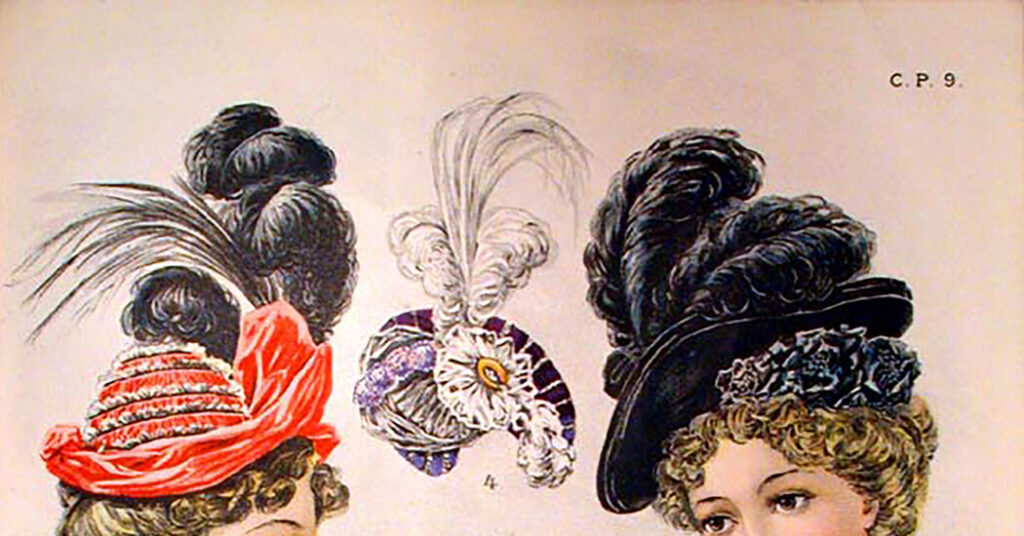
Some individuals collected vibrantly colored songbirds to accommodate a Victorian fashion trend for increasingly elaborate feathered hats, which occasionally featured whole birds incorporated into the millinery.
The mania for collecting could be as hazardous for the perpetrators as for their targets. In 1872, Maj. Charles Bendire was climbing a tree in Arizona to reach the nest of a zone-tailed hawk when a band of Apaches, alerted by the bird’s screeches, attacked him. Bendire stuffed an egg in his mouth and beat a retreat to a nearby military camp, where a soldier had to yank out a tooth to remove the orb.
By the turn of the century, the once ubiquitous passenger pigeon had been blasted out of existence, and threats to other species, including long-billed curlews, red knots and greater and lesser yellowlegs, prompted a backlash. One unlikely visionary was Edward Avery McIlhenny, the Tabasco pepper sauce heir and an avid trophy hunter, who in the 1890s set aside thousands of acres of saltwater marsh in the bayou to protect a population of snowy egrets.
The naturalist and Audubon Society founder George Bird Grinnell (yes, that’s his real middle name) enlisted Theodore Roosevelt in the effort, while three female activists — Harriet Lawrence Hemenway, Mabel Osgood Wright and Florence Merriam — mobilized a grass-roots campaign against the feather trade. “It was women,” McCommons writes, who “sparked what became the first nationwide environmental movement in America.”
As states stepped up their enforcement of new wildlife statutes, the response could turn deadly. One of the book’s most gripping episodes concerns the murder of Guy Bradley, a game warden in the Florida Everglades. “Flamingo was a wild, lawless place reachable only by boat,” McCommons writes of the mosquito-infested backwater where Bradley waged a fearless and solitary fight to save egret and flamingo rookeries, “and so isolated that newcomers and visitors were known as people from ‘the outside.’” Bradley’s death in 1904, at the hands of a former Confederate sharpshooter turned plume trader, helped spur a drive for national bird legislation.
The effort culminated 15 years later, when federal wardens arrested Frank McAllister, Missouri’s attorney general and an ardent hunter, for duck and goose poaching. McAllister’s claim that federal game agents had no jurisdiction in Missouri went all the way to the Supreme Court, which sided with the agents and gave teeth to federal bird protections.
McCommons fills his tale with avian arcana, describing, for example, a campaign by activists to target feline predators. In 1900, the New York City branch of the A.S.P.C.A. killed 250,000 “ash barrel cats and night wanderers” in the tenement districts on Manhattan’s East Side. (Feral cats still kill between one billion and four billion birds in North America each year, according to a contemporary study that McCommons cites.)
Still, this deep dive into minutiae can grow wearisome. The effort to codify protections was a noble pursuit, but McCommons’s recounting of negotiations over the “daily bag limit” of ducks and geese is unlikely to interest more than the most ardent ornithologists. His sketches of animal activists sometimes read like Wikipedia entries, and his vast cast of characters can become difficult to follow.
McCommons’s heroes laid the groundwork for reform, but the threats to the country’s birds have never fully receded. In the decades after World War II, DDT nearly eliminated North America’s raptors; Rachel Carson’s “Silent Spring,” published in 1962, helped to prompt a ban on the pesticide and led to new laws protecting peregrine falcons and other endangered species.
Today, birds face an array of threats, from shrinking wilderness to the glass towers that claim millions of avian lives each year. McCommons’s fine book is a reminder that the chorus of wings and birdsong we still hear owes much to the unlikely pioneers who first fought to protect it.
THE FEATHER WARS: And the Great Crusade to Save America’s Birds | By James H. McCommons | St. Martin’s | 306 pp. | $33
The post The Motley Crew Who Saved America’s Birds appeared first on New York Times.