A federal judge in Washington, D.C., struck down the Defense Department’s controversial press policy as unconstitutional Friday, ruling in favor of the New York Times and one of its reporters, Julian E. Barnes.
Senior U.S. District Judge Paul L. Friedman said in his ruling that the ongoing war with Iran made it “more important than ever that the public have access to information from a variety of perspectives about what its government is doing.”
The policy, introduced in October, stated that the Pentagon could revoke credentials for any journalist who solicits information the department has not authorized for release — even if that information was unclassified. The policy led to a mass exodus of journalists from dozens of news organizations who refused to sign, including the Times and The Washington Post. Only a handful of the hundreds of formerly credentialed members of the media signed the updated agreement.
A cohort from largely right-wing outlets sympathetic to President Donald Trump signed on to the new policy, including far-right activists Laura Loomer and Jack Posobiec, as well as former congressman Matt Gaetz.
A representative for the Justice Department did not immediately respond to a request for comment. Chief Pentagon spokesman Sean Parnell said in a post on X, “We disagree with the decision and are pursuing an immediate appeal.”
In court, the government argued that a public call for tips from Loomer was allowable under the policy but one by The Post was not, a claim that Friedman questioned in his ruling. “The Court is unpersuaded that there is any distinction between The Washington Post’s tip line and Ms. Loomer’s, other than that The Washington Post’s motto is ‘Democracy Dies in Darkness,’ while Ms. Loomer’s apparently is willingness to ‘serve [the] commander in chief,’” he wrote.
Friedman also wrote that although national security and the security of troops must be protected, a free press was important for Americans’ understanding of their government, “so that the public can support government policies, if it wants to support them; protest, if it wants to protest; and decide based on full, complete, and open information who they are going to vote for in the next election.”
The Times celebrated the ruling in a statement. “Americans deserve visibility into how their government is being run, and the actions the military is taking in their name and with their tax dollars,” Times spokesman Charlie Stadtlander said. “Today’s ruling reaffirms the right of The Times and other independent media to continue to ask questions on the public’s behalf.”
Friday’s ruling comes two weeks after the Times squared off against Justice Department lawyers on the case in court. The Times argued that the policy was designed to silence unfavorable coverage of the Trump administration and had been applied inconsistently, such as in the case of the two calls for tips.
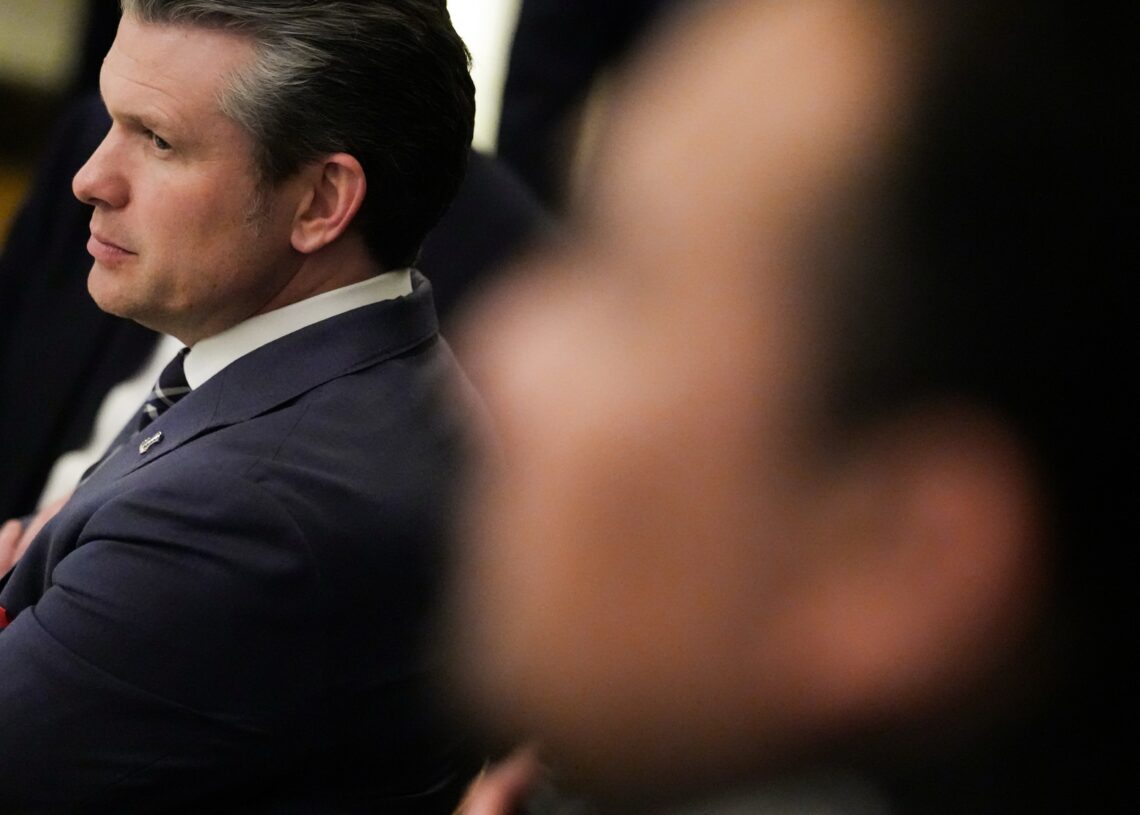
Tim Parlatore, a senior adviser to Defense Secretary Pete Hegseth, was the principal author of the new press policy. He said in a news conference following the March 6 hearing that the department hoped the judge would rule in favor of the government but also clarify what’s allowable under the law.
“I think the best thing the judge is going to be able to do is give us an opinion as to where he thinks the line actually is,” Parlatore said. “At that point, the department will make a decision as to whether we want to appeal it — or just go back and edit the policy.”
Press freedom groups cheered Friedman’s ruling Friday. “In a careful opinion, the court affirmed that our security and liberty rely on the press’s freedom to publish and the public’s ability to access news about government affairs free from state control,” said Gabe Rottman, vice president of policy at the Reporters Committee for Freedom of the Press.
Katherine Jacobsen, U.S., Canada and Caribbean Program Coordinator for the Committee to Protect Journalists, said the ruling was an “important step” in restoring access to the Pentagon. “As the court noted, recent United States military activity in Venezuela and Iran make journalists’ access all the more critical.”
Friedman issued a permanent injunction, halting the new provisions of the press policy introduced in October 2025. He ordered that the credentials for Barnes and other Times reporters be restored. While the judge didn’t order that the credentials of reporters from other outlets be restored, he voided the policy that they refused to sign, paving the way for them to get credentialed once again.
The Pentagon Press Association, which represents members of the Pentagon press corps, called in a statement Friday for the “immediate reinstatement” of credentials for all its members.
“We look forward to returning to the Pentagon and providing the public, including the members of the military currently involved in conflicts around the world, information about why and how the Defense Department is waging war,” the statement said.
Theodore J. Boutrous Jr., a partner at the law firm Gibson Dunn who represented the Times in court, called the judge’s decision a “powerful rejection” of the Pentagon’s crackdown on information during wartime.
“As the court recognized, those provisions violate not only the First Amendment and the Due Process Clause, but also the founding principle that the nation’s security depends upon a free press,” he wrote in a statement. “The district court’s opinion is not just a win for The Times, Mr. Barnes, and other journalists, but most importantly, for the American people who benefit from their coverage of the Pentagon.”
The post Pentagon press policy ruled unconstitutional in case brought by N.Y. Times appeared first on Washington Post.