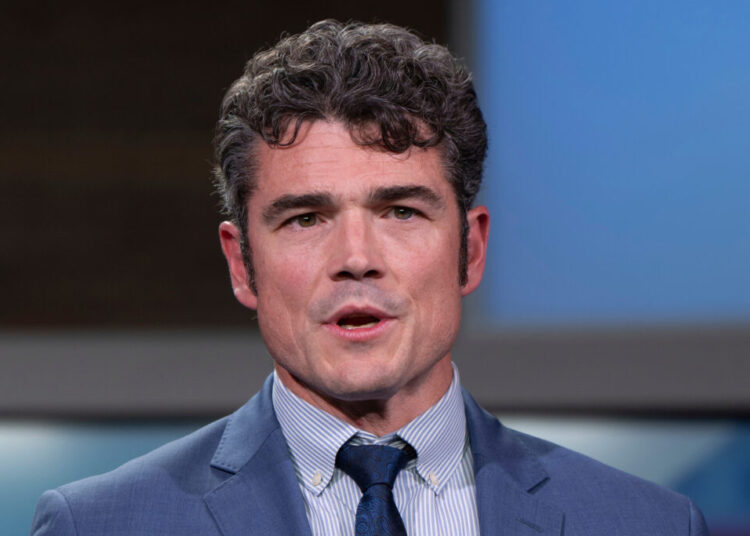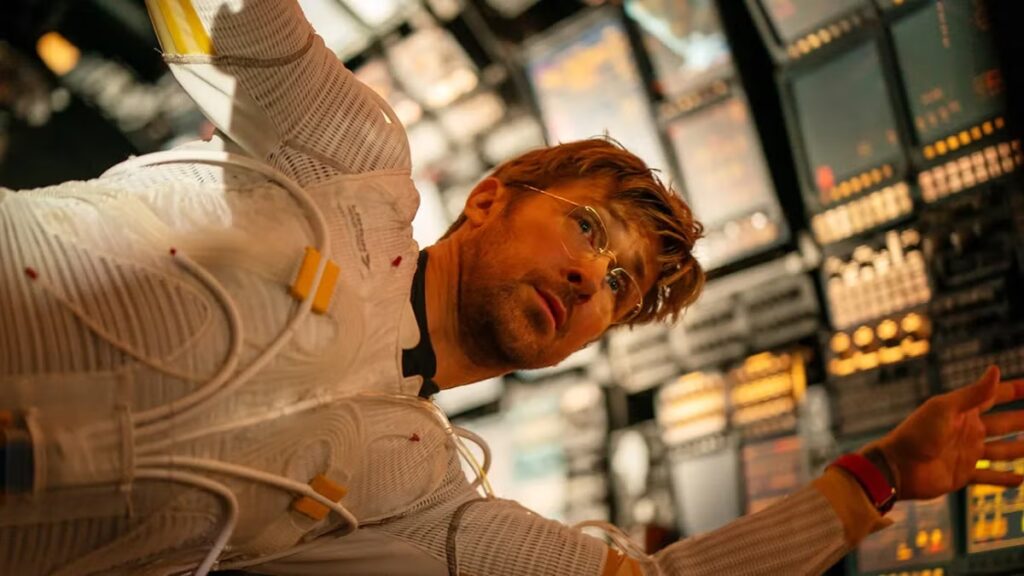
“Project Hail Mary” is such an accomplishment, such an overwhelming, often dazzling thriller full of emotion and heart and some really good jokes, that it’s easy to forget that this is the first feature Phil Lord and Christopher Miller have directed since 2014 — when “The LEGO Movie” and “22 Jump Street” were both released in the same calendar year and smashed audience expectations for entirely different reasons.
They were attached to the “Star Wars” movie “Solo” but after reaching a creative logjam during production, were removed and replaced by Ron Howard. The eventual movie, released in 2018, was a critical and commercial underperformer. It lacked the Lord and Miller je ne sais quoi, among other things.
In that time, the duo have produced several movies, including the Oscar-nominated animated feature “The Mitchells vs. the Machines,” gonzo comedy “Cocaine Bear” and the under-seen “Strays,” revived their beloved animated series “Clone High” and started the critically acclaimed (and sadly short-lived) Apple TV whodunnit series “The Afterparty,” with Miller directing every episode of the first season.
Were they nervous returning to big budget, big screen filmmaking?
“We were full of anxiety, but we try to keep that between ourselves,” Miller said in a wide-ranging chat with TheWrap about their anticipated Amazon MGM Studios movie, which opens in theaters Friday amidst stellar reviews and intense interest from the millions of fans of best-selling author Andy Weir.
“That’s by design. We should be miserable,” Lord added in the interview.
You can’t blame them. The pair, after all, were charged with creating not just an an epic space film following Weir’s previous, Oscar-nominated adaptation, “The Martian,” but also a statement piece by Amazon MGM that the studio meant business when it came to producing big blockbusters. Amazon MGM has had a string of disappointments, but the early critical praise suggests “Project Hail Mary” could turn its fortunes around.
Not that any of those elements seemed to bother the pair, who were more fixated on the intricacies of bringing a rock-like alien to life.
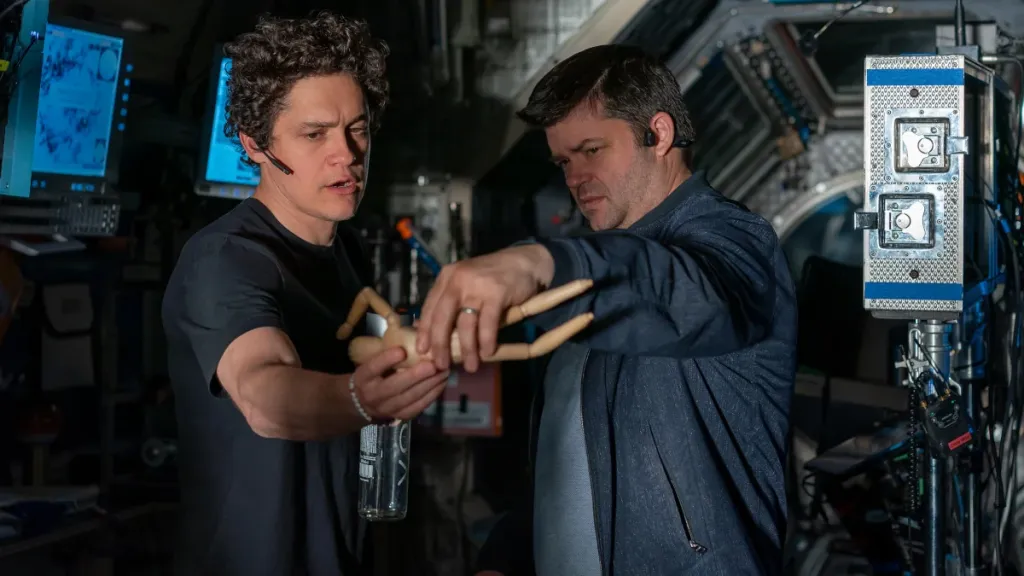
“Everyone was wonderful and everyone had the best attitude and everyone was a great person and super talented, but every day was really hard because we’re on wires where we’re trying to shoot puppets and figure out how we’re going to get these scenes,” said Miller.
“[Cinematographer] Greig Fraser and [visual effects supervisor] Paul Lambert looked at us and said, ‘This is the most complex movie we’ve ever worked on. And we’ve made two ‘Dunes,’” said Lord.
Pre-launch sequence
Before “Project Hail Mary,” Lord and Miller were attached to another adaptation of a best-selling Weir novel.
They were first going to make “Artemis,” about a heist on a moon colony. Their involvement was first announced back in 2017, before the novel had even been published, with Simon Kinberg and Aditya Sood producing.
“It was really hard for us to figure out how to practically shoot something set on the moon with 1/6 gravity in a way that would be achievable and affordable and look good,” said Miller.
“We have figured that out,” interjected Lord.
But the bigger reason why “Artemis” fell by the wayside (at least for now) was Ryan Gosling.
It was Gosling who brought Lord and Miller the manuscript for “Project Hail Mary,” and it was Gosling who would eventually produce and star in the movie. They already had an existing relationship with Weir and excitedly read it “in one night,” according to Miller.
“We were blown away by how emotional it is, in addition to being exciting and full of twists and turns and all that stuff, but the heart of it was like, Oh, this could be something really, really special. We had to just jump on it,” Miller said.
To adapt “Project Hail Mary” Lord and Miller turned to Drew Goddard, who had previously adapted Weir’s “The Martian” for director Ridley Scott (and secured an Academy Award nomination for Best Adapted Screenplay in the process) and who Lord and Miller had known for decades. They were unable to write the screenplay themselves because they were very deep into the second animated “Spider-Verse” movie, but at the time they proposed the idea, Goddard was too busy. He also wasn’t sure that he wanted to adapt another Weir novel.
Miller remembered telling him, “We’ll wait for you. Because you know exactly how to do this, you can blend the tones, you understand the science, but you won’t make it something that a regular person can’t follow and love and you understand how to put the relationship at the at the heart of the story.”
“We’re so glad we did because he did an amazing job,” Miller said.
Lord said that Goddard first worked on a loose outline in the “first months of the pandemic.”
“He was like, ‘I don’t know, I think maybe be like this.’ And it was great. It was like, ‘Oh, you broke the back of the movie,’” said Lord.
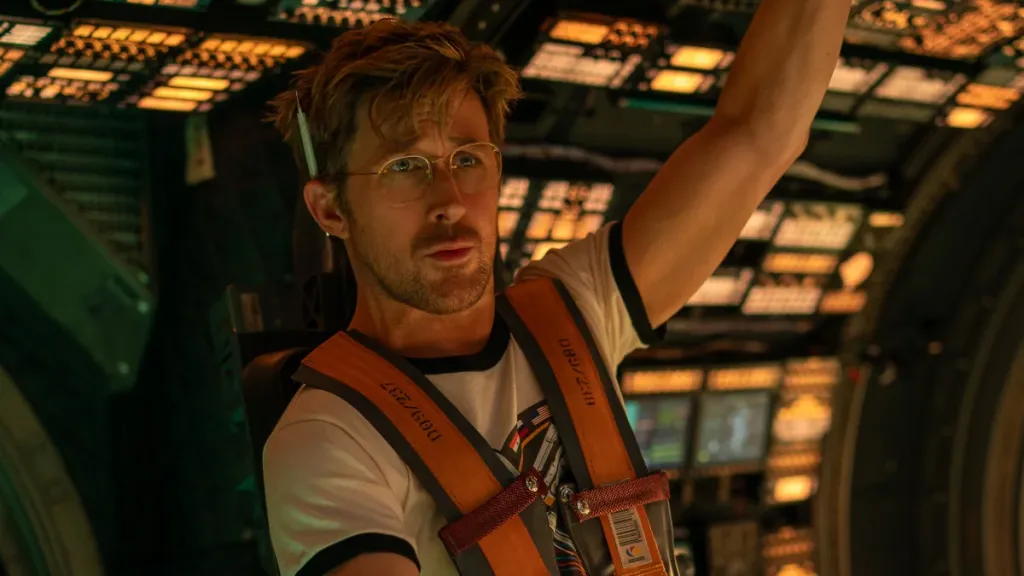
Both the original “Project Hail Mary” novel and its big screen adaptation center on Ryland Grace (Gosling), a middle school science teacher who wakes up on an interstellar spaceship and, suffering from temporary memory loss, must put the pieces back together of his life, of his mission and how he wound up on the other side of the cosmos, alone and faced with an impossible task. He slowly remembers that he’s on a mission to unravel the mystery behind a star-eating organism that is threatening to kill the sun. His space voyage is to a planet that has not been affected by the organism – dubbed astrophage. If he can figure out why this planet hasn’t been affected, he can save the sun and life on Earth.
But how much of the structure was on the page and how much was discovered during shooting and editing?
“That’s a good question. I can’t remember how much we wiggled the scenes,” said Lord.
“We wiggled it,” said Miller.
“We wiggled it a lot in edit and then we wiggled it back to where we started,” said Lord.
“There are some scenes that moved from where we intended them originally,” said Miller. Their editor Joel Negron was tasked with putting the two timelines into a story that “kept it moving forward and made narrative sense,” said Miller.
Takeoff
During the shoot, which took place in England in 2024, they built transitions that could be used that would bridge the narrative between the Earth-bound scenes and the space-set scenes (more on that in a minute).
“Some of which we used, some we had just in case,” said Lord.
The first flashback took the most finessing.
“It wasn’t clear how long you wanted to be in space before you left or how confused he should feel,” said Lord. The audience had a hard time understanding that they were looking not at flashbacks but the character’s memories.
“We worked hard to make you understand that he was trying to remember,” said Miller.
“He was driving the movie to go to the past, instead of the movie omnisciently telling you or cutting to a specific scene,” said Lord.
The filmmakers were buoyed by the relatively streamlined nature of the adaptation. The novel is told from Grace’s point of view, as he struggles to figure out the specifics of his predicament and then the science that will allow him to accomplish his mission.
“Andy’s novel has all this first-person stuff and cinematically that can happen in a single shot,” said Lord.
As for who would play Grace, it was never a question that it was going to be Gosling, who has experience with space travel having played Neil Armstrong in Damien Chazelle’s “First Man.” (He will also appear in next year’s “Star Wars: Starfighter” from director Shawn Levy.) Gosling brought them the project with the explicit implication that he would play the lead. This was a big relief for Lord and Miller, since the role is so specific and so seemingly tailor-made for Gosling.
“You have to be able to be funny in some moments and really emotional and dramatic in some moments. Sometimes those moments are right after each other,” said Miller. “And the range that is required of this part, the amount you have to hold the screen for the entire length of the movies, in every scene of the movie is … the people who can pull that off are part of a very short list.”
Another challenging element of the performance is that Gosling’s Grace eventually shares the screen with Rocky, a Labrador-sized rock creature with five arms and no eyes, who goes to the same unaffected planet looking for answers to save its respective planet. (This isn’t a spoiler; Rocky is in all the early marketing materials and is a part of several collectible popcorn buckets.)
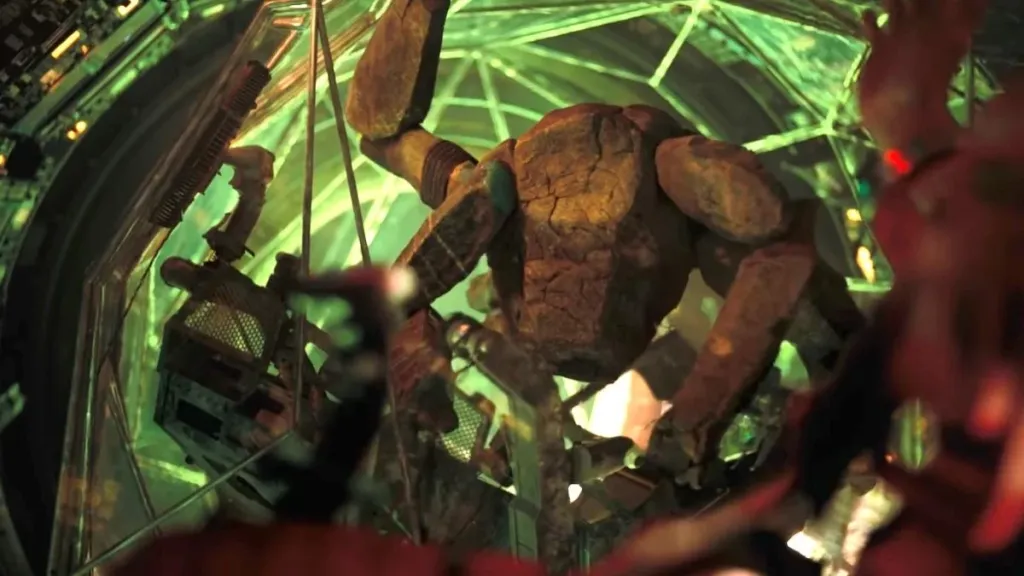
Rocky was brought to life using a combination of cutting-edge puppets, fabricated by Neal Scanlon, the man behind the creatures in the recent “Star Wars” movies, and computer animation from British visual effects house Framestore. They suspect that the ratio was about 50/50 in terms of puppetry and animation.
“We were trying to something that felt like nothing else, always trying to do things that look different. A lot of space movies end up feeling cold and distant and very formalist. We were like, Well, let’s be honest about how messy space is,” Miller explained.
To that end, having a real Rocky to play opposite Gosling was key.
“We wanted to feel like you were you were really there, which is why it was really helpful that we had a practical Rocky on set with us at all times, because the camera was able to be up in everyone’s business and find what was happening in these moments of improvisation that are all over the movie, that wouldn’t have been there if it was just a tennis ball on a stick,” Miller continued.
Even during scenes where Rocky is interacting with Grace on his ship, in a kind of hamster ball, they had puppeteers pushing a Rocky around on set. “Ryan had the ball to follow and look at,” said Miller.
The voice of Rocky is provided by James Ortiz, who was one of the five puppeteers (dubbed “The Rocketeers”) who wound control Rocky. It got to the point where Ortiz’s performance was so good that they kept his voice in the final film. “While we were making it, it became very clear that we can’t replace this guy’s voice with some actor doing an imitation of what he did and what they found on the day as scene partners,” said Miller. “He became Rocky. And then what was cool is that the animation team, for the scenes that we couldn’t do with a puppet, they really captured the spirit of the way that the puppet moved.”
“They really focused on how the puppet was moving – the stinkiness we would call it of how the puppet moves,” said Lord.
At a certain point even the filmmakers couldn’t tell if the scene had a puppet or the CGI recreation. “It was hard to tell after a while and that never happens,” said Lord. There would also be a smaller Rocky puppet that would be used when the character skitters around quickly. “The animators used that as a reference also.”
“Another advantage of having the puppet there was like on the day when Grace and Rocky meet for the first time and they imitate each other’s movements, we were in Ryan’s ear, pitching him things to do and the puppet team was on the other side trying to copy whatever Ryan did,” said Miller. “We didn’t tell the puppet team what we were doing. We would get these shots and would be like, This is magic. And everybody on the set was like, I can tell there’s something special happening here.”
One of the most bracing things about “Project Hail Mary” is the way that it looks. Working with the Oscar-winning cinematographer Greig Fraser, who shot the first two “Dune” movies, “The Batman” and “Rogue One,” they concocted a visual shorthand that is also the reason you should see “Project Hail Mary” in the biggest, most sophisticated auditorium you can find.
“Part of our first conversation, his idea was that the space scenes should be immediate and it should fill the entire frame. And the memories should be idealized,” said Lord. “This film grain is actually much tighter, and it feels smoother on Earth because a memory gets simplified and polished and your field of vision is actually shorter. You don’t see the whole picture or the things are not there.”
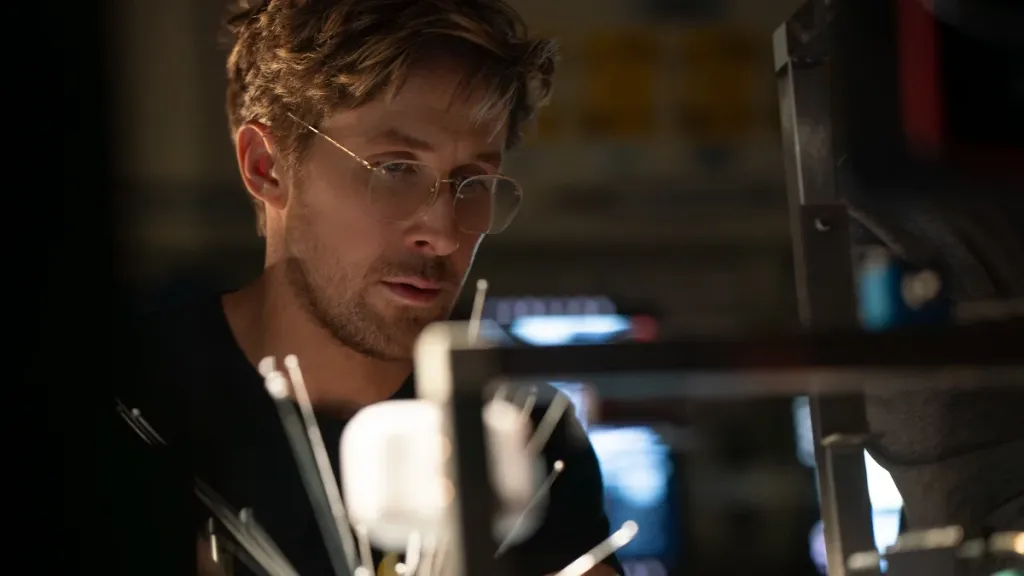
There are some moments in the movie where the “memory” aspect ratio (2.39:1), gets blurry and fills more of the screen.
“The audience seemed to need some help,” Lord said. “That was us going, What’s the good version of doodle-do-doo-doodle-do-do?” (Lord is approximating the sound, made famous by Mike Myers and Dana Carvey in “Wayne’s World,” for the sound effect of a camera going wobbly, as seen in countless old television shows as they transitioned to a flashback or fantasy sequence.)
“Greig had the idea that we would take the Earth footage, in the 2:39 aspect ratio, project it on screen. Then he would take a film camera, and then film the projection and then mess with the lens so that it bled out of its frame,” said Miller. “We did it a couple times because you didn’t quite know what we were going to get until we developed it. We’re like, Oh, this is cool, but this part, it doesn’t work. You got all these happy accidents. And then we added this thing and we were like, Oh, there is bleeding between these two different ways of seeing the world.”
Re-entry
Not that Lord and Miller are slowing down. Lord said that they had recently cracked how to give “Artemis” “its own visual signature for a movie that is about a very punk rock kid. And it’s a heist movie.”
There’s also the third “Spider-Verse” movie, “Spider-Man: Beyond the Spider-Verse,” which currently has a June 18, 2027 release date. For the third film they’ve recruited Alice Brooks, a live-action cinematographer, to help give the third (and so far final) film its own distinct aesthetic.
“She goes into a little room with a little camera and they set up the blocking and she gets coverage like it’s a live-action movie and then the editorial team can find the shot. We can set up the scenes in a way that we just never were able to do on the first two, so we’re getting this beautiful, intentional cinematography on top of everything else. The pipeline is really advanced from where we started,” said Miller.
Lord promised that the entire team of Spider-people will be back “with some new teammates. There’s a lot of goodbyes in that movie.”
And yes, sooner rather than later, they will be directing a new project.
“We are going to do something soon, after we finish the ‘Spider-Verse’ movie,” said Miller.
“There’s a lot of irons on the fire. There’s ones I’m really excited to think about. And now I’m thinking about them,” said Lord. “But for now it’s a hard horse ‘Spider-Verse’ summer.”
From one universe to another, the sky’s the limit for Lord and Miller.
The post With ‘Project Hail Mary,’ Directors Phil Lord and Christopher Miller Blast Off appeared first on TheWrap.