Zachary Karabell is an author and investor and writes “The Edgy Optimist” on Substack.
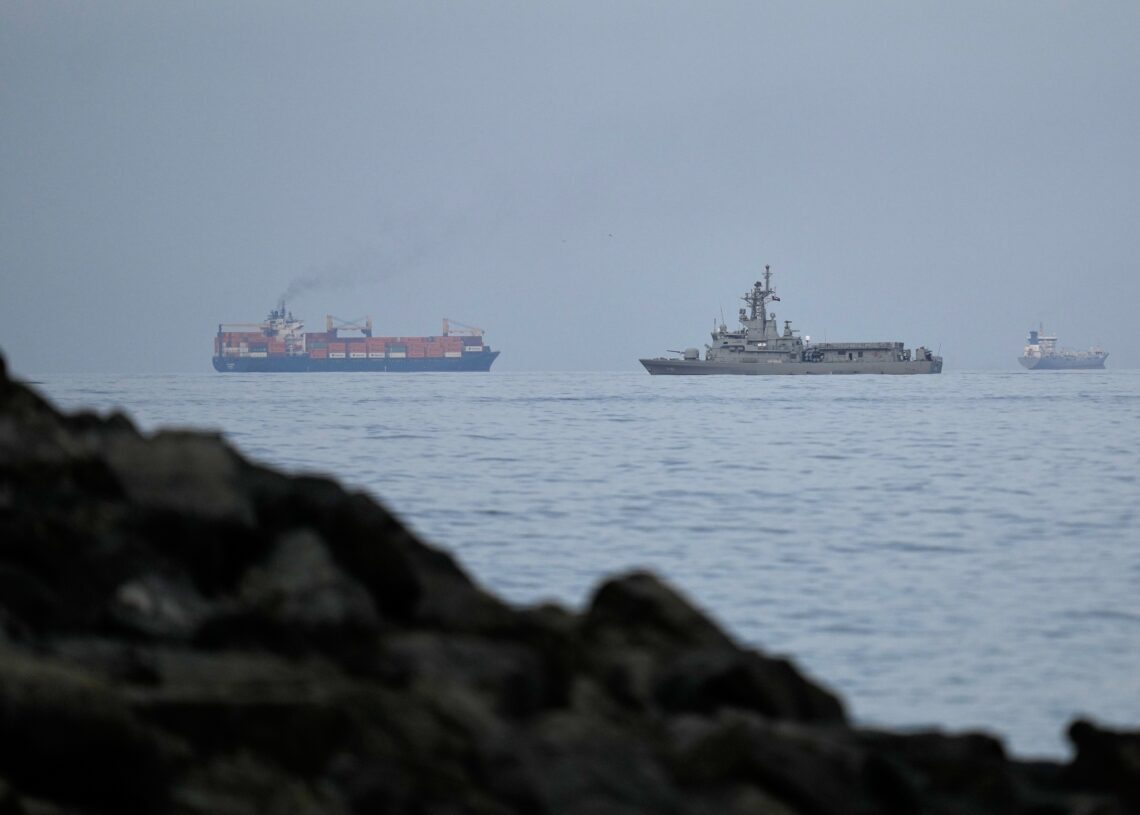
Weeks into the U.S.-Israeli war against Iran, the world is facing the greatest energy supply shockin history. Greater, even, than the 1970s crisis, with roughly 20 percent of the world’s oil now trapped. And the closure of the Strait of Hormuz, a critical choke point, does more than disrupt oil shipments; it cuts off supplies of natural gas and fertilizer for agriculture. Around 20 percent of global fertilizer supply is made by Persian Gulf states and cannot be shipped through the strait.
Oil prices have risen 50 percent since the bombing began on Feb. 28; fertilizer is up more than 30 percent. Given these disruptions in vital materials, you would think there would be severe strain on the global financial system. But after nearly three weeks of this conflict, the system is remarkably stable; it is functioning without panic or alarming signs of stress.
It’s important to distinguish between price movements — whether stocks and commodities go up or down, whether bond yields rise or fall — and stability. Stock markets can go down 10 percent or more in a matter of weeks and regularly do. U.S. equity markets decline by 5 percent about once a year and by 10 percent or more (a “correction”) every few years, most recently in April 2025 after President Donald Trump announced his now-illegal “Liberation Day” tariffs. Global equity markets are more volatile. Oil prices can oscillate in a wide range, and bond yields also can move sharply in a short period.
These price movements, however, usually happen in orderly fashion, even if individuals or institutions panic, with investors making rash decisions based on limited information or herd mentality. “Orderly” means the system operates as it should. When someone wants to sell or buy something, they can; when you want to withdraw money, you can; when you want to send money or shift investments, you can.
Think of orderly or stable markets as the equivalent of a supermarket: Even when people rush to hoard goods during a crisis — a coming hurricane — there is food on the shelves, they line up calmly enough to pay for their groceries, and they load their purchases into their cars and drive away.
But sometimes, the system cracks. The last time was 2008 during the mortgage meltdown that morphed into a global financial crisis. Basic tasks like making sure banks had enough money for people to withdraw became a challenge. The Federal Reserve and governments worldwide had to provide massive amounts of emergency liquidity to avoid a total meltdown.
Since then, there has been nothing of that magnitude, and there was nothing similar for decades before. The onset of covid-19 in 2020 led to a halt in travel and draconian measures by governments, but the financial system hummed along, as central banks throughout the world acted quickly and ensured that even with the disruptions, there would be ample liquidity in the system.
The current energy shock might make you think the system would be imperiled, and yet as of now, that isn’t evident. Major crises are often the product of several stress factors converging. One could imagine that the combination of the Iran war, fears that the roughly $2 trillion private credit market in the United States is a bubble about to burst and panic over the impact of artificial intelligence on multiple industries could tip the system. That, too, hasn’t happened, yet.
It’s risky to make this argument, because there’s always a chance the current moment is at a tipping point or close enough. No one wants to be infamous economist Irving Fisher, who said just before the October 1929 crash that stock prices had reached “what looks like a permanently high plateau.” Or be like current White House economist Kevin Hassett, who co-authored a book in 1999 called “Dow 36,000” just before the indexes started a steep decline; the Dow did eventually hit 36,000 … 22 years later.
But the stability of the financial system — its smooth functioning in the face of crises such as the oil shock and covid — is a feature of the world today that gets less attention, probably because stability is not news, whereas crisis is, and because of an understandable caution that calling attention to it is tempting fate.
Financial meltdowns are devastating, and recovery takes years. Identifying cracks before they become grave fissures is paramount, and central banks, financial institutions and governments have improved at monitoring such risks. None of that precludes an implosion.
But while being attuned to dangers, it’s also vital not to ignore that recent decades have seen systemic stability, and that should at least provide some relief in a world full enough of fears.
The post The real state of the global financial system might surprise you appeared first on Washington Post.