Since the United States and Israel began their most recent bombing campaign in Iran, President Trump has mused about a quick military operation to secure or eliminate Iran’s highly enriched uranium.
I spent more than two decades extracting weapons-grade materials from unstable parts of the globe. It would be next to impossible for American and Israeli Special Forces to land in hostile territory and easily extricate or destroy Iran’s fissile material. To be sure that its highly enriched uranium is identified and disposed of would require a large and prolonged on-the-ground military presence, or the cooperation of Iran’s government.
Learning the nature of nuclear materials and their locations often takes months of diplomacy. In Kazakhstan, shortly after the fall of the Soviet Union, I had to go on a moose-hunting trip in the Altai Mountains with Vitaly Mette, the director of a factory where fissile material was stored. I bonded with him in naked bathhouse sessions and over shots of Wild Turkey whiskey. Weeks later, after I had gained Vitaly’s trust, a burly former K.G.B. colonel took me for a walk in a snowy courtyard outside Almaty; he passed me a note from Vitaly that read, “U 235, 90%, 600 kg.” This meant that Vitaly had a cache of uranium, highly enriched to 90 percent concentration of its highly fissionable element — sufficient for about two dozen nuclear weapons.
After getting permission from Kazakhstan’s president to inspect the material, the Defense and Energy Departments had to conduct months of detailed planning. It took about six weeks — even with a team of U.S. specialists working overtime with the factory staff — to package the fissile material for safe transport before flying it out on Air Force C-5 Galaxy cargo planes. We had a relatively cooperative government on the ground, but the logistics simply took time.
For 20 years after this episode, I was involved in similar operations to remove fissile material from Georgia, nuclear-capable MiG-29 aircraft from Moldova, 1,300 tons of chemical weapons materials from Syria, and other missions to move or eliminate components of weapons of mass destruction programs. All of them took meticulous planning, troubleshooting and concerted diplomacy.
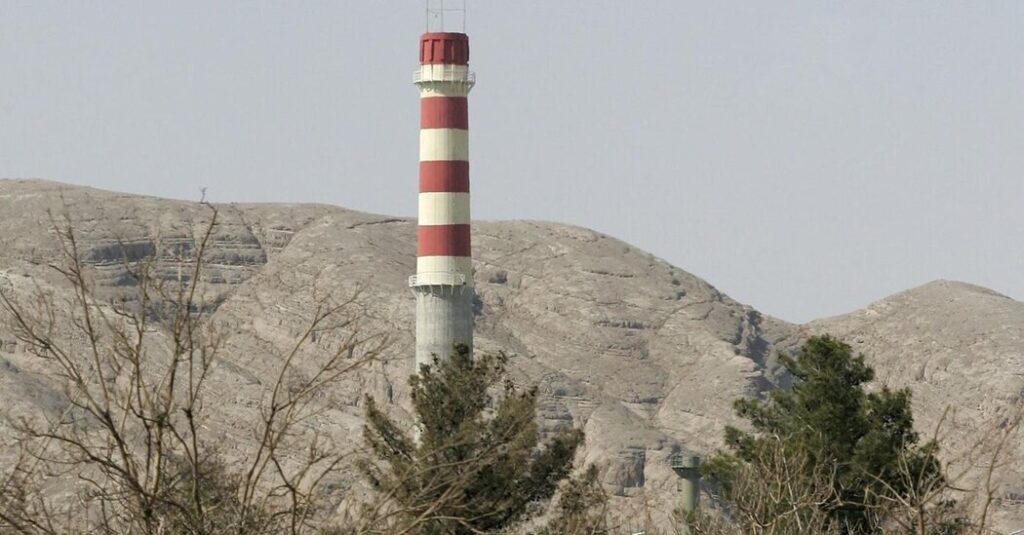
The best estimates indicate that Iran has more than 400 kilograms of 60 percent enriched uranium, much of it stored at its nuclear facility near the central Iranian city of Isfahan, which includes a tunnel complex buried deep underground. My experience tells me that removing that material from Isfahan, and anything relevant stored in other locations, would be extremely difficult without a cooperative government. The United States and Israel have extraordinarily capable Special Operations units. But they can only do so much so quickly.
When the Central Command and the Joint Chiefs of Staff assessed options for dealing with Syria’s chemical weapons in 2012, they estimated that securing multiple sites there would require 75,000 military personnel. A potential Iran operation would be different from what we faced in Syria and elsewhere. Nuclear material requires different handling than chemical agents do. U.S. intelligence on Iran’s weapons stockpile and preparations to secure it are probably better developed than what we had in Kazakhstan in the 1990s. Iran is still controlled by a stable, centralized state; this is not an environment in which obscure factory directors can freelance as uranium peddlers with little or no oversight.
But every operation presents unique challenges. At least some of Iran’s highly enriched uranium is contained in gas canisters small enough to be moved — or at least it was, before the United States and Israel bombed the Isfahan site in Operation Midnight Hammer last June. Any leaky canisters would emit toxic radioactive gas. The U.S. team might need to sheath them for transport to a third country, where they could repackage the material.
The Iranians have also had years to plan for a possible raid on their nuclear stockpiles, and it’s anyone’s guess what they might have prepared at Isfahan and other sites to foil a quick extraction force.
Even if the canisters are still intact and Iranian countermeasures are minimal, the United States and Israel struck the entrances to the Isfahan tunnels last June. The Iranians appear to have excavated at the site since then. But it is hard to know how much further digging would be required to extract all the nuclear material — perhaps days or weeks, during which a sizable ground force with continual air support would need to secure the site against Iranian attacks.
The best way to deal with Iran’s highly enriched uranium is to methodically remove it from the country in peacetime and under intrusive international monitoring. Requiring an operation like this could be a condition of a cease-fire with Iran, or the work could be quietly carried out with the agreement of a more pliant Iranian government in the future.
Capturing or destroying Iran’s nuclear material is the best way to prevent the country from producing a nuclear weapon — or, should Iran’s regime fall, to prevent others from obtaining the material. America’s war goal should be to create conditions under which this can happen. It doesn’t help to entertain delusions that the job can be done before the bombs stop falling.
Andrew Weber is a senior fellow at The Council on Strategic Risks. A former U.S. State Department Foreign Service officer, he was assistant secretary of defense for nuclear, chemical and biological defense programs from 2009 to 2014.
The Times is committed to publishing a diversity of letters to the editor. We’d like to hear what you think about this or any of our articles. Here are some tips. And here’s our email: [email protected].
Follow the New York Times Opinion section on Facebook, Instagram, TikTok, Bluesky, WhatsApp and Threads.
The post I Spent Two Decades Securing Nuclear Materials. Getting at Iran’s Would Not Be Easy. appeared first on New York Times.