In early 2025, aides to Vice President JD Vance ordered a small office at the State Department to document how European regulators were censoring online speech.
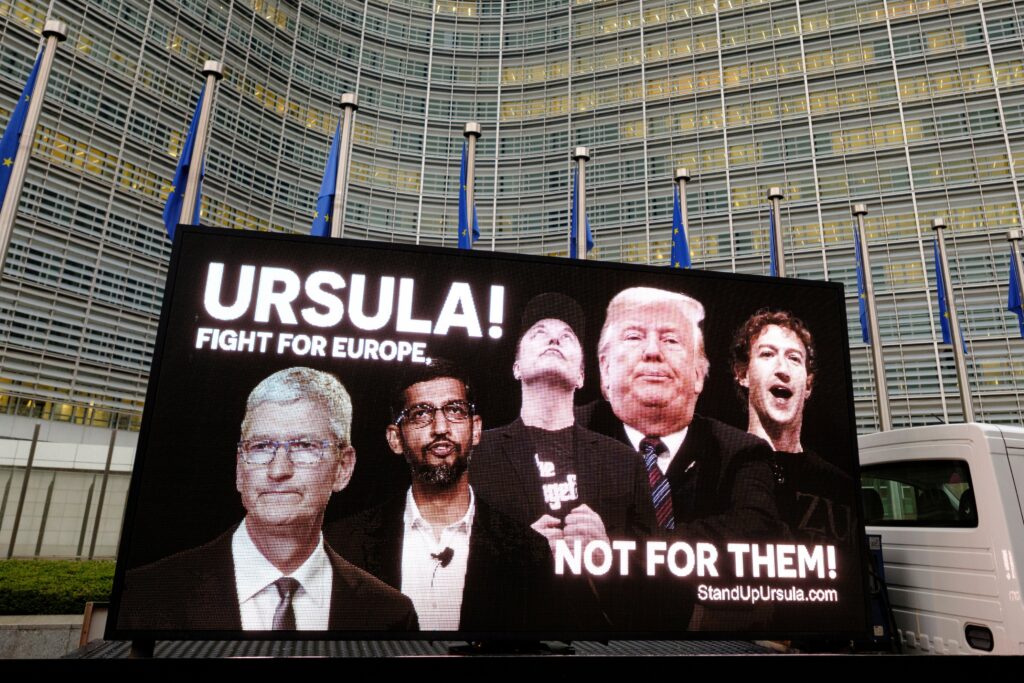
Staffers launched an investigation focusing on the European Union’s Digital Services Act, a sweeping 2022 social media law requiring large tech companies to limit the spread of harmful or illegal speech on the continent.
The weeks-long investigation, details of which have not previously been reported, uncovered no records indicating censorship, according to two people familiar with the matter, who spoke on the condition of anonymity for fear of retribution.
“There is no evidence that Member States of the European Union are overreaching the DSA to censor and criminalize online content,” they wrote in conclusion.
Despite the finding, the Trump administration has pressed ahead with a wide-ranging State Department effort to crack down on what it alleges is widespread censorship in the E.U., according to documents reviewed by The Post and nine people involved or aware of the campaign, many of whom spoke on the condition of anonymity to protect their livelihoods.
It has banned some European researchers from entering the United States and dismantled federal programs intended to fight foreign disinformation campaigns. Behind the scenes, the administration has crafted a plan to allow American tech companies to skirt European rules, using the federal government’s powers to control exports, according to two of the people and documents.
The department is preparing to launch a website to host banned content. A teaser for the site, freedom.gov, includes a mounted Paul Revere-type figure galloping over the words “Freedom is coming.”
The push has refocused the State Department’s agenda — which traditionally emphasized global free expression, particularly in authoritarian states — to prioritize fighting censorship by European governments.
The State Department said in a statement that it has been consistent in raising concerns about the Digital Services Act and a similar British law and had “never ‘concluded’ anything to the contrary.”
Sarah Rogers, the department’s undersecretary for public diplomacy, told The Charlie Kirk Show in October that her predecessors had panicked in the face of growing access to information online and responded by attempting to censor it.
“It is my job to hold out to the world what America’s values and priorities are,” Rogers said. “They aren’t censorship anymore. … They are America First. America’s crown jewel value … is free speech.”
Vance’s office did not respond to a request for comment. Reuters previously reported on the administration’s plans for a freedom of expression website.
The Trump administration’s effort echoes a years-long campaign in America, where Republicans have accused tech companies, researchers and the Biden administration of conspiring to stifle conservative views online. While a lawsuit alleging government censorship of social media petered out at the Supreme Court in 2024, the push has nonetheless succeeded in convincing some leading platforms to relax their policies, and some independent research groups have pulled back or disbanded in the face of legal and political pressure.
President Donald Trump’s return to the White House has supercharged the effort and expanded it overseas. The administration alleges that European tech laws that censor content are part of a broader cultural shift with immigration and declining birth rates that put the continent at risk of “civilizational erasure.”
“American diplomacy should continue to stand up for genuine democracy, freedom of expression, and unapologetic celebrations of European nations’ individual character and history,” the administration wrote in its December national security strategy. “America encourages its political allies in Europe to promote this revival of spirit.”
Administration officials singled out groups including the German organization HateAid, which supports victims of online abuse and backs efforts for online attacks to be classified as “digital violence.”
Josephine Ballon, the group’s chief executive, learned just before Christmas that she had been banned from entering the United States. The State Department issued the ban on the grounds that Ballon and others “led organized efforts to coerce American platforms to censor, demonetize, and suppress American viewpoints they oppose,” which she denies.
She compared Trump’s tactics to those used by the online bullies that her organization teaches victims about.
“This is intended to intimidate us and silence us,” she said in an interview. “We are not silenced by the German far right and we will not be by the U.S.”
The State Department is now preparing to release a report it says will expose how previous U.S. administrations worked with the tech industry and outside groups to stifle Americans’ speech, officials have said. Multiple groups that track disinformation and have ties to Europe have been informed by the State Department that their private communications may be released publicly in this report, according to three of the people interviewed by The Post.
In the United States, the GOP has been fighting tech company policies for years that seek to limit the spread of hateful or false content. Social media firms ramped up their work in 2020 as they sought to limit the spread of what health authorities deemed to be misinformation about coronavirus vaccines and Trump’s false claims that he was the winner of that year’s presidential election. Republicans argued that such policies stifled conservative viewpoints online, while Democrats countered that right-wing publishers were among the highest-performing pages on social media.
An avalanche of lawsuits and congressional hearings has achieved some of the right’s key goals, with tech CEOs revising their approaches to disinformation. Meta, which operates Facebook and Instagram, shut down its U.S. fact-checking program last year and lifted restrictions on content advocating against the rights of LGBTQ+ people. When Elon Musk took over Twitter and rebranded it X, he laid off content moderators in favor of a system of user-submitted notes. Outside the tech industry, funding for disinformation research has dried up and some top researchers have left the field.
But officials in Europe, where many countries have speech laws more restrictive than those in the United States, have pressed ahead with regulating social media companies, passing the Digital Services Act in October 2022. Under the law, large tech companies are required to provide information to regulators and outside researchers about the underlying algorithms guiding their sites. The companies must also counter disinformation and take down content that is considered illegal in the country where it is viewed, which could include Holocaust denials in Germany or racial slurs in France. (Such posts tend not to be illegal in the United States, where the First Amendment protects many forms of hate speech and misinformation from government censorship.)
The Trump administration has now set its sights on those regulations — and independent groups that champion similar ideas.
Clare Melford, a British activist who had her visa banned over Christmas, said the weight of the U.S. government is being brought to bear against her. Her organization, the Global Disinformation Index, is being investigated by the Federal Trade Commission over its work encouraging advertisers to not work with websites that promote divisive content.
“Some people regard it as you must be doing something right if you’re annoying the U.S. administration and others regard it as a risk factor,” Melford said. “It has, absolutely, a chilling effect on the whole sector.”
The State Department staffers tapped by Vance’s office last year pursued their investigation by asking social media companies for examples of times they were ordered to take action against content or accounts because of the E.U. law, according to meeting notes reviewed by The Post. X officials hand-delivered a manila envelope marked confidential with a handful of examples that were mostly related to law enforcement requests, according to two people.
“We did not find anything,” said one of the people. “It was not politically convenient that we could not find anything.”
At the same time, high-ranking Trump officials were intensifying their public criticism of the law. Vance accused European governments of suppressing free expression at the Munich Security Conference in February 2025, likening the fight against misinformation to a Soviet-style push to squash disfavored ideas or political candidates.
Brendan Carr, the chair of the Federal Communications Commission, said in a speech in Barcelona last March that the DSA imposes “excessive” rules against tech companies and that “free speech” was “in retreat.”
The administration considered ways it could use its own regulatory powers to limit the law’s reach. That spring, it called a meeting that included officials from the Commerce, State, Defense and Treasury Departments and White House to discuss potential strategies to advance free expression, according to a copy of the meeting materials viewed by The Post.
The proposals included a system that would use export controls to offer tech companies more legal freedom to refuse requests from foreign governments to take down content, according to a copy of the proposal viewed by The Post. A licensing system run by the Commerce Department would have aimed to give American firms legal cover to object to requests to take down content deemed legitimate under a “speech standard” devised by the Trump administration.
The system has not been launched but Rogers, the undersecretary, told a right-leaning podcaster in January that the State Department has other tools it could leverage, including imposing harsher sanctions, providing virtual networks to citizens in countries it considers to have a “censored internet,” and raising the issue in upcoming trade negotiations.
“This is not just a cultural civilization issue — this free speech issue — it’s a commercialization issue,” she said.
Will Oremus and John Hudson contributed to this report.
The post Inside the Trump administration’s campaign to counter content bans in Europe appeared first on Washington Post.