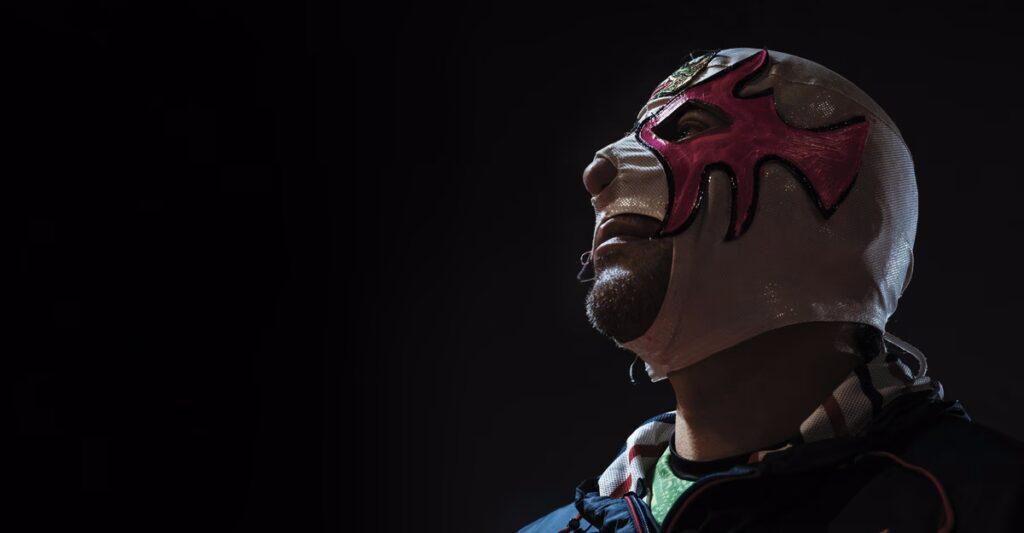
Photographs by Adriana Loureira Fernández
They arrived suddenly—five white vans, identical and unmarked, blocking the street.
It was February 9, 2023, and Mauricio Morales was leading a group of migrants he had found at a bus station through Mexico City’s San Rafael neighborhood. Mau, as his friends called him, had told the migrants he could help them at the nearby refugee camp where he worked. They had just crossed a busy boulevard and were making their way down a side street when the five large utility vans lurched to a stop in front of them.
Men with machine guns, wearing tactical gear, spilled out and started barking orders and threats: ¡Entren todos! ¡Ahora mismo, hijos de puta! Were they police? Military? Mau couldn’t tell, and there was no time to ask for identification. Within seconds, the migrants were being shoved into the vans. When Mau tried to resist, something hard hit him on the head, and he fell to the ground. As he was loaded into the back of one of the vans, he heard gunshots. He thought of his mother. If this is the end, he remembers thinking before he lost consciousness, please let her be okay.
Mau woke on the floor of a dank, windowless room with a single mattress and a bucket in one corner. His wallet was gone; so was his phone. He had no idea where he was or why he’d been taken, but for the next few days, he and several other captives held with him were beaten and tortured. Men took turns pummeling him—breaking his ribs and pulling out his fingernails. When he tried to ask what they wanted, the beatings only got worse.
Then one day the men removed him from the room without explanation and deposited him back into a van. Assuming he was about to die, Mau began to weep. But when the van came to a stop and his captors hauled him out, he noticed that they were being careful with him now, almost gentle. “The boss wants to talk to him,” he heard one of them say.
The facility they took him to was strange. It vaguely resembled a school: four wings divided into classroom-like compartments and an enclosed courtyard in the middle. But there were no children here. Instead, men with guns patrolled the premises while women who looked like they were dressed for a night of clubbing loafed around. Narcocorridos, accordion-heavy cartel ballads, played loudly over speakers in the courtyard.
Mau was taken to a makeshift office, where a man with a paunch and a thick mustache sat behind a desk. He was flanked by a large bodyguard in a butcher’s apron and a voluptuous woman in a low-cut, form-fitting dress. He seemed irritated as he assessed Mau. “Look at him,” the man grumbled. “He’s so fucked up.” He sent the bodyguard and the woman, who seemed to be his girlfriend, out of the room. Once they were alone, the man became warm and friendly. He introduced himself as Don Paco, and apologized to Mau for what he’d been put through.
“I know who you are,” Don Paco said.
He told Mau that his men had noticed a tattoo of the Olympic rings on his wrist. After some research, they discovered that they had inadvertently kidnapped a world-class athlete—an Olympic runner who’d competed in Beijing, London, and Rio de Janeiro. This was serendipitous, Don Paco explained, because he happened to be in the market for athletes.
He said he was a leader of an organization called La Unión Tepito. Mau had heard about La Unión on the news. The cartel was relatively new, having risen to power in the past decade or so, but its tight grip on Mexico’s capital city had made it one of the country’s most notorious criminal syndicates. Don Paco told Mau that for all the attention paid to bloody turf wars and theatrical executions, organizations like his were an important part of the community—and Mexico was better off when its cartels got along.
Then Don Paco revealed something that would forever change how Mau saw his own country: For many years, Don Paco said, a secret tournament had been organized by Mexico’s biggest cartels. They each fielded teams in sports such as soccer, flag football, and boxing, and rival cartel leaders gathered to watch the games. He described the event as a civilized affair, where the bosses could place friendly wagers and do business without shooting one another.
Winning the tournament was a point of immense pride, Don Paco explained. And so he had a proposition for his new prisoner: He wanted Mau to coach and play on a flag-football team. The team would train at the facility and then represent La Unión at the tournament. If Mau won, he and his teammates would be released. If not, they would meet the same fate as anyone else who let down the organization.
Perhaps sensing Mau’s incredulity, Don Paco put it bluntly.
“If you win, you live,” he said. “If you lose, you die.”
Then the cartel boss flashed a broad smile. “But I’m sure you’ll win, so it won’t be a problem.”
The email arrived in my inbox on a Thursday evening in December 2024: “Are you free for a call?” the subject line asked. “Massive story.”
The message was from Robert Reynolds, a Las Vegas lawyer and talent manager whose clients included a collection of aughts rock acts, most notably the Killers. I barely knew Reynolds. We’d first spoken years earlier, when I tried unsuccessfully to get an interview with the band’s front man, Brandon Flowers. Reynolds had never given me a tip before, and frankly, I couldn’t imagine what “massive story” the manager of the Killers might be privy to. But my curiosity was piqued, so I gave him a call.
Reynolds picked up after one ring—“McKay!”—and launched into his story. He spoke in a throaty rumble, his bro-ish cadence punctuated, in moments of peak enthusiasm, with an emphatic dude. A few months earlier, he told me, he’d fielded an unusual ticket request from a high-ranking official at the United Nations. The official told him that a beloved volunteer at the UN’s refugee camps in Syria, Ukraine, and Mexico had recently been held captive for months by a cartel. He was now recovering from the ordeal, and his colleagues wanted to lift his spirits with surprise tickets to his favorite band’s sold-out show in Mexico City.
Reynolds obliged, and met the volunteer, whose name was Mauricio Morales, before the concert. After some coaxing, he got his new friend to recount his harrowing experience. The story floored Reynolds. “I was like, ‘Dude, this is a movie!’ ” he told me.
Reynolds was a fledgling filmmaker himself. He’d helped produce a few documentaries—including an Emmy-nominated HBO film about his brother Dan Reynolds, the lead singer of Imagine Dragons—but what he really aspired to was screenwriting. This story, he believed, was his way in. Shortly after their meeting, he purchased Mau’s life rights and began working on a film treatment for The Cartel Olympics.
The project was already generating buzz, Reynolds told me. The actor Michael Peña, of Marvel Cinematic Universe fame, had expressed strong interest in playing Mau. The darkness of the story was just the kind of thing that Oscar voters loved. So was the “body transformation” that would be required for Peña to convincingly play an Olympian. But the actor had a condition: He wanted a journalist to vet Mau’s account and publish it in a reputable outlet so that he and the filmmakers could say, with full confidence, that the movie was “based on a true story.”
That’s where I came in. Speaking in excited, hurried tones, Reynolds laid out his proposal. I would interview Mau and write a story about his captivity, and then sell the film option to Reynolds, who—with his industry connections and Peña’s attachment—could get the project fast-tracked at a major studio, and make us all a small Hollywood fortune.
I told Reynolds I’d think about it, but when I hung up the phone, I burst out laughing. The story seemed preposterous. An intercartel sports tournament? The hero’s life hanging in the balance? Flag football? It sounded like an overwrought episode of Narcos or something. “It would be an incredible story if it were true,” I told my wife that night. “But it almost certainly isn’t true.”
My opinion changed the first time I spoke with Mau, a few weeks later. I understood immediately why Reynolds found him so compelling. He was understated and self-effacing, politely answering my questions in good but imperfect English, and apologizing whenever he stumbled over a word. In a squawking, almost Muppety voice, he told me about his work in the refugee camps, how he organized intramural sports teams to keep the kids entertained while they endured their nightmarish limbo. I liked him right away.
When I asked him about the kidnapping, he told me the story in halting, disjointed fragments, pausing periodically to steady his emotions. He didn’t get flustered by skeptical questions—he simply explained what he’d seen as best as he could recall, sometimes admitting that certain bits were hazy. After a while, as I made him recount repeatedly the gruesome details of his torture, my skeptical-reporter persona began to soften. I found myself apologizing for my aggressiveness. “It’s okay, Mr. McKay,” he said.
To my surprise, Mau seemed credible. More important, he offered a list of sources who he said could vouch for him and verify parts of his story.
My first interview request went to James Winston, an aid worker and human-rights investigator based in London who worked for R4V, a UN-backed organization that supports migrants and refugees. Winston was the person who had initially contacted Reynolds and connected him with the UN official. He had also worked closely with Mau at the refugee camps, and spent years studying the atrocities committed by Mexico’s cartels. He was doing fieldwork when I first reached him, but he answered a list of questions by email. When I asked him if there was any reason I should distrust Mau’s story, his response was chiding. To uninformed outsiders, he told me, the depravity of Mexico’s cartel culture was difficult to comprehend. “Many stories may seem unbelievable,” he wrote. “But after years of immersion, I can assure you that they reflect a very real aspect of this society.” In fact, Winston said, he was writing to me from a rural outskirt of Guadalajara, in west-central Mexico, where he was investigating what appeared to be a clandestine crematorium operated by the Jalisco New Generation cartel. Authorities had discovered a pile of bones, bullet casings, and more than 200 pairs of shoes in a burned-out building on a remote ranch.
“If I may,” Winston wrote, “I’d suggest delving further into this culture to better grasp the reality and, potentially, write a more informed piece on Mau’s story.”
I felt like an idiot. I thought I’d been approaching this story with the clear-eyed wariness of a savvy reporter. But to Winston, I was exposing my sheltered-American naivete. He had a point. My sole experience in Mexico had been a week in 2011 at a resort, where I’d snorkeled with my wife, eaten coconut ice cream, and taken guided tours of some ruins.
But I knew Mexico was a real place, with real problems. The country’s past two presidential administrations had catastrophically failed to rein in the cartels, and the new president didn’t seem to be faring much better. If I was going to do Mau’s story justice, I would need to go deeper.
Before signing off, Winston warned me that pursuing this story would come with risks. Publishing Mau’s account “could very likely result in his death,” he wrote. And if I tried to report in Mexico, I would be putting myself in peril: “Mexico is currently a very dangerous country for journalists.”
In the cartel prison, training began daily at 7 a.m. sharp: laps in the courtyard, followed by push-ups and weight lifting with cinder blocks. Then the prisoner-athletes of La Unión Tepito were divided into groups and spent the rest of the day practicing for their assigned events. There were teams for soccer; a handball-style game called frontón; and tochito, or American flag football, which has become popular in Mexico.
Mau mostly kept to himself at first, interacting as little as possible with his teammates. Unlike him, most of the men in the prison were creatures of Mexico’s criminal underworld, and he found them frightening.
One, nicknamed El Diablo, was a dead-eyed ex-cop who’d worked for a rival gang and spoke about his body count in an unnerving monotone. He specialized in disappearing victims. “It wasn’t just drug dealers,” he volunteered. “I had to do 14 kids one time.” There had been nowhere to hide the bodies, he explained, so he’d meticulously dismembered each corpse and then dissolved the limbs in a vat of hydrochloric acid. Mau had trouble looking him in the eye.
Another teammate, Augusto, was a hulking lawyer who looked to be about 70. Augusto claimed that he was in the tournament as punishment for mishandling one of La Unión’s cases. But the rumor around the prison was that he’d actually raped and murdered a young assistant who turned out to be the girlfriend of a cartel leader. Augusto was an asset to the team: He was deceptively strong for his age, and skilled, too, having played American football when he was young. But he had a menacing air and a virulent misogynistic streak. One evening, the team was watching a movie in which a woman was strangled to death on-screen. Augusto, visibly aroused, began to masturbate.
Weeks passed in the prison, then months. Deprived of contact with the outside world, Mau lost track of time. He ran drills for his team and drew up plays. At times, the experience felt almost like summer camp: sports and exercise during the day, dinner and taped soccer games on TV at night.
But terror was never far away. Many nights, Mau would lie in bed, listening to agonized screams echoing from other wings of the prison, and try not to think about who was getting tortured this time, and for what, and whether he would be next.
As Mau got to know his teammates better, he was surprised to discover that they weren’t all irredeemable and depraved. Palomino was a taxi driver who had started running errands for the cartel to supplement his family’s meager income. Loquillo desperately missed his wife. Little Hugo was a skinny sicario in training who’d been lured into cartel life as a teenager with the promise of glamour and travel, and who peppered Mau with questions about what London and Beijing were like.
Mau became especially close with Mamers, a muscular hit man who was his first real friend in the cartel prison. They talked about their lives outside—Mau’s work in the refugee camps earned him the mocking nickname Samaritan—and traded workout routines. When the subject of ex-girlfriends came up, Mamers admitted that he struggled with jealousy in relationships, and Mau counseled him on how to relax and be less controlling.
The more time he spent with Mamers, the more Mau realized that they weren’t so different. They’d simply had different opportunities. Mamers—like Little Hugo, and Palomino, and so many more—had wound up on the Mexican conveyor belt that transports directionless young men into organized crime with ruthless efficiency. He had done terrible things, it was true, but how many choices did he really have? Mamers wasn’t a rotten person, Mau concluded. He was the product of a rotten country.
And unfortunately, Mau could now relate all too well to being trapped in a corrupt system. No matter how many kids his cellblock mates had killed or women they’d raped, his survival depended on working with them.
One night, after training was over, Don Paco gathered the prisoners in the courtyard. There was a chill in the air that reminded Mau of late summer, though he couldn’t say for sure what month it was. Don Paco announced that they would leave for the tournament the next day. Celebratory cervezas were passed around as the boss gave a pep talk on the importance of sportsmanship and clean play. He didn’t want to see his teams cheating, he told them—it would spoil the pride of La Unión’s victory.
Before he left, Don Paco reminded the prisoners of the life-and-death stakes of the event, and then added a further warning.
“Some of you will walk free tomorrow,” he said. “But you must swear never to speak of what you saw here. We know who you are and where to find you.”
I began talking regularly with Mau on the phone. It was clear to me that independently verifying his story would be difficult. If it had happened the way he said it had, there would be no public record and few living witnesses. But I wanted to get a sense of the story’s plausibility. Were Mexico’s cartel leaders really operating with such impunity that they could routinely force scores of kidnapped athletes into a Squid Game–style tournament for their own amusement?
Mau pushed me to expand my imagination. He was endlessly patient with my ignorance. Sometimes he would recommend movies for me to watch, as though I were an addled child who could understand how his country worked only by watching TV.
When I would express surprise at one of his assertions—about judges bought off by cartels; about celebrities and politicians with known narco connections—I could almost hear him stifle a sigh of exasperation. “The thing you need to understand about Mexico …” he would say, before launching into a lecture about how things work there.
A brief review of Mexico’s narco history confirmed that there was a lot I didn’t understand. For all their potency in the popular imagination, the country’s notorious drug cartels are only a few decades old—much younger than America’s crime families. But they have woven themselves into Mexican society. They raise money for churches and build health clinics in rural areas. They throw block parties and hand out toys to kids at Christmastime. And, yes, they host sporting events—see the boxing matches organized by Los Zetas.
In some parts of Mexico, the state has been effectively replaced by cartel rule. Extortion payments to organized crime are part of daily life—required to run a business, secure protection for your family, and retrieve abducted loved ones. In 2010, after a photographer was gunned down in a parking lot near his newsroom in Juárez, the newspaper El Diario published a front-page editorial pleading with the cartels: “What is it you want from us? What is it you want us to publish or not publish? Explain so that we can respond. You are at present the de facto authorities in this city.”
Even after the Mexican government declared war on the cartels in 2006, some of the most-wanted bosses were still able to roam the country freely, untouched by the law. El Chapo, the elusive leader of the Sinaloa cartel, was known to drop by high-end restaurants for dinner—gunmen politely confiscating patrons’ phones, El Chapo picking up everyone’s tab when he was done.
The more time I spent reading these stories, the more I had to admit that Mau’s, while still improbably wild, didn’t seem impossible.
One day, at the end of an unusually long phone call, Mau seemed dejected. The news in Mexico City was dominated by the broad-daylight assassination of two aides to the mayor, possibly by cartel sicarios. The shooting had taken place not far from where Mau lived, and though it had nothing to do with him, he seemed to feel like he was running for his life with nowhere to hide. He told me that he’d come to believe that corruption and violence were so deeply rooted in Mexico that, even if all the cartels disappeared overnight, the culture they’d created would outlive him.
For several months, I interviewed people in Mau’s life—friends, former co-workers, anyone who could vouch for his essential reliability. Some of them knew more about his captivity than others. Mau had evidently not been eager to talk when he was first released, and few had pressed him for details. It had seemed insensitive for them to ask too many questions—and besides, maybe not knowing was safer for everyone. But those I talked with could remember Mau disappearing one day in February and returning—shaken, scarred—many months later. “His gaze had changed,” Eduardo, a friend of Mau’s, recalled. “He was always looking around, very watchful of everyone.”
My reporting that spring was frequently interrupted by a stream of messages from movie producers. Word had somehow gotten out in Hollywood, and multiple studios and production companies were suddenly vying to option my forthcoming story. Each of them had its own angle. The head of a large film studio in Spain, who had served as a U.S. ambassador under President Obama, appealed directly to The Atlantic’s vice chair. A producer in Mexico claimed a loose personal connection to Mau—he had been friends with her college boyfriend, she said—but then referred to him by the wrong surname: Bermúdez.
How did all of these people know about my article? I had yet to write a word of the story—I still wasn’t even sure there would be a story at all. And out of concern for Mau’s safety, I’d told almost no one what I was working on. But when I asked the producers how they’d gotten my contact information, they all said the same thing: Mau had sent them.
Mau, for his part, seemed as mystified as I was. Reynolds was the only filmmaker he’d spoken with, he insisted, and the idea that he would be peddling this story around was lunacy. “I don’t want to get killed!”
When I told Reynolds about the inquiries, he was not surprised. People in Hollywood talk, he reasoned; everyone pretends to be more connected than they are. Maybe Peña or his team had been hyping the project, or maybe the leak had come from William Morris Endeavor, the agency that represented Reynolds. (Peña did not respond to requests for comment.)
But the prospect of competition clearly put Reynolds on edge. Soon after our conversation, he began pestering me to sign a contract giving him exclusive film rights to the story, and sending regular texts that sought to mask his anxiety with enthusiasm—How’s it going?? Just checking in  So excited!
The morning after Don Paco’s speech, Mau and his team were awakened early. Hoods were placed over their heads, zip ties were attached to their wrists, and then everyone was loaded into vans like the ones that had first brought them there.
They drove for hours, Mau listening closely for clues about their location. City streets turned into freeways and then a winding, bumpy road. Eventually, the vans stopped, and Mau heard what sounded like a metal gate swing open. A few minutes later, he and his fellow prisoners were ushered out of the vans. When the hood was removed from his head, Mau was astonished by what he saw.
They were at some kind of vast, remote ranch in a mountainous region that Mau didn’t recognize. Armed men in uniforms—could they really be police?—were directing traffic and confiscating weapons and phones, while men in cowboy hats and women in flamboyant dresses milled around drinking and chatting. The atmosphere was upbeat, almost festival-like. On a nearby stage, a group of musicians played brassy banda music; elsewhere, a gaggle of spectators admired a collection of parked monster trucks.
Mau’s surprise turned to disbelief when he was escorted into an enormous gymnasium at the center of the property. In one section, magicians and clowns entertained young children. In another, a large board projected betting odds for the various tournament events, while men below clamored to place their wagers. Surveying the hundreds of attendees in the bleachers, Mau was shocked by how many people he recognized. The gym was filled with boldfaced names of Mexican society: celebrities, influencers, high-ranking politicians, TV-news anchors.
An emcee announced that it was time for the sorteo—a random drawing that would determine the first round of flag-football matchups. As Mau waited, Don Paco’s girlfriend sidled up to him. “Luck is going to be very important here,” she whispered. “You don’t want to play against Sinaloa.” Mau held his breath until the matchup was announced: La Unión Tepito would play Los Caballeros Templarios. “You got lucky,” the woman said.
The flag-football games took place on a field outside the gymnasium. A referee briefly ran through the rules and blew a whistle, starting a 40-minute clock.
Mau realized quickly they were in trouble. Flag football is supposed to be a no-tackle, limited-contact sport. But their opponents were openly trying to maim them—punching, kicking, gouging—without any objection from the referees.
After a few minutes, Mau called his teammates into a huddle. He told them to forget every rule he’d taught them. “There’s no fair play in here,” he said. If they were going to win, they’d have to play dirty.
The rest of the game was a violent scrum of chipped teeth and punctured skin. When the whistle blew, La Unión Tepito had defeated Los Caballeros Templarios, 14–7.
Spectators cheered while Mau and his teammates, bloody and panting, tended to their wounds. He barely noticed at first as the opposing team was led off the field, disappearing behind the gym. But then came a loud series of bangs that, amid all of the celebrating, sounded to Mau like firecrackers.
A sweetly acidic smell wafted toward the field, and Mau asked his teammates what it was.
El Diablo was the first to answer. “That’s blood.”
When summer came, I set out with an Atlantic fact-checker to confirm the details of Mau’s biography. With his account of the cartel tournament largely impossible to verify, Mau’s story would have to hang on his trustworthiness as a source. If he was telling the truth about the small stuff, I figured, he was more likely to be a reliable narrator.
Mau seemed eager to help. He offered to dig up any documents we might need and promised to put me in touch with colleagues at the various NGOs on his résumé.
We started with his athletic credentials. Mau spoke often about his experience in the Olympics—how he’d been shaped by sports, and how competing had given him the necessary resilience to endure his captivity. An accomplished middle-distance runner, he sometimes lamented that he’d never made it to the Olympic podium—his final chance for a medal, in Tokyo, had been derailed by the pandemic and a devastating injury to his Achilles tendon.
On June 19, the fact-checker and I emailed officials at the Olympic committee in Colombia, the country for which Mau said he had competed. (His mother was a native Colombian, he said, and he had dual citizenship.) We asked for confirmation that Mau had been on the team. The reply came back a few weeks later: They had no record of Mau competing on the track team. We scoured Colombia’s published results from the past five Olympic Games, and came up similarly empty-handed.
When I called Mau, he sheepishly admitted that he had fudged some small details in our interviews to protect himself. He had actually competed for Mexico’s Olympic team, he told me, not Colombia’s, and he promised to share his accreditation documents to prove it. But he was worried that revealing this to a reporter would put him in danger. “The thing you need to understand about Mexico is that the press is very different here,” he told me. Many reporters disregarded basic professional standards, Mau said, and some were actually on a cartel’s payroll.
Besides, Mau was starting to wonder if the real threat might come from the government, not the gangs. Mexico’s new president, Claudia Sheinbaum, was under enormous pressure from her voters and from the Trump administration to crack down on cartel violence. A former Olympic athlete from Mexico alleging an illuminati-style gathering where politicians mingled with murderous cartel leaders would not go unnoticed in the National Palace. Mau was consumed by images of the police dragging him from his apartment in the middle of the night and disappearing him again, this time for good.
He apologized repeatedly for lying. “I kept some information to myself,” he explained. “I didn’t want anything to happen to me. People around me are very much afraid. I’m afraid.”
The fear in his voice sounded genuine. And I had to admit that his paranoia was understandable. What reason did he have to trust me, really?
We talked about various ways of ensuring his safety; he even said he might leave the country before the story came out. I told Mau that I would take every reasonable precaution, but that I needed him to be completely honest with me going forward. He agreed. Before we hung up, I asked him if there was anything else I should know.
“No, Mr. McKay,” he said. “I promise.”
The next several rounds of the tournament passed in a macabre blur—violent and frenzied, yet oddly methodical. Each game ended the same way, with Mau’s motley team limping off the field in victory, and the losers disappearing behind the gymnasium. More firecrackers. More of that sweet, acidic smell.
As the tournament progressed, Mau became monomaniacally focused on doing what was necessary to win. With each round, the games got harder, and Mau got more ruthless—twisting limbs, stabbing at eyes, trying to inflict maximum pain with each illegal tackle. Some of the players he was assaulting were not even sicarios or drug traffickers—they were ordinary kidnapping victims like him. But his conscience had been numbed by a single-minded focus on staying alive.
By the time the championship game arrived, the sun was setting behind the distant mountains. The crowd on the sidelines had ballooned as word got around about La Unión Tepito’s unlikely run. Mau’s team had beaten cartels with more money and more manpower, and he got the sense that La Unión was the Cinderella story of the tournament. Even the guards, previously gruff and dismissive, were now treating them with grudging respect.
Their final game would be against the Tláhuac cartel—a team of tall, quiet, wiry men. As Mau studied his opponents from a distance, Don Paco’s girlfriend pulled him aside with some intel. She’d been watching Tláhuac all day, she said, and he should know that the players specialized in torture. “They are super dirty,” she told him.
The game, as predicted, was brutal. Mau broke a rib and two fingers; other players lost teeth, causing blood to stream from their mouths. At one point, a Tláhuac player threw Palomino to the ground and tried to strangle him while the refs looked on indifferently and the crowd roared its approval.
When regulation ended, both teams were still scoreless, and the game entered overtime—the first team to score would win. Mau called a play that they’d practiced often during their training. Mamers faked a handoff to Palomino, who scampered furiously toward the end zone, drawing the defense away. Mau, left open, sprinted to the opposite side and caught a short touchdown pass from Mamers.
The whistle blew. The game was over.
For a moment, there was silence. Then the sidelines erupted—cheers, banda music, firecrackers. Mau collapsed to the ground, sobbing. It didn’t feel like a celebration, but something closer to grief.
From the field, Mau was shepherded onto a stage in the gym, where he was greeted by a beaming Don Paco. Someone placed a gold-colored medal around Mau’s neck. It felt heavy and ridiculous. For a moment, the two men stood side by side—the cartel boss and his champion—as the whooping, chanting crowd bathed them in applause.
Then, without warning, guards grabbed Mau and shoved him into a van. His bloody clothes were ripped off his body; a hood was placed back over his head. Dizzy and dehydrated, Mau slipped in and out of consciousness. Eventually, a door was opened, his hood was removed, and he was pushed out onto some pavement. The van peeled off.
It was dawn, and he was in a quiet slum that he’d never been to before. Stripped to his underwear, bruised, barefoot, and bleeding from his face, Mau stood and began to walk. The medal was still hanging around his neck.
In the days after my come-to-Jesus meeting with Mau, he labored to reassert his trustworthiness. He sent me documents, screenshots, and references to prove that he was who he claimed to be. He wanted me to know that he wasn’t a dishonest person—that he’d lied only out of fear for his safety. But every piece of evidence he produced just raised more questions.
He sent me a medical report that he said was from his first doctor visit after his release from captivity; it showed high cholesterol and not much else. Where, I asked him, were the mentions of broken ribs, mangled fingers, and stripped fingernails? Mau seemed faintly amused by my question. “If you’re looking for something that says, ‘This guy was tortured by a cartel,’ it’s not going to say that,” he deadpanned. Fair enough.
The Olympic “accreditation” he’d promised to send, meanwhile, turned out to be a grainy photo of a laminated pass, attached to a lanyard, with his name printed on it and the familiar Olympic rings in the corner. At first glance it looked impressive enough. But when we shared the photo with a source at the International Olympic Committee, he said it was a guest credential—something issued to friends and family, not athletes. (By now I’d also heard back from the Mexican Olympic Committee, which said it had no record of Mau competing.)
Then there was Mau’s surreal Instagram profile. He had mentioned his account in passing more than once, but whenever I asked for a link, he would change the subject. Once I finally found it myself, I understood why. The account had nearly 400,000 followers but close to zero engagement, suggesting that his “fans” were mostly bots. The grid was filled with photos that seemed to slide in and out of reality: Mau posing with Mike Tyson, Mau posing with Lionel Messi, Mau shaking hands with Kofi Annan, and at least one apparently AI-generated image of a tuxedo-clad Mau at the Oscars.
There were plenty of Olympic photos, but those were confusing, too. Most of them were selfies, not action shots. In some pictures, he was in a Mexican uniform; in others, an American one. There was an image of a glossy 2008 spread from an English-language magazine in Beijing that featured a photo of a shirtless Mau alongside an article describing his preparations to compete for the Mexican national team—in volleyball.
There did appear to be one photo of Mau running in the Olympics. It was pinned to the top of his Instagram profile: a pack of middle-distance runners on a blue track, and a bright-red arrow hovering above one of them. But when I looked closer, I noticed that he was wearing blue instead of Mexico’s green and red. When I asked him about this over text, he insisted that the photo was from the 2016 Games in Rio, and that an Instagram filter had altered the color of his uniform. But a reverse image search quickly debunked this lie: The picture was from Paris 2024, and the runner was an Italian named Pietro Arese, who just happened to look a little like Mau from a distance.
Exasperated, I called Mau.
“I’ll be 100 percent honest with you,” he said, when I told him what I’d found. “I didn’t have a picture of myself running in the Olympics, so I posted that to keep people interested.”
“How can you possibly not have a photo of yourself running?” I demanded.
He hesitated. “The reason,” he finally said, “is because I didn’t run.”
The story tumbled out of him all at once, in a rush of righteous indignation—how he’d made it onto the national track team as an alternate in 2016; how he’d witnessed rampant corruption among Mexican Olympic officials, who sold off valuable credentials to politicians and businessmen instead of prioritizing athletes and training staff; how he’d been caught leaking evidence of bribery to the press and was blacklisted from competing.
Mau admitted, with some embarrassment, that his Instagram persona was embellished—but he insisted that it wasn’t as bad as it looked. (Didn’t everyone exaggerate their accomplishments on social media?) If the Olympic committee claimed to have no record of him, he told me, that was only because it had punitively scrubbed his name from its records. “People saw me there,” he said. “They know me.” This was just what happened when you tried to blow the whistle on corruption in Mexico.
I found this explanation dubious, but it didn’t matter all that much. Mau’s Olympic record per se was not essential to the story. His repeated lying, though, posed a clear challenge to his credibility.
James Winston, meanwhile, was proving strangely difficult to get on the phone. The London-based aid worker had been one of Mau’s most persuasive validators. We had corresponded at length over email and WhatsApp, but every time I asked him for a phone interview, he was unreachable—traveling in Honduras, or en route to Gaza. He always promised he’d call as soon as he could. He never did.
Hoping to at least confirm Winston’s expertise, I asked him to connect me with some of his colleagues at the NGOs where he’d worked. He gave me email addresses for two people, both of whom responded with warm notes about Winston’s knowledge and dedication; when I asked if we could talk on the phone, they grew skittish. One said she was too afraid of the cartels to be quoted. Both stopped responding. A subsequent Google search revealed that the websites for the organizations in their email domains didn’t exist. Both URLs led to identical “under construction” Squarespace pages. When I asked Winston for his LinkedIn profile, he said he would send it to me, but never did.
A few days later, however, I found a page for a “James M. Winston” that matched his purported résumé—and had been created that same month. The profile was sparsely populated, and parts of it appeared to have been written by a non-native English speaker. When we checked with the institutions he claimed to have an affiliation with—the London School of Economics, the UN Refugee Agency, R4V—none of them had any record of him. The James Winston with whom I’d been corresponding for months seemed not to exist.
By August, I was ready to give up. Investigating Mau’s story felt like trying to clutch an ice cube—every time I attempted to grab hold of it too tightly, it slipped out of my grasp.
Only one thing was keeping me from walking away from the story: I’d found Mamers.
At the outset of my reporting, Mau had told me that he was in touch with his sicario teammate—the two men had a soldiers-after-the-war bond that transcended their many differences. At first Mamers didn’t want to talk with me, but Mau finally persuaded him to give me a brief FaceTime interview. His account of the cartel games overlapped with Mau’s in ways that were hard to dismiss. He was nervous, but said he could go into more detail if we met in person. I had to decide if this story, whose chief narrator had a gaping credibility problem, was worth a trip to Mexico.
On August 14, Robert Reynolds texted me in a characteristic flurry of exclamation points. “How’s it going?” he wrote. “So excited for progress!! Michael Peña just called me. He’s really excited about this.”
Maybe it was the seduction of a Hollywood deal. Maybe I just felt like I’d gone too far to turn back now. But seeing this story through felt like the only option. I booked a flight to Mexico City.
I landed late on the night of August 24, and found the driver The Atlantic had hired waiting for me outside baggage claim. He was short and quiet, wearing a baseball cap and a serious expression. As we pulled away from the airport, he locked the doors and merged onto a wide, well-lit highway.
In preparing for the trip, I’d encountered a strange kind of narrative confusion when it came to American perceptions of Mexico City. As a tourist destination, the city had never been hotter; travel websites and influencers hyped its food scene and museums. At the same time, the Trump administration and its allies, seeking to justify a maximalist immigration crackdown, had cast the city as the apocalyptic capital of a failed state. The day after I arrived, Stephen Miller would make headlines by declaring, with his usual brittle certainty, that the Mexican government was “run by criminal cartels.”
There were legitimate reasons to believe that the Mexican capital was growing more dangerous. The broad-daylight assassination of the mayor’s aides in May had rattled the city’s political class and awakened fears that Mexico City was no longer considered a neutral zone in the cartel wars. Sales of armored vehicles in the city were up, and private-security details were becoming more common.
The Atlantic wasn’t taking any chances. Because the story involved cartels, my editors insisted on certain precautions. I would be traveling around the city with the private driver and accompanied, most of the time, by a fixer. A photographer would join us for some of the reporting, and when we ventured into neighborhoods considered especially risky, a security guard would come along. I’d shared my location with my editors on my phone and agreed to check in every three hours. I couldn’t decide if this was prudent or ridiculous.
As we drove toward my hotel in the verdant neighborhood of La Condesa, I watched the city roll past the van window: taquerias still open at midnight, couples walking dogs, clusters of young people outside bars lit with fairy lights. I thought about the Mexican TikTokers who made videos mocking American tourists for posting breathless dispatches about how “nice” and “safe” Mexico City felt—wide-eyed foreigners marveling that the streets were paved and the toilets flushed.
The next morning, I met my fixer, Ulises, in my hotel’s restaurant. He was impossible to miss: 6 foot 4, burly, and jovial, with a stubbly beard and a roguish demeanor. I’d been warned by a Mexican reporter before my trip that some local journalists resented being called “fixers,” but Ulises told me he didn’t mind. Fixing had been good business for him. And besides, why take yourself so seriously? “My secret is that I’m a shitty journalist,” he said, “but I know all the best restaurants in Mexico City.”
Over breakfast, I asked what he made of Mau’s story. He shrugged. He’d seen terrible things in his years as a cartel tour guide for foreign journalists, so he was open to the possibility that Mau’s story was true. But he also seemed uncomfortable with the image of his country that Mau was conveying.
“Mexico isn’t the Third World,” he said. “I mean, look.” He gestured toward the window, where a clean, tree-lined street stretched past the hotel. Cyclists weaved among cars; a woman in workout gear jogged by with headphones. “Isn’t it scary?” he said sarcastically.
There were parts of the country where the cartels had enormous power, he said. But it wasn’t accurate to suggest that Mexico as a whole was a dystopian gangland, or that the government was simply a puppet of organized crime.
I appreciated Ulises’s skepticism, but I wasn’t ready to write off Mau just yet. I would sit with him, in his own city, and let him tell his story one last time.
We drove to a quiet street in Ciudad de los Deportes and met Mau on the ground floor of his building. He looked as he did in his Instagram photos—handsome and fit, with a well-maintained coil of curly hair and a raglan T-shirt clinging to his shoulders and chest. But his smile was uneasy. As we climbed the stairs to his apartment, I noticed dark half-moons of sweat blooming under his arms.
“I’m nervous,” he admitted. He’d spoken with Reynolds, who had urged him to be totally honest. Mau assured me that he would be: “I don’t have anything to hide.”
We entered a sunlit one-bedroom, and Mau and I took seats on perpendicular couches. Ulises and the photographer, Adriana, remained on the room’s perimeter, quiet observers. Mau looked almost small sitting there, his muscular shoulders slouched, his hands fidgeting in his lap, a restive expression on his face.
I asked him to tell me the story of his kidnapping and captivity again, from beginning to end. The beats were familiar by now, and as I listened to him talk, I found myself thinking about all the people who benefited from narratives of cartel violence: American politicians; Mexican politicians; the journalists who hired Ulises to help them produce their sensational dispatches from narco land; the Hollywood executives monetizing movie treatments; the cartels themselves, who thrived on the fear. I almost pitied Mau. Even if his account wasn’t entirely true, so many others were profiting from stories like this—why shouldn’t he get a piece?
After finishing his account, Mau turned to what had become a persistent theme in our conversations: the metastasizing corruption in Mexico. He talked about the large number of people who were currently missing. When he rode the bus, the ads on the digital screens used to be for cellphone plans and soft drinks. Now they were almost exclusively for missing persons—grainy photos and cash rewards and phone numbers to call.
At my request, Mau FaceTimed his mother. I had hoped to interview her in person, but she lived too far away. She appeared on-screen in a modest living room, an older woman with careful makeup and a tight, anxious smile, sitting on a couch pressed up against a bare wall. I sat next to Mau as he held the phone, and he translated her narration of his disappearance from her perspective.
Recounting the story was clearly painful for her. At several points, she broke down in tears and had to stop, dabbing at her eyes with a tissue while Mau murmured reassurances in Spanish. She described the first call from the kidnappers, the male voice demanding money, the impossible deadline, the panic of scrambling to find the cash.
She also said something I’d never heard in Mau’s many accounts of the story. The kidnappers, she told me, had demanded nearly 1 million pesos, or about $60,000. To cover the payment, she said, Mau’s older brother had been forced to sell his house.
Mau had mentioned before that his family had made extortion payments, but he’d always presented this as a minor detail. The money was not, in his telling, what saved him; it was his own triumph on the football field. Taken aback, I asked her to repeat herself. I glanced at Ulises, who had an inscrutable look on his face.
After we hung up, Ulises spoke. “That’s a good brother,” he told Mau. “He saved you, man.” Mau seemed to stiffen at the comment.
Mau had promised to take us to the street where he’d been kidnapped. Before we left, he went to use the bathroom, and for the first time I looked around the apartment.
The walls were crowded with Olympic paraphernalia—selfies of Mau in branded warm-ups, medals hanging from nails, what appeared to be a framed letter from the International Olympic Committee certifying his participation in the Games. It was all perplexing. Hadn’t he already admitted to me that he had never actually competed, that his Olympian persona was a social-media performance? He lived here alone—whom was he trying to convince with all this stuff on the walls? In the kitchen, a framed race bib hung near the refrigerator, the kind marathon runners pin to their shirts. To my surprise, it said “Bermúdez”—the last name that the Mexican movie producer had used for Mau. I made a note to ask him about it later.
When we got into the van, Mau blanched. This, he said, was exactly like the vehicle he’d been stuffed into when he was taken. As we drove, he warned us that the neighborhood we were headed to was known “cartel territory”—we would have to be careful. But the street he directed the driver to was in a gentrifying enclave of expats and hipsters with man buns.
We got out, and Mau began narrating his kidnapping, pointing at various landmarks like a tour guide. But nothing about the scene he described made sense here. The street was too narrow and crowded with parked cars to accommodate the five vans he claimed had pulled up to snatch him and dozens of migrants. The block was lined with security cameras and bustling with pedestrians. In the 30 minutes we spent there, I saw multiple police cars roll by.
I kept thinking back to the conversation with Mau’s mother. She certainly didn’t seem like an accomplice in any hoax. Everything about her distress—the wobble in her voice, the tears—had felt sincere. While Adriana led a reluctant-looking Mau to a sunny corner of the street to take his portrait, I pulled Ulises aside and asked what he made of the mother’s testimony. Maybe Mau was embellishing his story, I said, but it certainly seemed to me that his family really had made those extortion payments.
Ulises responded by asking what I knew about “self-kidnapping.” The practice—people staging their own abduction to extract money from relatives—had become such an epidemic in Mexico, he told me, that the government had begun cracking down with tougher sentences and public-service announcements warning that it was a serious crime.
“I think he stole that money,” Ulises said quietly.
I looked over at Mau, who had dropped his coquettish act and was now preening for the camera. I wondered, for the first time, if I was dealing with a very different kind of man than I had allowed myself to believe.
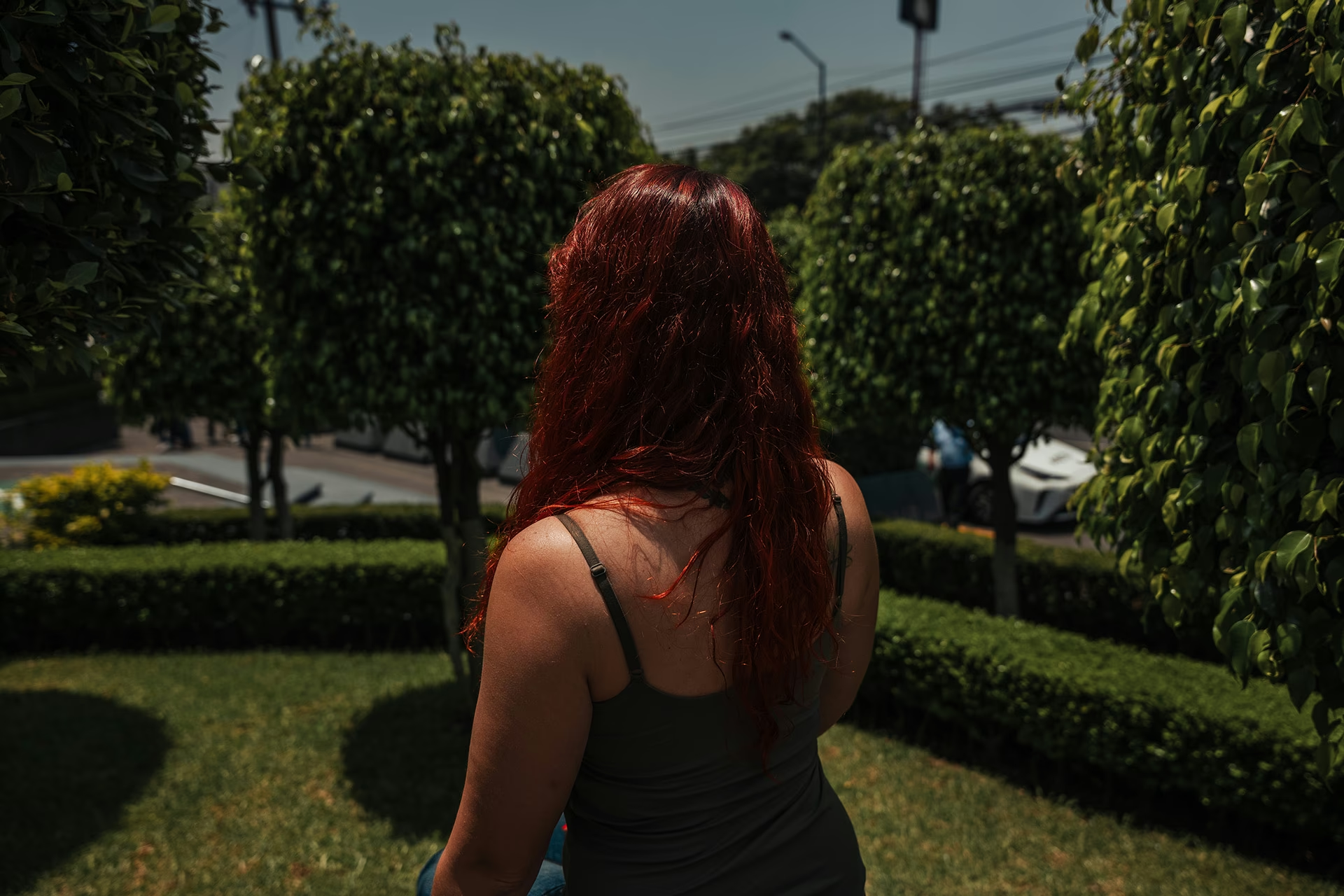
I met Mau’s girlfriend, Nancy, at a café near the clinic where she worked as a doctor. She was slim and pretty, with wavy dyed-red hair and an assortment of tasteful bracelets adorning her wrists. She’d grown up in the city in an upper-middle-class family, gone to private school, and spent a year living in the U.S. as a teenager, where she honed her English, before returning home for medical school at one of the country’s most respected public universities.
She told me she’d met Mau on Bumble a year earlier. She was drawn by the impressive claims in his bio—that he’d visited at least 100 countries and spoke seven languages. “I was captured by that,” said Nancy, an aspiring globe-trotter herself.
Early in their relationship, Mau told her that he’d been kidnapped by a cartel, but he didn’t talk much about his captivity at first. Details trickled out over time—the torture, the tournament, the VIP audience. Once, while she was watching her favorite news anchor, Mau pointed at the TV and said, “He was there.” She was shocked—she had always trusted the anchor’s reporting. “How could he be there? How could he know that, and not tell about it?” she remembered thinking. On another night, a well-known politician appeared on TV, and Mau told her that he, too, had attended the tournament.
Nancy came to feel as though she didn’t know her own city, her own country. The Mexico of her childhood had been replaced by shadowy figures and conspiracies of silence—a malevolence that lurked in places she’d passed a thousand times. She recalled driving one afternoon with Mau in the passenger seat when he’d suddenly tensed up. He told her this was the street where he’d been abducted.
“Here?” she’d exclaimed, in disbelief.
I asked her where it was. The neighborhood she named was miles away from the spot that Mau had taken us to.
It was clear to me that Nancy was genuinely in love with Mau. (When I conferred later with Ulises and Adriana, they agreed.) She said she was glad to be there for him as he processed the trauma of his captivity. They had built a tender and adventurous life together. She traveled with him around the world, and nursed his injuries. (One day, as she was running her fingers along his cheek, she felt the ridge of an old fracture that had never properly healed.) She also helped him work through old grievances with his family. Mau had never gotten along with them, she said. His mother had favored his brother, doting on him while treating Mau as an afterthought. “His mother is not very nice to him,” Nancy told me. She had not met his family and didn’t want to: “I can’t stand that someone is that mean to him.”
I asked Nancy what Mau did for a living—a question I’d somehow never gotten a clear answer to.
She responded as if the answer were obvious: He was a runner for the U.S. Olympic team. She went on to gush about his athletic accomplishments—how most runners retired well before their late 30s, and how, defying the odds, he was determined to make it to the Summer Games in Los Angeles. “If he can get to 2028, that would be almost a record at his age!” As her eyes gleamed with pride, my stomach sank.
Before we left, I asked Nancy what she thought about Mau’s prospective Hollywood deal. She said that Mau had told her all about Reynolds, and Peña, and the development of the script. Ulises asked: Would she be a character in the movie?
Nancy laughed self-consciously and cast her eyes downward. “Well, I don’t know,” she said, clearly embarrassed by how much the idea pleased her. “He told me yeah, I might.”
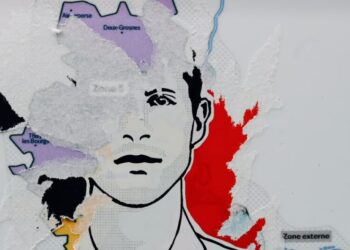
One thing that Mau had told me was undeniable: The missing-persons posters were omnipresent in Mexico City. Once you saw them, they were impossible to miss—on buses, on street corners, at subway entrances. At the center of the city, there was a traffic rotary known locally as “the roundabout of the disappeared,” plastered with hundreds of faces. The government, eager to project an image of calm and security, had begun scraping the posters off the wall, but mothers returned every day to put them back up. More than 130,000 people are currently listed as missing in Mexico, a number that has roughly tripled in the past decade.
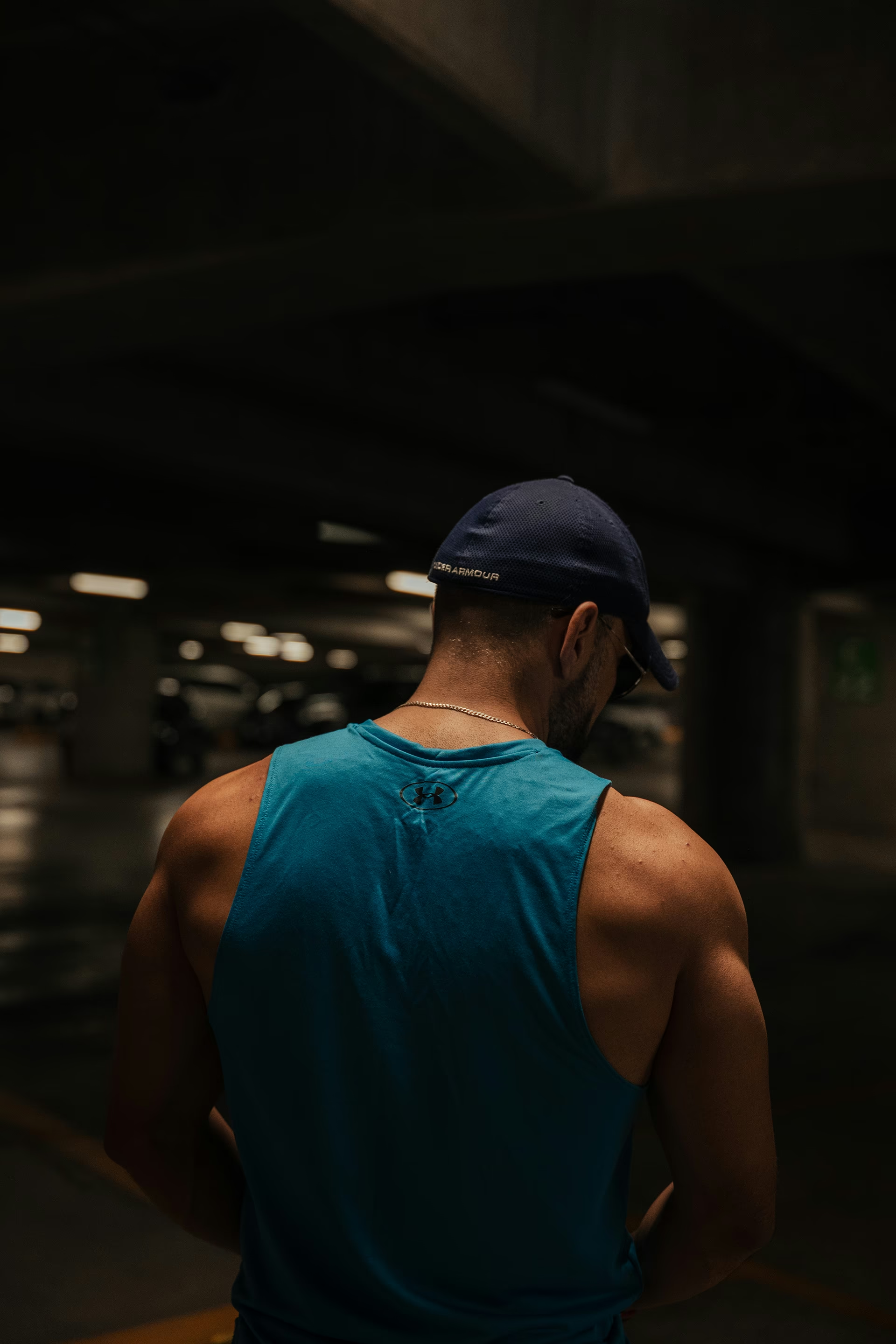
One evening, Ulises, Adriana, and I drove to an upscale shopping mall, where Mamers had suggested we meet. I had messaged him on WhatsApp earlier that day to ask if I could bring a photographer. He agreed on the condition that she not take pictures of his face—for a former cartel hit man risking his life to tell his story, anonymity was essential for survival. To keep a low profile, he told me, he’d be wearing a hat and sunglasses.
But when I spotted him as we descended the escalator into the mall’s atrium, I almost laughed out loud: He was dressed like a caricature of a tough-guy sicario—oversize sunglasses, a tight blue tank top stretched across his bulging chest, a gold chain around his neck.
We sat down at a table outside a coffee shop, and I asked Mamers to tell his version of the story from the beginning. He related the events in a steady voice, without embroidery or visible self-regard. He recalled meeting Mau in the prison for the first time and taking pity on him—a soft, bewildered naïf who clearly had no idea what kind of world he’d been dropped into. He described the members of their team: El Diablo, the taxi driver, the perverted old lawyer. He recounted the day of the tournament, the gymnasium in the mountains, the bands and the monster trucks and the VIPs in the stands.
“People from different political parties, different criminal organizations in the same place hanging out,” he said at one point, switching briefly to English. “I was like, What the fuck? ”
I asked him why he was telling his story now—wasn’t he afraid?
Mamers said he’d taken precautions. He had moved to a different part of the city and grown a beard to avoid recognition. He was out of the cartel game, he told me, and now worked in construction. He wanted a different life.
He’d agreed to the interview largely out of loyalty to Mau. Befriending an innocent person who had been victimized by a cartel had forced him to reckon with his own complicity. For years, he said, he had done his employers’ violent bidding without giving it much thought. Watching Mau endure it had unsettled him—and he wanted people to know what was going on in his country.
“I’m proud to be Mexican,” he said, “but Mexico is sick.”
When the meeting ended, we said goodbye to Mamers and walked out of the mall in a quiet daze.
Adriana broke the silence. “That was a mindfuck,” she said. Ulises nodded. “I think,” he said carefully, as though he couldn’t quite believe what he was about to say, “that maybe something did happen to them.”
I agreed. Whatever else was going on with Mau, Mamers’s story seemed too detailed, too internally consistent, too mundanely specific to dismiss as a fabrication for my benefit. When I checked in with my editor that night, I told him that I wasn’t quite so sure anymore that this was all a hoax.
Before going to bed, I started watching The Maltese Falcon in my hotel room. I felt a certain self-aggrandizing kinship with Humphrey Bogart’s Sam Spade as he groped his way from one deception to another—each revelation rearranging the pieces without clarifying the picture, the truth always just out of reach.
But I couldn’t shake the sneaking suspicion—though I tried to repress it—that in Mau’s story, I was not the shrewd, enterprising detective, but a mark.
La Unión Tepito sprouted in 2009 from a massive open-air market in one of Mexico City’s most dangerous neighborhoods. It presented itself at first as a kind of neighborhood watch, in which young men from Tepito provided security, for a fee, to local vendors worried about larger cartels. The arrangement grew into a profitable protection racket, and La Unión Tepito soon expanded into narcotics and kidnapping. Ulises had told me that we’d need to be careful when we visited the market—no loitering, no pictures. But as we wound our way through the crowded maze of vendor stalls hawking counterfeit Gucci bags and black-market smartphones, I saw few obvious signs of organized crime. It wasn’t until we slipped some cash to a shopkeeper who let us climb a hidden ladder in the back to a secluded rooftop overlooking the market’s expanse that Ulises spoke freely: Those men zipping through the market on motorized scooters, he told me, were likely employees of the cartel.
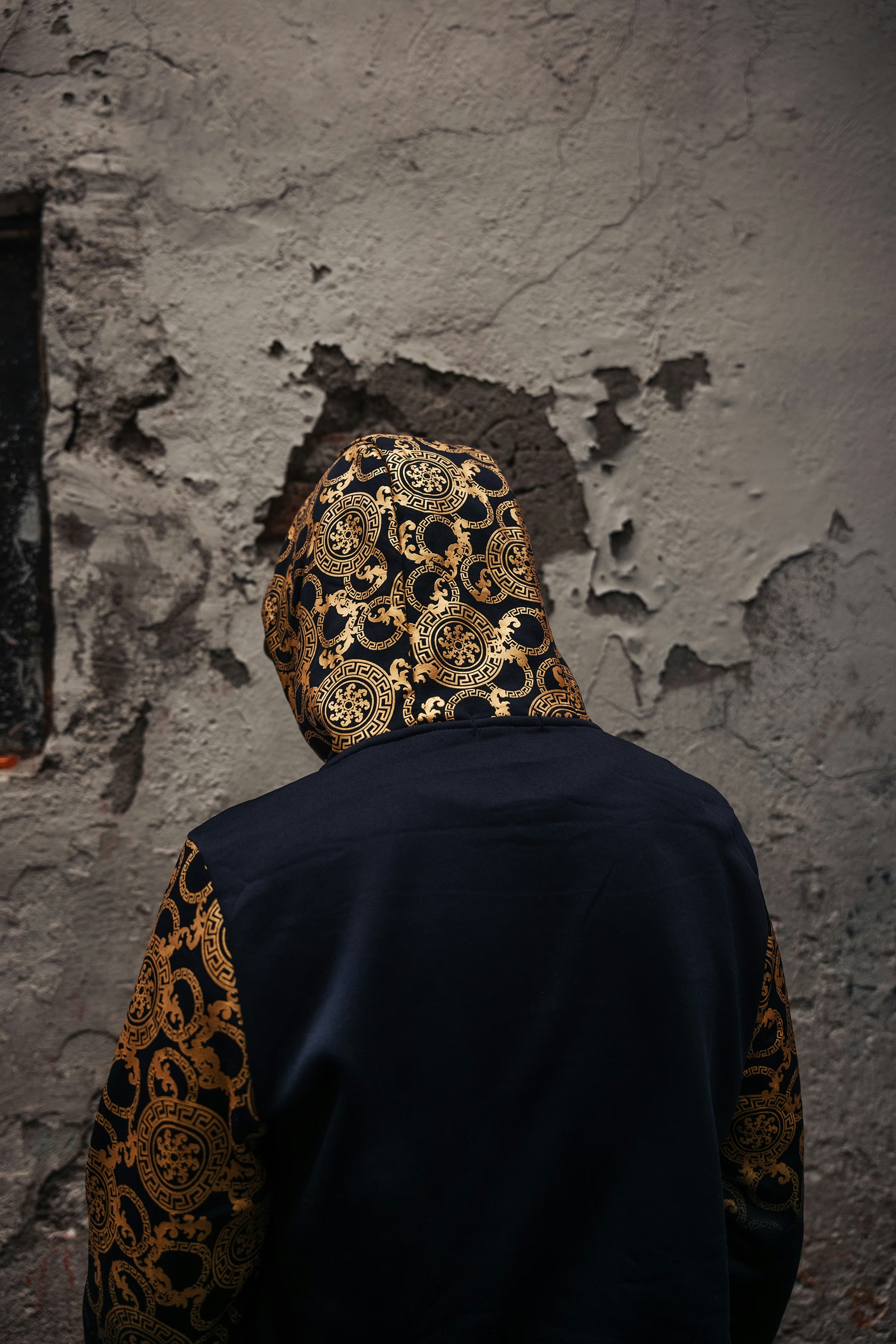
Through one of Ulises’s contacts, we’d arranged to meet a low-level employee of La Unión Tepito, a young man who asked me to call him Pedro. We sat with him at a plastic table in an alleyway a few blocks from the market. He wore a flamboyant tracksuit embroidered with a gold dragon that belied his flat, affectless demeanor. He told me he’d started working for “the organization”—the preferred term for the cartel among its members—when he was about 16, following his father, a leader in La Unión, into the family business. He was now in his early 20s and served in a supervisory role.
I asked Pedro how a typical cartel kidnapping worked. He walked me through the logistics in a matter-of-fact monotone, as if he were explaining how to assemble a piece of IKEA furniture.
“First you study the person who is going to be kidnapped, then you go do the job,” he said. “They’re taken to a safe house. The family is contacted and a ransom is demanded. If the family doesn’t agree, then they start with the mutilation until the family complies.”
Mutilation? I glanced at Ulises to make sure I’d heard his translation correctly. He gave me a look that suggested I not seek elaboration.
I decided to tell Pedro why I was there. I’d heard a story, I told him—without using names or excessive identifying information—about a man who’d been kidnapped by La Unión and forced to compete in an intercartel sports tournament. I painted the picture for him as Mau had painted it for me—cartel bosses from Sinaloa and Jalisco in the stands, politicians and celebrities placing bets.
Pedro, who had been stone-faced throughout our interview, smirked. “Like a movie,” he said.
He told me that he had never heard of such a tournament, and that it went against everything he knew about how the cartel operated. Kidnapping, he explained, was a risky business. Hold on to a victim for too long, and the chances that he escapes or someone comes looking for him grow. La Unión rarely kept a victim for any length of time—if the extortion payments didn’t come, they’d simply get rid of him. Scooping up scores of people and holding them for months in some kind of remote training facility would be too dangerous.
As we made our way back to the hotel, my phone buzzed with an email notification from someone in New York. After I’d seen the Bermúdez race bib hanging on Mau’s wall, I’d done another round of Google searches on his name. Buried in an American court database was an opaque legal filing suggesting that a man named Mauricio Morales Bermúdez was involved in some kind of criminal case in Mexico. On a whim, I’d sent cold emails to several of the people named in the document. Now one of them wanted to talk.
When I reached him by phone later that day, he asked for anonymity to discuss ongoing proceedings. Then he told me the story.
In 2010, according to several sources and allegations made in court documents, Mauricio Morales Bermúdez opened the Mexican office of the Non-Violence Project Foundation, a Switzerland-based nonprofit best known for its “knotted gun” logo. The foundation, with offices in multiple countries and a dazzling slate of celebrity “ambassadors” (Yoko Ono, Paul McCartney, Lionel Messi), made for an impressive résumé line. It also gave Mau entry into an elite segment of Mexican society.
Through a fundraising auction for Non-Violence Project Mexico in 2013, Mau met Alejandro Martínez, a wealthy, well-connected labor-union leader in Mexico City. Martínez, a trained musician and lifelong Beatles obsessive, was intrigued by some of the rare items up for bid: guitars signed by Eric Clapton and George Harrison, a ukulele bearing McCartney’s name, and—most tantalizing—a T-shirt that had belonged to John Lennon, signed by all four Beatles. Martínez submitted bids on multiple items, and won more of them than he’d expected. Soon after that, he received an email from Mau, who introduced himself as the organization’s director.
In 2015, Mau invited Martínez to an event in Arizona on Super Bowl weekend. There would be a flag-football exhibition featuring celebrities and former NFL players, and then, as a valued donor, Martínez would attend the big game on Sunday. Martínez, thrilled, accepted the invitation.
The exhibition was as advertised. Miguel Herrera, then the coach of Mexico’s national soccer team, ran plays in the huddle; TV personalities from Univision and Fox Sports posed for photos with fans. Mau moved easily among them all—hugging athletes, greeting journalists, navigating the game as if the stars were old friends. Martínez would later remember thinking that Mau was a natural salesman. He even joked that Mau should come work for him.
But when Martínez tried to claim his Super Bowl ticket, he was told there wasn’t one waiting for him; he ended up having to watch the game from a bar. He flew back to Mexico livid, and wrote to the organization to complain.
A few days later, Martínez began receiving contrite emails from an executive at Non-Violence Project Mexico. She apologized profusely for the Super Bowl mishap and said the organization wanted to make it up to him. Soon Yoko Ono herself was emailing him, on behalf of the foundation, offering him a special investment opportunity, available to VIP donors, that would guarantee a return of 50 percent.
The pitch was seductive. The union would receive not only a sizable return, but also anti-violence workshops for its members, and an array of perks for Martínez: a trip to the World Cup, concert tickets, and meet and greets with the foundation’s celebrity “ambassadors.” It sounded like an incredible deal. Martínez and Ono both signed the contract, and Martínez wired $200,000 to the organization.
At first, the arrangement worked as promised. Trainers led workshops for Martínez’s union in Mexico. Packages of memorabilia arrived—soccer jerseys signed by Pelé, Maradona, and Messi; NFL helmets covered in the signatures of Super Bowl MVPs; game balls from European championship matches. Martínez traveled with his family to a concert in California where McCartney and the Rolling Stones played on the same bill, and also got tickets to multiple Super Bowls.
Martínez ended up wiring about $700,000 to the organization. But the promised financial returns never materialized.
When Martínez began asking pointed questions about how the nonprofit planned to produce such returns, he got evasive answers about corporate sponsors and VIP boxes donated by FIFA.
Eventually, the perks dried up. The workshops ceased. In Russia for the World Cup, Martínez discovered that his hotel reservation was missing and his game tickets weren’t available under his name. By the time he flew home, he no longer trusted anyone associated with the organization.
He hired a team of lawyers and private investigators. Together, they pieced together an elaborate—and almost comically audacious—scheme. Those emails signed by Yoko Ono? They weren’t written by her; her signature on the contract was a forgery. That shirt signed by all of the Beatles? Almost certainly fake. And the union money Martínez had wired for its “investment”? It had landed in a bank account controlled by Mauricio Morales Bermúdez.
Martínez’s lawyers contacted the Non-Violence Project Foundation in Switzerland to alert the group that it had a con man in its midst. But instead of offering to help sort things out, foundation executives sent back a series of strange, contradictory responses. (The foundation later disavowed some of the people who had written to Martínez, and said that key signatures and emails appeared to be fake. The foundation did not respond to detailed questions from The Atlantic, but in a statement it said that Bermúdez was never an official employee and that Non-Violence Project Mexico was a “separate and independent” nonprofit entity.)
The more Martínez’s lawyers dug into the foundation, the more suspicious he became that it might be involved in Mau’s scam. The fake employees who had pitched the investment had all somehow managed to use official @nonviolence.com email addresses. Some celebrities featured on the foundation’s website, meanwhile, said they had not authorized the use of their names or images. And an outfit calling itself the Non-Violence Project USA had been linked in press reports to a Medicaid-fraud scheme.
Martínez filed a legal complaint on behalf of the union naming both Mau and Non-Violence Project Mexico. Mau, seeming to catch wind of the investigation, left the country. For several months, according to private investigators hired by Martínez, he traveled around Europe, apparently using some of the union money to cover the cost of his jet-setting.
Finally, Mau came back to Mexico, where authorities turned up outside his apartment with a warrant. They arrested him for fraud on February 9, 2023—the same day he would later tell his friends, his girlfriend, and me that he had been kidnapped by a cartel. According to legal records, he spent 18 months in prison awaiting trial; he was released after promising to repay hundreds of thousands of dollars, and to cooperate in a fraud investigation against the Non-Violence Project Foundation. (In its statement, the foundation denied responsibility for the alleged fraud and said that it is “not a party to any legal proceedings” connected to Martínez’s claims against Bermúdez. Martínez declined to comment.)
Mau did his time at Reclusorio Sur, a men’s penitentiary near the mountains on the southern edge of Mexico City. Also awaiting trial in the prison was a small-time businessman who’d been accused of fraud and the theft of a bicycle. His full name was Edgar Omar González Giffard, but most people inside the prison called him Mamers.
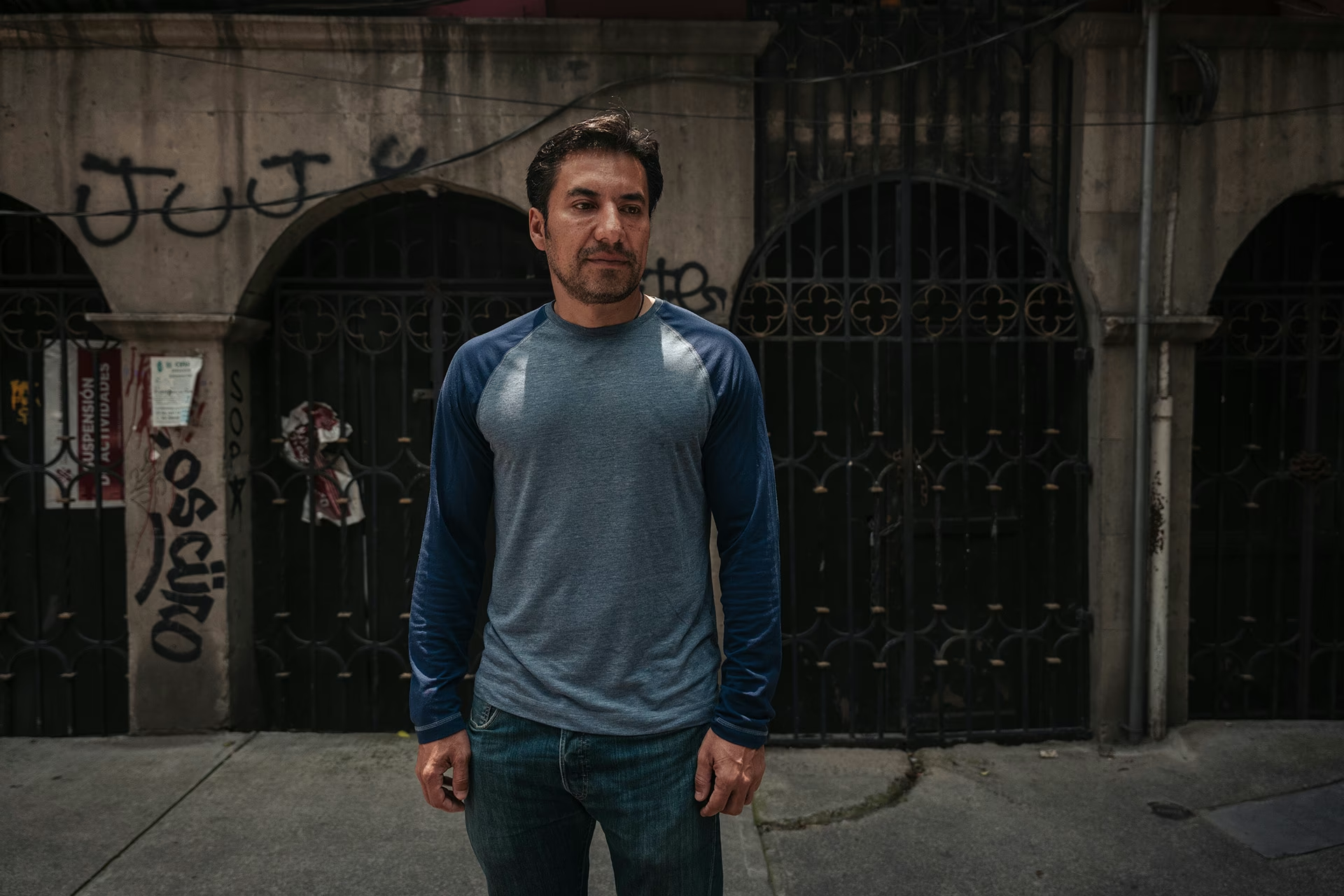
On my last day in Mexico City, I asked Mau to meet me at a park near his apartment. Given the conversation I knew we needed to have, it felt unwise to go back to his home. We chose a concrete table with a built-in chessboard, surrounded by trees and low shrubs. Mau wore a yellow track jacket with ROCKY stitched across the chest.
Shortly after we sat down, I pulled up his mug shot on my phone. Turning the screen toward him, I asked, “Is this you?”
Mau didn’t flinch or scoff or reflexively start making denials. He just paused as his eyes scanned the image. I could almost see him processing this new development—testing the angles, deciding how to respond.
Determined to maintain control of the conversation, I plowed ahead, reading off the details that accompanied the photo: the fraud complaint, the sums of money, the name on the arrest warrant.
“You were arrested the same day you told everyone you were taken by the cartel, right?” I asked.
Unflustered, he began to tell me a new story. Yes, he said, he’d been arrested—but my timeline was wrong. He’d been arrested in 2022, a year before he was taken by the cartel.
And the arrest warrant that stated clearly he’d been taken into custody in February 2023? I asked.
It must have been doctored, he told me. Very powerful people were involved. He was the victim of a conspiracy—caught between a politically connected union and a corrupt international NGO whose bidding he had been forced to do. He said he could explain everything, but it would have to be off the record—he couldn’t be sure of his safety otherwise. I heard the familiar refrain of his pitch returning: What you don’t understand about Mexico …
But I was tired of Mau’s stories.
I asked him if he had stolen the money his family had paid for his ransom.
“No, obviously not,” he said.
And James Winston—he wasn’t a real person, was he?
Mau insisted that he was.
Realizing that we weren’t going to get anywhere, I stood up to leave. Before we parted, I asked if he could send me the case file from his arrest—the documents that would establish the timeline and basic facts of what he’d been charged with.
“I don’t know, man,” he said. “I need to talk to my lawyer.”
Something in his demeanor had changed. It was as if he’d flicked off a switch. The likable, self-effacing man I’d been talking with for months had withdrawn, and in his place was someone colder, more distant. His mark had gotten wise—it was time to move on.
I said goodbye and made my way up the hill toward the park’s exit, looking back for one last glimpse at Mau. He was heading in the opposite direction, shoulders slightly hunched, staring down at his phone, his thumbs moving quickly across the screen.
When I got back to my hotel that night, I called Robert Reynolds to break the news that the story he’d wanted so badly to adapt for the screen wasn’t true after all. He sounded genuinely shocked.
“Wow,” Reynolds said, almost as if to himself. “He seemed like such a good guy.”
Did he? I found myself wondering about that now. Had Mau’s performance really been so compelling? Or was his story just exciting enough, just potentially profitable enough, just flattering enough to American sensibilities and preconceptions, that Reynolds and I and everyone else had simply wanted too badly to believe it?
In retrospect, it seemed absurd that I’d ever taken Mau so seriously. As more of the pieces fell into place following my discovery of his arrest and imprisonment, he looked less like a heroic survivor or even a mastermind hoax artist, and more like a low-level scammer with a talent for improvisation. That email from the high-ranking UN official asking Reynolds for Killers tickets for a beloved volunteer? It was signed by Filippo Grandi, then the UN high commissioner for refugees, whose office confirmed that it was a forgery. (Mau denied writing it himself.) Those messages from movie producers who had somehow caught wind of the story I was writing? It turns out Mau was stringing along multiple filmmakers—the producer in Mexico told me they were on the verge of signing an “exclusive” contract with him.
And yet, I still couldn’t say definitively that he’d invented his account out of whole cloth. In the course of my reporting, I learned about interprison sports tournaments, including a football competition, organized by the Mexico City penitentiary system. It is well established that the cartels have a presence in the country’s prisons—was it possible that Mau’s fantastical story of heroism and life-and-death stakes was rooted in his own less cinematic, less blood-drenched experience as a regular prison inmate? Then there was the mystery of Mamers’s “disappearance.” Late last year, Mamers went dark on social media and, Mau said, stopped responding to his messages. My own attempts to contact him were also unsuccessful. Mau told Reynolds that his old friend was dead, most likely taken out by a cartel. Maybe he’d just gone to ground. In a country with 130,000 missing people, I suspected I would never know for sure.
In the months after I left Mexico, the news in my own country would be dominated by ICE raids and mass deportations—a hard-line immigration agenda built on the stories we are told about crime and migrants and cartel bosses. When the death of a drug lord in February set off a brutal wave of cartel attacks, the United States canceled flights to resort cities and issued shelter-in-place alerts for Americans in Mexico. Mau’s account of the cartel Olympics fit neatly into the governing narrative of the age, one that imagines a permanent, untamable dystopia just beyond America’s southern border.
Some stories take on a life of their own because they show how things really are. Others spread because they tell us what we already believe. And sometimes a story that’s too good to be true is just that.
But a good story is a hard thing to kill.
Two weeks after my return from Mexico City, Reynolds called me.
“Dude,” he said breathlessly. “I just talked to Michael Peña.” He had filled the actor in on the latest developments—Mau’s deception, my investigation, the whole ridiculous misadventure—and Peña saw potential. “He said he loves this even more than the original story!” The movie was back on.
This article appears in the May 2026 print edition with the headline “The Incredible Story of the Cartel Olympics.”
The post The Incredible Story of the Cartel Olympics appeared first on The Atlantic.