Her nemesis, Aleksandr Lukashenko, still occupies the grandiose presidential palace in Minsk, Belarus. She endured years in prison for daring to help lead a movement against him. But she is certain that in some important respects, she has won.
“I won not just because I didn’t break, but because neither hate nor anger ever took root in me,” Maria Kalesnikava, who was freed three months ago in a U.S.-brokered deal, said in an interview in Berlin, her new home.
“This whole time, I never wanted revenge, even in the most difficult moments,” she continued. “I did not accept these rules of the game of hate and aggression, rudeness and violence.”
If she had, it would have been understandable. Ms. Kalesnikava, 43, spent five years, three months and six days in prison. She was sent there after she and a handful of others inspired hundreds of thousands of Belarusians to peacefully protest Mr. Lukashenko’s election fraud and decades-long grip on power.
She suffered a perforated ulcer in prison and underwent surgery, and right after the operation, her jailers cut her off from the world. For more than 20 months, largely in solitary confinement, she was denied phone calls, visits, even letters to and from her loved ones. The silence was agonizing for her and her supporters.
Despite her treatment by Mr. Lukashenko, Ms. Kalesnikava thinks the West’s isolation of him is misguided, driving him more firmly into Russia’s orbit. She wants to see more of the kind of engagement that won her freedom — the kind that led on Thursday to the freeing of 250 political prisoners in the latest round of such releases brokered by the Trump administration.
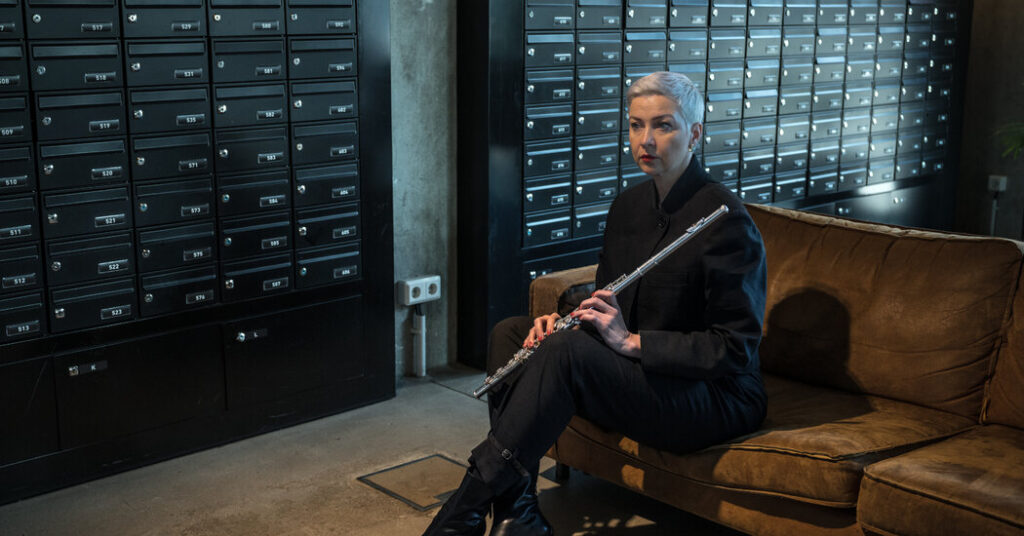
Sporting her trademark blond power-pixie haircut and red lipstick in the interview, she did not want to dwell on her physical and mental hardships. She wanted to talk about her gratitude: for supporters who risked imprisonment to send her care packages, for journalists who persisted in asking about her, and for the U.S. government for securing her release and that of hundreds of others imprisoned for their pro-democracy activism.
Nothing in Ms. Kalesnikava’s background suggested she would one day lead political protests. A child of engineers, she trained as a flutist and conductor, performing with orchestras and ensembles. In 2007, she moved to Stuttgart, Germany, to continue her studies, earning master’s degrees in early music and in contemporary classical music.
She visited Belarus only sporadically until moving home in 2019, in part to be closer to her family. When she returned, she found her country, run by Mr. Lukashenko since 1994, experiencing a period of relative openness amid a long period of repression.
In Minsk, the capital, she met Viktor Babariko, a banker who had created a cultural center called OK16. Ms. Kalesnikava became its art director, and when Mr. Babariko announced he would run for president against Mr. Lukashenko in 2020, she agreed to run his campaign.
But the government jailed him and other challengers, and then barred them and other contenders from running. Ms. Kalesnikava and other opposition leaders rallied around a new candidate, Svetlana Tikhanovskaya, the wife of a jailed former candidate.
Mr. Lukashenko derided the campaign, saying that if a woman carried the burden of the presidency, “she would collapse, poor thing.”
Undeterred, the opposition campaigned hard. Ms. Kalesnikava became a widely recognized figure, posing for photos with supporters as she made a heart with her hands.
“It was a time of enormous hope, because people believed in themselves, in their potential, in the fact that there was an opportunity to create the Belarus they had dreamed about,” she said.
Then came the August election, and the government said that Mr. Lukashenko had received more than 80 percent of the vote. The opposition, which claimed to have won, and international monitors dismissed that as pure fiction.
Opponents of the government took to the streets, marching peacefully in a movement that seemed to keep growing. Although hundreds were arrested after each protest, the time seemed ripe with possibility. Many Western countries, including the United States, refused to acknowledge the election results as legitimate.
The regime — aided by Russian forces after Mr. Lukashenko called on President Vladimir V. Putin for help — put down the protests with batons, tear gas, rubber bullets, water cannon and tens of thousands of arrests. Security forces made Ms. Tikhanovskaya leave Belarus with her children.
In September, officers seized Ms. Kalesnikava in the center of Minsk and put her in a van, along with two other activists, with a bag over her head. When they arrived at the border with Ukraine, she realized that the government was trying to forcibly deport her. She jumped out of the vehicle and tore up her passport so that she would be unable to cross the border, insisting that she remain “with her people.”
It was pure instinct.
“It is much harder for me now to choose which salad I will eat than it was to decide to tear up my passport,” she said.
The authorities charged her with conspiracy to seize state power unconstitutionally, among other offenses. She was convicted and sentenced to 11 years in a penal colony.
Every day, she wrote a letter to her father, although he never received any during the last three years of her imprisonment. For long stretches of her term, she toiled in a prison workshop six days a week, sewing uniforms for law enforcement agencies.
In 2024, she was kept in such strict isolation that she kept count of the days when she saw the sun without looking through bars or glass — 22 in all. A single grainy photo of her father hugging her in the prison infirmary in November 2024 was the first proof the world had that she was even alive.
During her total isolation, she was allowed to listen to the radio. She recalls dancing in her cell to Sting, Dua Lipa, and Imagine Dragons.
Last year, the Trump administration began re-engaging with Mr. Lukashenko. Secret visits eventually led to Belarus’s release of hundreds of political prisoners, though at least 1,117 others remain incarcerated, according to the human rights group Viasna.
Mr. Babariko and Ms. Kalesnikava were freed in December.
In exchange, Washington eased sanctions against Belarus, including on the sale of potash, a mineral used in fertilizers that is the country’s leading export. Some activists have criticized the engagement as “potash for prisoners,” arguing that Mr. Lukashenko’s regime is jailing people almost as fast as it releases them.
But Ms. Kalesnikava welcomes the rapprochement and has urged European leaders in meetings to follow Washington’s lead. The trade-off, she insists, is worth it.
“When I hear criticism about not releasing political prisoners in exchange for talks and sanctions relief,’” she said, “I want to tell these people: ‘Go ahead. Look the parents of the children who are now in prison in the eye and tell them these people aren’t worth fighting for.’”
Belarus’s dependence on Russia undermines European security, she said, so she supports engagement that “turns Belarus toward Europe and the Western world.”
“When conversation stops, the room for war begins,” she added.
While she was in detention, Ms. Kalesnikava’s German bank account was blocked, a ripple effect of the sanctions against Minsk. The same thing has happened to many of her compatriots, making their lives in exile difficult. It is just one example of the ways that isolating Belarus punishes people who were not the intended targets.
“If Europe remains closed to Belarusians for another five years, an entire generation will grow up with no personal experience of European culture or democratic values,” she said. “Their understanding of the West will be shaped entirely by propaganda, effectively losing them to Russia and creating a long-term security threat for Europe.”
Ms. Kalesnikava acknowledges that doing political work in exile has limits, but she is determined to continue her activism. She also wants to return to the arts, and is buzzing with plans.
“All these authoritarian regimes, the first thing they fight against is the art world,” she said. “Because creativity is impossible without inner freedom.”
After years of being forbidden to play her flute, a sensation she sometimes dreamed about in prison, she is back to practicing, preparing for a momentous return to the stage, on April 9 in Berlin.
Valerie Hopkins covers the war in Ukraine and how the conflict is changing Russia, Ukraine, Europe and the United States. She is based in Moscow.
The post An Autocrat Jailed Her, but She Wants the World to Talk to Him appeared first on New York Times.