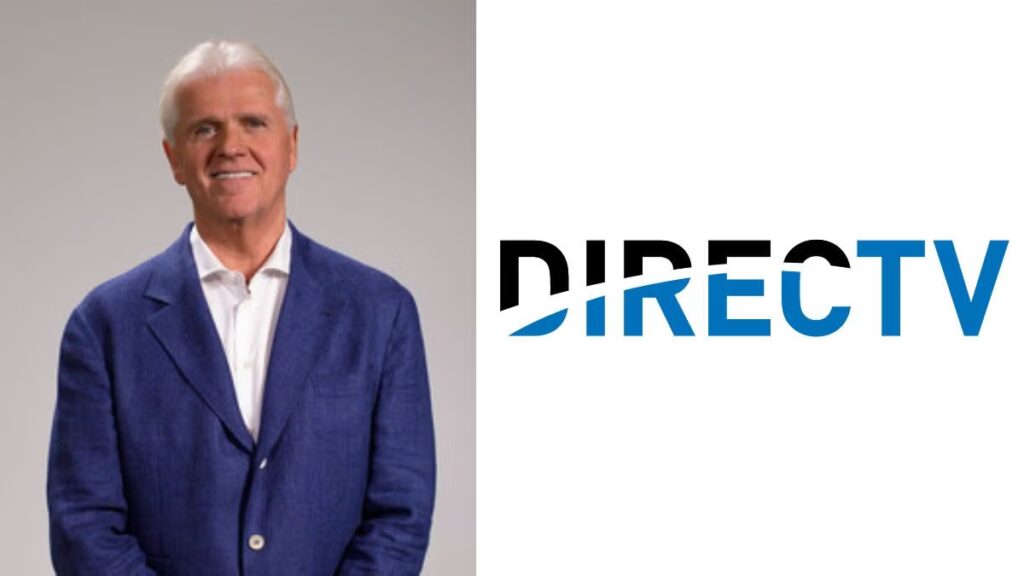
DirecTV has entered the Nexstar-Tegna chat, accusing the $6.2 billion merger of violating federal antitrust laws in a new lawsuit.
The legal document was filed Thursday in Sacramento district court, stating that the potential acquisition, which would bring together the nation’s largest and second-largest broadcaster, would be a concentration of broadcast media without precedent. It would further “irreparably drive up consumer costs, reduce local competition, shutter local newsrooms and increase both frequency and duration of blackouts of key local teams and network programming,” according to the multichannel video programming distributor.
“This merger would create a massive concentration of market power,” the legal documents read. “The acquisition would give Nexstar control of 228 broadcast stations reaching 80% of television households in 132 local markets and increase concentration in more than a dozen local markets by more than 10 times the amount that is presumptively unlawful under the antitrust laws. That enormous increase in market power will enable Nexstar to raise prices and reduce the amount, variety, and quality of local news without having to worry about losing business to competition.”
DirecTV’s lawsuit comes just one day after eight states sued to block the merger. The coalition of lawsuits filed on Wednesday comes from attorneys general in California, New York, Colorado, Illinois, Oregon, North Carolina, Connecticut and Virginia.
“Today, my office has filed a lawsuit to block the proposed merger of broadcasting giants Nexstar and Tegna. This merger would cause incredibly high levels of concentration in local TV markets and is expected to raise cable and satellite prices across the country, causing irreparable harm to local news and consumers who rely on their reporting as a critical source of information,” California AG Rob Bonta said in a statement. “If approved, this multibillion-dollar deal would combine the nation’s largest and third-largest television-station conglomerates, creating a behemoth covering 80% of U.S. television households. This merger is illegal, plain and simple, running contrary to federal antitrust laws that protect consumers. When broadcast media is owned by a handful of companies, we get fewer voices, less competition, and communities lose the critical check on power that local journalism delivers.”
Still, Nexstar is “highly engaged” in discussions with the Department of Justice and the Federal Communications Commission regarding the transaction, per CEO Perry Sook. FCC chairman Brendan Carr and President Donald Trump have both previously expressed support for the deal, which would require the elimination of the 39% national TV ownership cap put in place by Congress in 2004 to ensure viewpoint diversity and prevent monopolization.
First announced last August, upon closing, Nexstar would have 265 television stations in 44 states and the District of Columbia, representing 80% of U.S. television households, adding Big-4 affiliate stations in Phoenix, Atlanta, Toledo and Portland, Maine, in the process. The combined company would also have stations in nine of the top 10 markets, and in 41 of the top 50. Together, Nexstar and Tegna have combined net revenue of $8.1 billion and adjusted EBITDA before stock-based compensation of $2.56 billion, excluding synergies.
The post DirecTV Files Antitrust Lawsuit to Block $6.2 Billion Nexstar-Tegna Merger appeared first on TheWrap.