Roberto González is chief advocacy officer at the Human Rights Foundation and an adjunct professor at Fordham University School of Law.
President Donald Trump has been presiding over a startling turn in U.S. policy on Cuba. In January, he announced that Washington would “work a deal” with Havana, which is facing one of its most severe economic crises in decades. Earlier this month, Cuban President Miguel Díaz-Canel confirmed that talks were ongoing. Then, on Monday, the same day Cuba was hit with a total power grid collapse, Trump moved beyond dealmaking language.
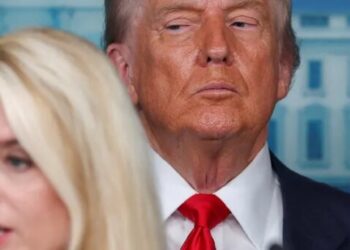
Speaking to reporters at the White House, Trump said he expected to have the “honor of taking Cuba in some form.”
Should the administration be right that Cuba has been so weakened, it may have on its hands the rarest of geopolitical openings. That opening should not be wasted. Before Washington offers any sanctions relief or diplomatic thaw, it should state one condition in public and without ambiguity: the unconditional release of all Cuban political prisoners.
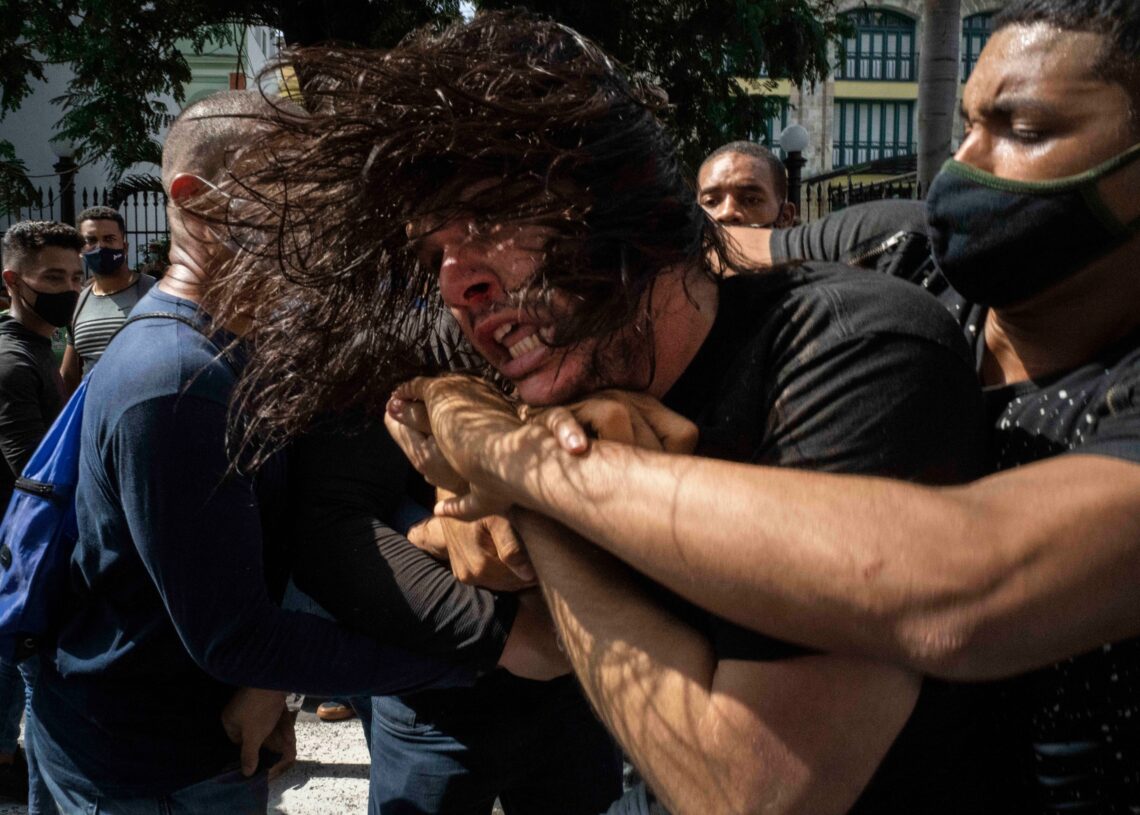
A government that seeks dollars while jailing dissidents is not reforming. It is refinancing repression. Cuba still imprisons hundreds of peoplefor political reasons. Even after last year’s Vatican-brokered agreement to release 553 prisoners, rights groups could verify only about 200 protest-related detainees among those freed. The United States has continued to cite the unjust detention and torture of Cubans who joined the major nationwide protests in July 2021, and independent monitors say many families still face surveillance, intimidation and arbitrary restrictions.
The categories are telling: peaceful protesters, independent journalists, artists and civic activists. An independent journalist, José Gabriel Barrenechea, was sentenced in January to six years in prison after joining a peaceful street protest during a blackout in 2024. Families of prisoners of conscience report worsening harassment and denial of adequate medical care.
Any negotiation that treats their imprisonment as a secondary matter would only legitimize repression.
Conditioning engagement on liberty is a staple of American statecraft. During the Cold War, the Jackson-Vanik amendment denied unconditional trade benefits to Soviet-bloc regimes that restricted emigration; a White House fact sheet later called it “an extraordinary success” in securing freedom of emigration from the Soviet Union and its successor states.
That standard survived the Cold War. In 2012, President Barack Obama kept Myanmar sanctions in place, even while acknowledging reforms, because of “remaining political prisoners” and persistent serious abuses. By 2016, when he finally terminated the nearly two-decade national emergency with respect to Myanmar, the White House cited “the release of many political prisoners” as part of the reason.
And there is even more recent evidence of this approach bearing fruit. This year, under intense U.S. pressure, Venezuelan officials released opposition figures, activists and other political prisoners. High-profile releases began at Washington’s request, and by late February a leading legal rights group said more than 540 political prisonershad been freed since Jan. 8, shortly after President Nicolás Maduro was ousted. Reuters later reported that Caracas had bowed to Trump administration demands and released hundreds as part of a desire for broader normalization with Washington. The releases were incomplete and uneven, but that is precisely the lesson: Pressure works best before relief is banked.
That is why Havana’s concessions must come before any handshake, not halfway through the process and not buried in a confidential side understanding. Prisoners released beforehand are leverage realized. Prisoners promised afterward are often little more than a press strategy.
For Trump, this is also a question of legacy. He can pursue an opening that leaves Cuba’s bravest citizens behind, or he can establish a standard worthy of both American interests and American principles. Secretary of State Marco Rubio has already placed sanctions on Cuban officialsover the unjust detention and torture of protesters. A release-first policy would match action and rhetoric with leverage and make clear that U.S. engagement is meant to strengthen the Cuban people.
If this truly is Havana’s moment of weakness, the United States should begin where every free nation ought to begin: not with the regime’s balance sheet, but with the names on its cell doors.
The post Trump talks of ‘taking Cuba.’ Here’s what must come first. appeared first on Washington Post.