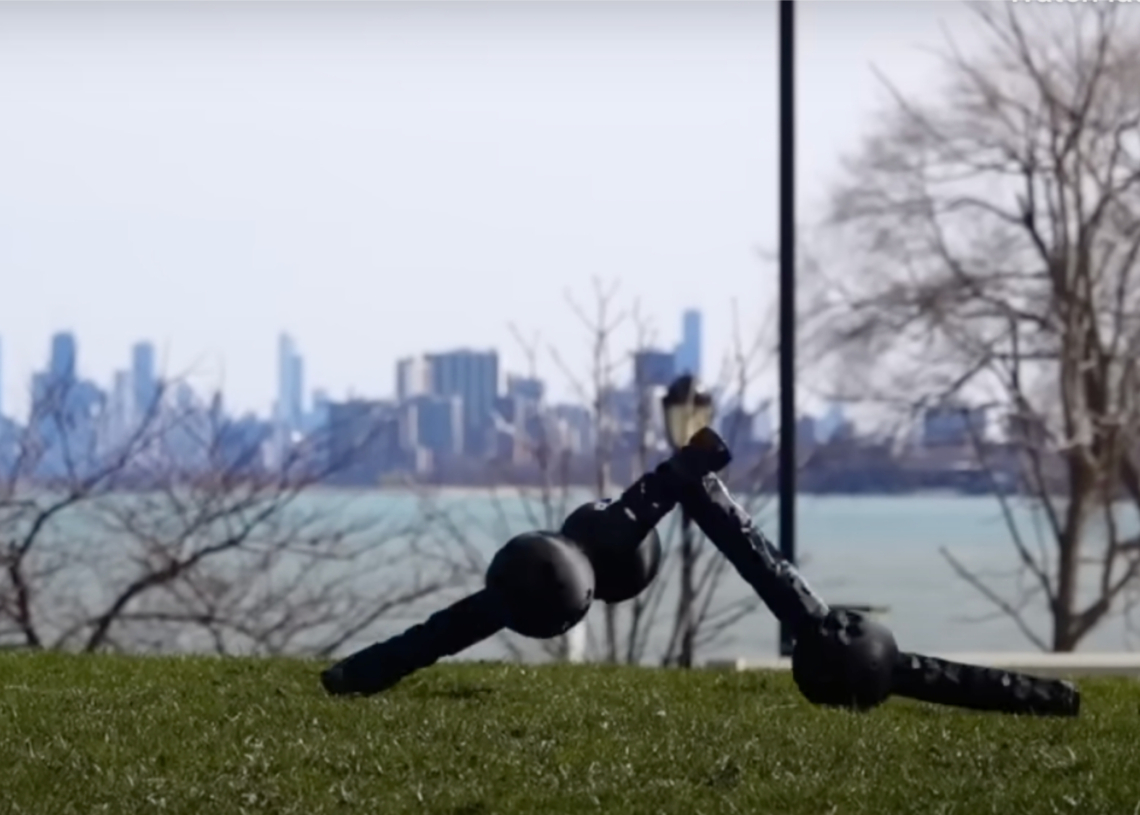
Humans usually build robots with a specific purpose in mind and a specific set of inspirations drawn from other aspects of life, such as animals or especially athletic humans. Researchers at Northwestern University wanted to see what would happen if they allowed an AI system modeled on natural selection to invent entirely new robots on its own. The work was published in Proceedings of the National Academy of Sciences and detailed on Northwestern University’s website.
The team created a simulation where thousands of simple modular machines competed to move effectively. Each design was made from basic components, such as stubby limbs, motors, and sensors, and reassembled in different ways. Think of it like an expansive Create-a-Character feature in a video game.
The system then ran different configurations through a Darwinian rule set that tested performance, keeping what worked and discarding what didn’t, and then repeating the process. Over time, the process produced what researchers call “metamachines,” robots created by relentless and ruthless trial and error in a virtual environment. In essence, these robots were treated like living creatures that were allowed to “evolve” within an AI simulation.
The results are appropriately freaky and weird.
Scientists Used AI to ‘Evolve’ Robots, Then Built the Wildest Designs in Real Life
Which makes sense. When free from human expectations, the designs prioritized function over appearance, resulting in robots that adapted in ways traditional robots never could.
The research team then brought these AI-evolved machines into the real world to demonstrate how they would function outside of a simulation. In the video below, you’ll get to see one of the AI-evolved nightmares brought to life. In the form of what looks like three burned logs from a campfire that were brought to life with a witch’s curse and now must aimlessly and perpetually wander the earth with their three singed little kickers slamming about in a horrific mimic of autonomous movement.
They can flip themselves upright if overturned, continue moving after losing limbs, and even function when split into separate pieces. Each module can act independently, sensing, computing, and navigating on its own before potentially rejoining the larger system.
One thing the system definitely has in its favor is resilience. These things can take a beating, even though most of it seems self-imposed, thanks to their bizarre idea of movement.
All told, this could signal a future of robotics where machines might not look like something we’d design. Instead, it might look like something we could have never imagined, because we technically didn’t.
The post Scientists Taught an AI to ‘Evolve’ Robots, Then Built the Weirdest Ones in Real Life appeared first on VICE.