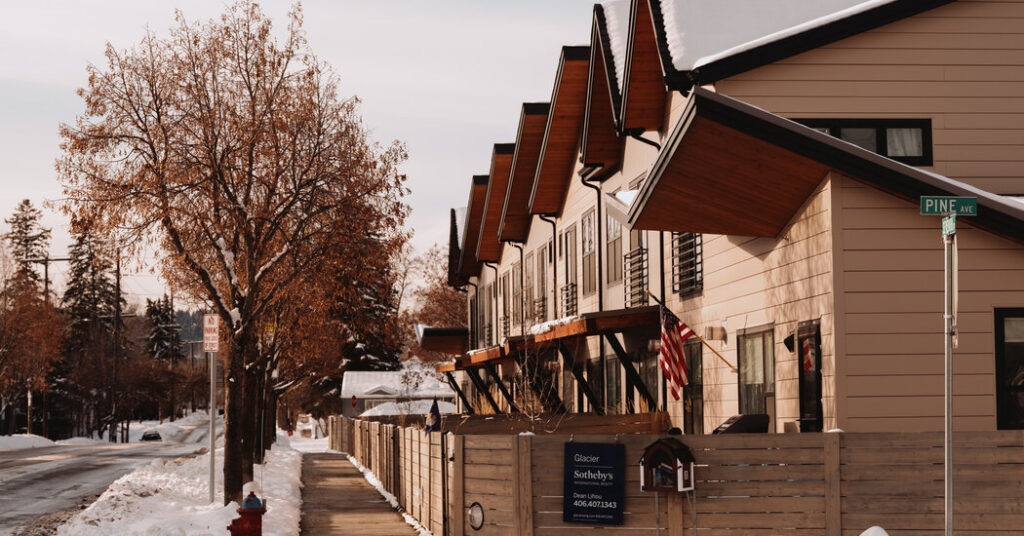
Mortgage rates in the United States climbed for the third week in a row, further squeezing housing affordability as the war in the Middle East drives up costs.
The average 30-year, fixed-rate mortgage rate rose to 6.22 percent, the mortgage finance giant Freddie Mac said Thursday, up from 6.11 percent a week earlier. The last time mortgage rates were this high was the second week of December.
Mortgage rates dipped below 6 percent in February, days before the war started, but they have been rising since then. Iran’s retaliation to U.S. and Israeli attacks, including effectively blocking oil and gas exports from the region, has raised energy costs and concerns about inflation globally. In response, the yield on 10-year Treasury notes, which underpin mortgage rates, have also climbed.
For home buyers, the higher mortgage rates can add hundreds of dollars annually to their loan payments. The war in the Middle East compounds affordability challenges for many Americans, but for the time being, the fighting is not likely to alter long-term decisions on major purchases like home buying, said Michael Pearce, the chief U.S. economist at Oxford Economics.
“The longer this goes on,” he added, “the more it’s likely to affect buyer behavior.”
The fighting is weighing on other participants in the housing market, too. Higher prices for oil and gas translate into higher costs for materials for builders.
The National Association of Home Builders has reported that sentiment is already low among developers, who now face a higher degree of uncertainty.
“With headline risk remaining elevated, whether it’s tariffs or international issues, that is a headwind,” said Robert Dietz, the group’s chief economist. He added that fuel contributed about 3 percent of the construction costs of a single-family home.
The outlook for the rest of the year is also troubling for developers, who are facing the prospect of higher financing costs, Mr. Dietz said. The Federal Reserve does not directly control mortgage rates, but it does set the rate that influences construction and land loans.
The central bank held interest rates steady at its meeting on Wednesday, and investors now expect that it will be more than a year before the Fed’s next rate cut.
The housing market has been stuck in the doldrums since the Covid-19 pandemic, when mortgage rates fell below 3 percent, setting off a frenzy of home buying and refinancing. Since then, many homeowners have been reluctant to sell their homes because they would then face higher rates. With fewer homes on the market, prices have risen and sales have slowed.
Since peaking at 7.79 percent in October 2023, rates have slowly drifted lower, offering hope that the housing market was beginning to thaw.
“Before the war, we had expected a gradual recovery,” Mr. Pearce said. “With the war, that’s going to delay any recovery.”
President Trump has made efforts to address housing affordability, including signing two executive orders on Friday to ease regulation and make it easier for home buyers to borrow.
But his executive orders complicate efforts in Congress to approve a housing bill that aims to increase the supply of new homes. Last week the Senate passed a bipartisan bill, and now House leaders are negotiating with divided Republicans before a final vote. The president has threatened to withhold his signature from any legislation until Congress delivers a bill that includes voter restrictions.
Gregory Schmidt is a Times business editor overseeing coverage of the European economy. He is based in London.
The post Mortgage Rates Highest in Three Months as War Weighs on Housing Market appeared first on New York Times.