The bolt of uncertainty that the U.S.-Israeli war with Iran has injected into the global economy has shaken the plans of policymakers at central banks far beyond Washington.
The European Central Bank, Bank of England and Bank of Japan all held interest rates steady on Thursday, a day after the Federal Reserve did the same, as they face a new inflationary threat from higher energy prices. While policymakers at each bank had been grappling with different economic circumstances, they have been united again by the prospect of a long disruption to energy supplies pushing up prices in their regions.
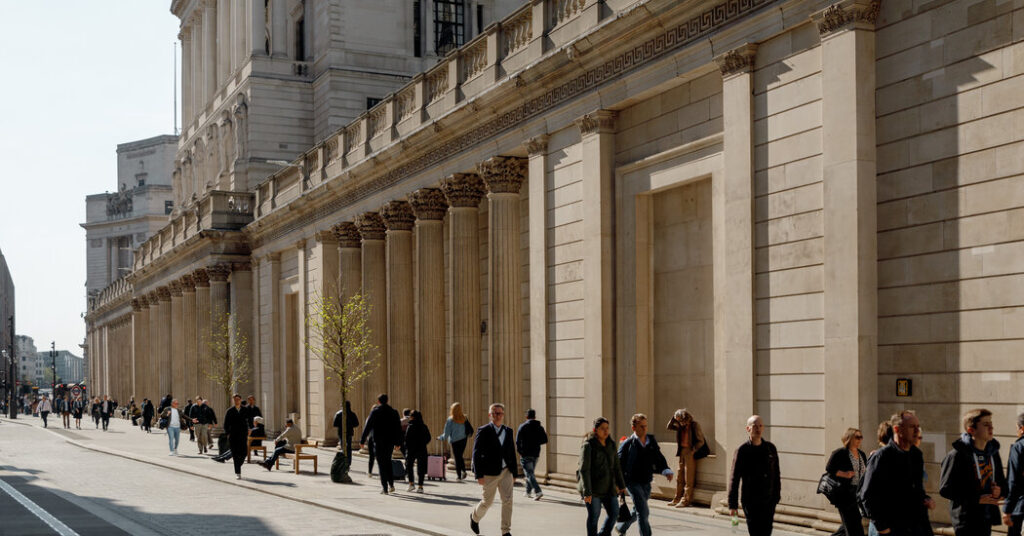
The most immediate shift has been in Britain. Policymakers held interest rates at 3.75 percent on Thursday and said inflation would be higher in the near term because of “the new shock to the economy.” Less than three weeks ago, traders had been expecting a rate cut at this week’s meeting because of growing confidence that inflation was returning to the bank’s 2 percent target. Now, they are betting there will be two rate increases in the next year.
Andrew Bailey, the governor of the Bank of the England, said on Thursday that policymakers held rates as they “assess how events unfold.”
“War in the Middle East has pushed up global energy prices,” he said. “You can already see that at the petrol pump, and, if it lasts, it will feed into higher household energy bills later in the year.”
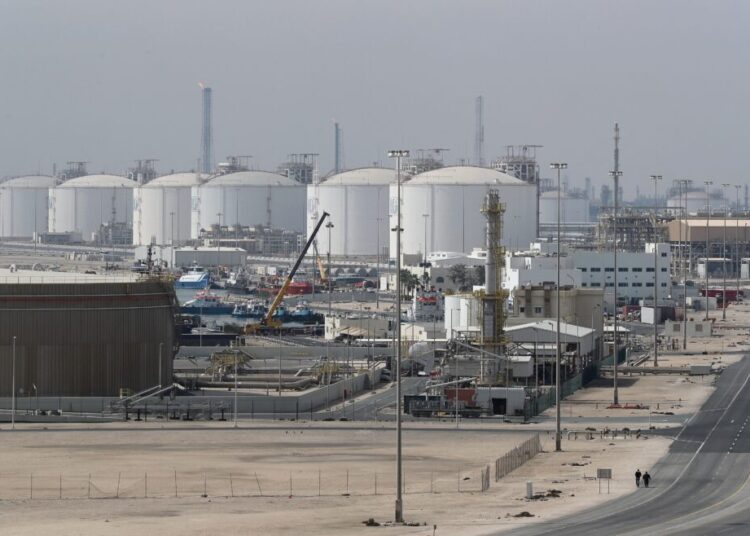
On Thursday, the price of oil and natural gas jumped after attacks on energy infrastructure in the Persian Gulf intensified. Brent crude, the international benchmark, climbed to $115 a barrel, while European natural gas prices at one point surged 35 percent. Gas prices came down a little, but they are still double what they were before the fighting began at the end of February.
The risk of a resurgence in inflation comes not long after central bankers battled the biggest jump in inflation in decades resulting from Russia’s invasion of Ukraine in 2022. At its peak, the average rate of inflation exceeded 10 percent in the eurozone and 11 percent in Britain. Policymakers responded by aggressively raising interest rates, which had painful consequences for homeowners, businesses and government budgets.
On Wednesday, the Federal Reserve held rates for a second straight meeting but many of its policymakers said they still expected to cut rates one more time this year. Jerome H. Powell, the chair of the Fed, repeatedly emphasized the high degree of uncertainty associated with the Middle East conflict and said it was too early to know what the impact would be on inflation and the labor market.
In Europe, traders have begun to expect central bankers will raise rates this year to counter inflation. It’s a sharp change from their expectations just a few weeks ago.
Before the war began, traders were betting that the Bank of England would cut interest rates twice this year, with a more than 80 percent chance the first one would happen at its meeting this month. Now, they are betting on two rate increase.
The bank had been cutting interest rates slowly as several of its policymakers were worried about signs of lingering inflation. That finally seemed to be abating. Last month, the bank said it expected inflation to return to target in April, a year earlier than expected, after the government announced measures to lower energy bills. But that has been upended by the war in Iran.
In a sign of how much the outlook has been disrupted, the decision to hold rates steady at the Bank of England was unanimous, ending months of division in the committee.
Inflation in Britain is expected to be about 3.5 percent in March, half a percentage point higher than the bank had forecast last month, and stay around 3 percent in the third quarter, a percentage point above the inflation target.
“All members stood ready to act as necessary to ensure that” inflation was “on track” to return to the 2 percent target, according to the minutes of the bank’s meeting.
Policymakers at the European Central Bank, which sets rates for the 21 countries that use the euro, also held rates steady at 2 percent. Though that decision was expected, policymakers said that the conflict in the Middle East had made the economic outlook “significantly more uncertain” and that there would be a “material impact” on short-term inflation.
The European Central Bank now expects inflation to average 2.6 percent this year, a revise up from an earlier projection that inflation would slightly undershoot the target at 1.9 percent. The bank also lowered its economic growth forecasts.
Traders are betting that the E.C.B. will raise rates at least twice this year, having projected no changes before the war in the Middle East.
“We are well positioned to navigate this uncertainty,” Christine Lagarde, the president of the bank, said in a news conference in Frankfurt. She added that policymakers were monitoring the situation closely, especially the risk that higher energy prices lead to a broader increase in inflation in other goods and services.
Earlier on Thursday, the Bank of Japan kept interest rates unchanged at 0.75 percent.
Before the outbreak of war with Iran, a market consensus was forming that the Bank of Japan could lift interest rates as early as next month as investors bet that wages would finally begin to outpace inflation this year, after four years of relative stagnation. It would have been a pivot from the near-zero rates that have defined the Japanese economy for decades.
But the war has scrambled that calculus. With surging energy prices threatening global growth and further squeezing Japanese households, some analysts now expect the central bank to delay its next rate increase until the summer.
Speaking at a news conference in Tokyo, the Bank of Japan’s governor, Kazuo Ueda, said that the bank would continue to raise rates, but that the “key point is how the intensifying situation in the Middle East will impact the Japanese economy.”
“We will choose the appropriate response based on factors such as the magnitude of the impact of price increases and economic deterioration,” he said.
Traders’ expectations of interest rate changes have been moving quickly, in step with jumps in energy prices. While many analysts say these expectations may be overdone, policymakers have become more hawkish.
One key question for analysts has been to what extent policymakers might choose to look through the increase in energy prices. Interest rates tend to be pushed higher when central bankers see so-called second round effects, namely high prices pushing up wages, because that can lead to a spiral that’s hard to bring back under control.
In 2022, many central bankers at first said that the jump in inflation would be “transitory.” Later they were criticized for acting too slowly. While policymakers have said this week that it was too soon to know how the war would impact inflation and economic growth, they have emphasized the risks.
“A larger or more protracted shock, which risked greater second-round effects in wage and price setting, would require a more restrictive policy stance,” according to the minutes of the Bank of England’s meeting.
River Akira Davis contributed reporting from Tokyo.
Eshe Nelson is a Times reporter based in London, covering economics and business news.
The post Central Banks Brace for Faster Inflation as Energy Prices Surge appeared first on New York Times.