In less than three weeks, the United States and Israel have destroyed many of the military assets Iran has used to menace the Middle East for decades. The Pentagon reported 15,000 strikes in the first 10 days, which not only blew up launchers, missiles and ships; they also leveled some of the production sites that once replenished Iran’s arsenal.
At least another two weeks of attacks will be necessary to ensure the regime cannot pose a serious military threat for several years — if it survives at all. Forcing the threat from Tehran into remission certainly would constitute a military victory, arguably the United States’ first in Iran since 1979.
But there are two actions that would subvert such a victory. The first is if President Trump prematurely calls off the operation before the necessary targets have been hit. He did this last summer, forcing an early end to Israel’s military campaign against Iran. Another week of operations then might have prevented Tehran from responding as forcefully as it did in the first days of this conflict.
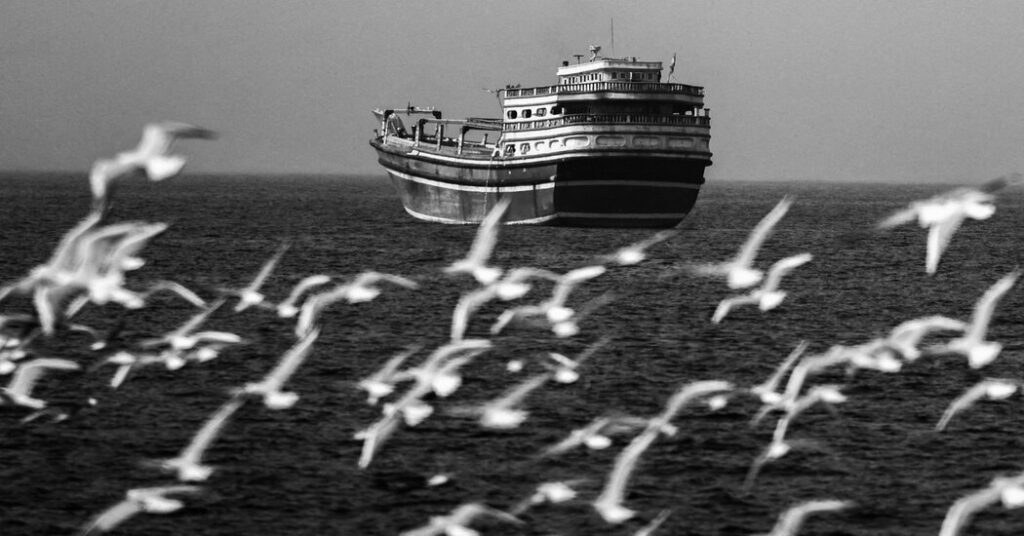
The second failure would be if the United States allows Iran to maintain control of the Strait of Hormuz. Should the regime survive the war with the power to close Hormuz at will, disrupting the transit of fossil fuels and other crucial commodities, any declarations of victory by the United States will ring hollow.
A tense struggle is underway between what’s required for success and the enormous financial stress the war puts on energy and stock markets. Victory is possible, but only if the United States endures that financial strain until it can gain control over the Strait of Hormuz and reopen the flow of trade.
At the moment, transits through the strait are down roughly 90 percent. Nearly all shipments of liquefied natural gas have stopped. Approximately 400 oil tankers are trapped in the Persian Gulf to the west of the Strait of Hormuz, unable to depart, and a comparable number of ships sit on the strait’s eastern side, in the Gulf of Oman. The price of Brent crude oil — the benchmark for oil prices — has risen more than 50 percent over the past month. If oil gets to $150 per barrel, it could send markets into a steep downward spiral. At that point, pressure on the Trump administration to reopen the strait would most likely grow substantially.
Opening the strait won’t be easy. Iran can threaten shipping with aerial drones, primarily Shahed drones loaded with explosives, and unmanned fast attack boats. It also has cruise missiles that are especially dangerous because the strait is just 21 miles wide at its narrowest point, giving American warships only 30 or 40 seconds to employ defensive measures.
Iran’s missiles, drones and unmanned attack boats have already been severely degraded by airstrikes and will continue to be hit hard, so the greatest obstacles to reopening the strait are now Iranian mines, some about the size of a washing machine, lying silently on the sea floor. American attacks have put 16 of Iran’s mine-laying vessels out of commission, but Iran probably maintains hundreds, perhaps thousands of mines.
The Reagan administration confronted a similar challenge nearly 40 years ago, when Tehran sought to pressure the Persian Gulf states to end their support for Saddam Hussein in the Iran-Iraq war. As part of Operation Earnest Will, U.S. Navy warships escorted Kuwaiti tankers in the Persian Gulf to protect them from Iranian attacks. The operation was ultimately a success, despite the fact that a mine ripped into a Kuwaiti oil supertanker on the very first convoy in July 1987. The next spring, a mine nearly sank an American warship, breaking the ship’s keel and injuring about 60 sailors.
Today’s challenge is greater because Iran now has more-advanced mines than it did in the 1980s. And it regularly ignores the rules that the Geneva Conventions lay out for mine warfare, such as properly marking mined areas. Some mines sit on the sea floor or are tethered to it. Still others can be programmed to count ships, so an American minesweeper could run the route and another ship could follow before the mine would detonate to bring down a third boat.
Mr. Trump is reportedly desperate to start having Navy ships escort tankers across the strait. The lesson of Operation Earnest Will is to avoid trying to pass the strait prematurely, before American forces can remove as much of the threat as possible. If there are mines in the water, it is essential to complete the painstaking, dangerous and slow work of demining.
I participated in convoy operations nearly 40 years ago, and I learned that there is no fast option — only methodical work that takes weeks, not days, of persistent satellite surveillance, as well as air cover by fighter jets and armed helicopters. Most likely, over the next two weeks, a sufficient number of American destroyers will arrive in the northern Arabian Sea to escort commercial vessels. It would be helpful if allies supplied capable warships, but this is not a necessity in the short term.
The president should remember that China is watching. If pressure in the oil markets is enough to break America’s resolve and lead Mr. Trump to pull out of the war, Chinese leaders are that much more likely to conclude that our commitments to defend Taiwan are nothing but bluster.
If the United States can hold firm for the next few weeks, it can fully degrade Iran’s war-making apparatus. This would usher in a multiyear interval of calm of the kind that neither sanctions nor diplomacy has been able to produce in over four decades. In that window, a better regional order could emerge.
The president has reached a decisive point. He cannot both end the war immediately and claim victory. It is one or the other.
Mark Montgomery is a retired U.S. Navy rear admiral and a senior fellow at the Foundation for Defense of Democracies. He was formerly a policy director for the Senate Armed Services Committee.
The Times is committed to publishing a diversity of letters to the editor. We’d like to hear what you think about this or any of our articles. Here are some tips. And here’s our email: [email protected].
Follow the New York Times Opinion section on Facebook, Instagram, TikTok, Bluesky, WhatsApp and Threads.
The post It’s All About Hormuz appeared first on New York Times.