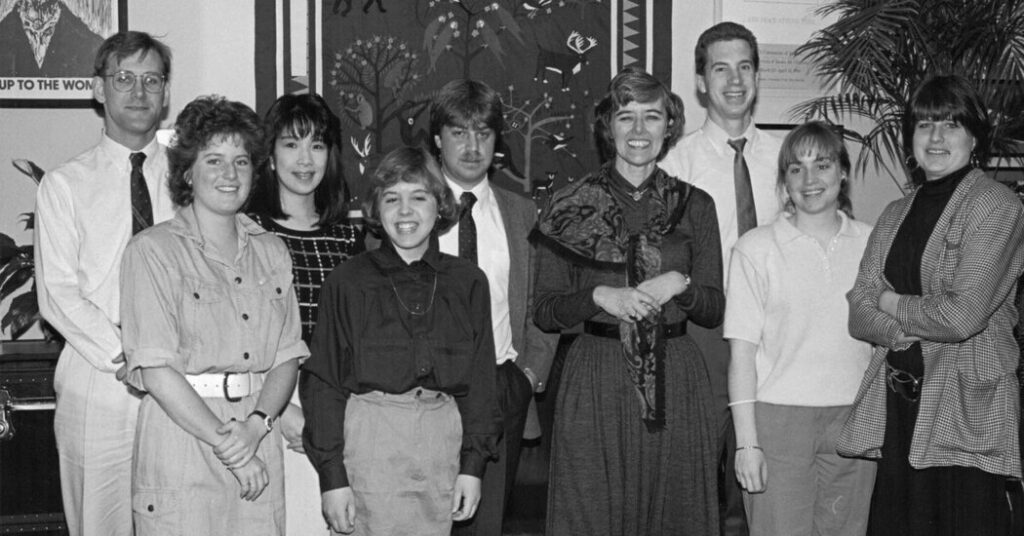
Sanae Takaichi was despondent. It was the late 1980s and Ms. Takaichi, now Japan’s prime minister, had just moved to Washington to intern for Rep. Patricia Schroeder, a trailblazing Democrat from Colorado.
Ms. Takaichi, then 26, had broken up with her boyfriend and fought with her parents to pursue her dream of working for Ms. Schroeder, a feminist force in Congress, whom she had seen on television. But she had a rocky start in Washington, sleeping on flattened cardboard boxes in her apartment and feeling ostracized because she hailed from Japan, then America’s chief economic rival.
“Even though I had done nothing shameful to anyone, I was shunned by both Japanese society and my American colleagues,” she later wrote. “I was truly alone in a faraway foreign country.”
Ms. Takaichi persevered, and last year she became the first woman elected as Japan’s prime minister. She returns to Washington on Thursday for a high-stakes meeting with President Trump. It will be a homecoming of sorts for Ms. Takaichi, who found her political voice during a nine-month stint in Ms. Schroeder’s office in 1988, according to interviews with five associates of Ms. Takaichi and an examination of her writings.
Despite her bumpy start, Ms. Takaichi became a tireless aide, answering phones, writing letters to constituents and helping draft legislation. She read newspapers to improve her English. Her desk — strewed with origami cranes, Japanese cookies and memos on education and defense — gave her a front-row view of American power.
“She was like a sponge, learning as much as she could about how a politician acts and reacts,” said Kip Cheroutes, a former communications director for Ms. Schroeder. “She wanted to know how a lawmaker talks, which hands you shake, which doors you knock on.”
The experience inspired Ms. Takaichi’s political career, she has said, showing it was possible for women to rise to high levels of power. For years, she kept a photo of Ms. Schroeder, who died in 2023, in her office, next to a portrait of Margaret Thatcher, the former British prime minister, her other hero.
As the standard-bearer of Japan’s main political party, Ms. Takaichi is now a dyed-in-the-wool conservative. But under Ms. Schroeder, she helped advance progressive causes like expanding health care for women and eliminating gender discrimination.
Her colleagues said there was no hint of her personal views.
“We didn’t know where her leanings were,” said Bert Ramlow, a former aide to Ms. Schroeder. “She was confident — self-assured without being self-centered — and eager to learn all sides of the issues.”
Ms. Takaichi first learned about Ms. Schroeder in 1987 while studying at a training institute for young leaders in Japan. She watched a news segment about Ms. Schroeder’s presidential bid.
“My eyes were glued to the television,” she recalled in a 1992 memoir. “What a fashionable, sexy and stunning woman she was. The vibrant colors of the scarf around her collar, her tasteful earrings and her beaming smile were burned into my memory. She delivered a speech on military issues with dignity and strength.”
After Ms. Schroeder dropped out of the race a few months later, Ms. Takaichi sent a telegram offering help, writing, “I still respect you.” Ms. Schroeder replied, inviting her to Washington.
Ms. Takaichi struggled to get by on a monthly stipend of about $1,200 from a Japanese research institute, borrowing a worn-out blanket from the manager of her building. She developed a love for Skippy peanut butter.
On Capitol Hill, lawmakers were concerned that Japan would surpass the United States; Ms. Takaichi described Ms. Schroeder as a “main character in the Japan-bashing campaign.” Some colleagues treated her as if she were a spy from an “enemy country,” according to Ms. Takaichi. But she won them over with her work ethic, staying in the office from 7 a.m. to 11 p.m. some days.
In her books, Ms. Takaichi marveled at the devotion of meagerly paid staff members (“a certain segment of Americans are even more ‘worker bees’ than the Japanese”); the long hours that went into responding to hundreds of letters from constituents every day (“I felt like I was seeing the very origins of American democracy”); and the humble lives of public servants (she recounted catching Ms. Schroeder clipping coupons for meat and butter).
On a trip to Colorado, she studied Ms. Schroeder’s energetic style at rallies and going door-to-door. Ms. Schroeder advised her to be herself and not cater to women or men.
“If I have to pander to everyone to be liked,” Ms. Schroeder told her, according to Ms. Takaichi, “I’d quit being a politician.”
When Ms. Takaichi returned to Japan, she spoke about her time in Washington, contrasting American democracy with Japan’s backroom deal-making and nepotism. She warned that Japan would soon face the same problems as America, including with drugs and immigration.
After winning election to Japan’s Parliament in 1993, she sent letters to her former colleagues, enclosing doodles, autographed photos or her books.
In a 1995 letter to Mr. Cheroutes, she recounted her success. She said her experience in Washington “made me what I am now.”
Javier C. Hernández is the Tokyo bureau chief for The Times, leading coverage of Japan and the region. He has reported from Asia for much of the past decade, previously serving as China correspondent in Beijing.
The post How Japan’s Leader Found Her Voice in D.C. Decades Ago appeared first on New York Times.