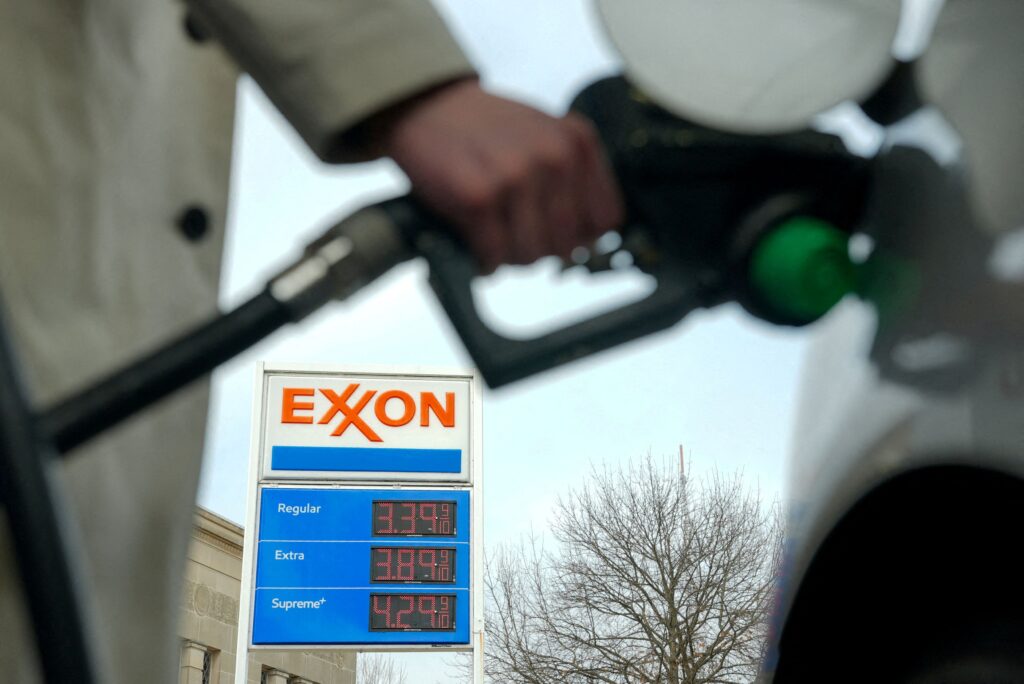
As American drivers pay more for gas and oil prices continue to climb, even the oil companies experiencing a revenue bump from President Donald Trump’s continuing war with Iran are on edge.
For the fossil fuel industry, disruption like Iran’s blockade on oil and gas exports through the Strait of Hormuz can be like a dangerous narcotic. Higher oil prices translate into a heady rush of new profit. But a painful reckoning can follow if prices stay elevated, as consumers and businesses cut energy use, economies slide toward recession and policymakers press for interventions on the industry.
The conflict started by U.S. and Israeli strikes on Iran last month is nearing its fourth week with no resolution in sight. Iran state media said on Wednesday that the country had struck “US-linked oil facilities” and Qatar’s state oil producer said its hub for exports of liquefied natural gas export sustained “significant damage.”
The International Energy Agency has described the fallout from the war in Iran as the largest supply disruption in the history of the global oil market. Brent crude, the global oil benchmark, was $107 a barrel late Wednesday, an increase of 46 percent since the first strikes against Iran on Feb. 28.
“Oil companies are not thrilled with these sharply rising crude prices,” said Bob McNally, who was previously an energy adviser in the George W. Bush White House and later founded research firm Rapidan Energy Group. “This is not a healthy, sustainable increase in prices and profits and investment opportunities for these companies. It is a body blow to the economy that will likely end up hurting demand for petroleum products.”
One oil company official who spoke on the condition of anonymity because they were not authorized to comment publicly said the industry would prefer to see the oil price stabilize at around $80 a barrel, a level that guarantees healthy profit but makes for gas prices manageable for drivers and comes with little risk of a market collapse. “Major oil companies don’t dance a jig when prices go up like this,” the official said.
Clay Brett, an attorney who advises oil industry clients at the firm Baker Botts, agreed. Oil executives, he said, would choose $80 oil “all day, every day” over the short-lived windfall that comes from a huge spike in prices followed by a slump.
The American Petroleum Institute, a trade group for oil and gas producers, said in an emailed statement that the “industry is focused on the long term and depends on stability, not volatility or short-term swings.”
It added, “U.S. oil and natural gas producers are built to weather cycles, and the strength of the industry isn’t measured by any one price point — it’s the ability to reliably meet global demand over time.”
Oil prices could average $100 per barrel for the year if the war in Iran continues, some analysts predict. That would net the two biggest oil companies in the United States, ExxonMobil and Chevron, extra profits totaling $47 billion because of the war, according to David Clark, vice president for corporate research at market research firm Wood Mackenzie.
Although a boon to shareholders, those windfalls could create problems for oil companies. Firms would report their extra profits from the Iran war ahead of the midterm elections, potentially enraging voters dealing with more expensive gas and moving politicians to target the companies with heavy regulatory measures like export controls.
ExxonMobil declined to comment. Chevron did not respond to request for comment.
Escalating oil prices put pressure on consumers and businesses to find ways to reduce their use of gas and other oil derivatives. That could accelerate the adoption of electric vehicles and prompt industries to shift to alternatives to petroleum feedstocks, reducing appetite for oil. Sustained price hikes can help trigger economic recessions that also sap demand for oil, as happened in the United States and other countries after the 1970s energy shocks triggered by conflict in the Middle East.
The danger to oil companies of prices staying high for a prolonged period, is that “you kill the goose that lays the golden egg,” said Mark Finley, a fellow in energy and global oil at Rice University’s Baker Institute for Public Policy. “You can cause a recession. You can spur government policies that push economies to move away from oil,” he said.
The oil industry has recent, painful memories of how surging oil prices can presage brutal falls.
In July, 2008, booming demand from China and economic optimism pushed up oil prices to $147 per barrel — roughly $220 in today’s dollars — delivering a slug of profits and triggering investment in expanded drilling. But due to the Great Recession, demand slumped and prices plunged to $30 by the end of 2008. Waves of layoffs and bankruptcies rippled through the oil industry.
Oil prices crashed again during the covid pandemic, due to plunging demand, setting off another round of financial losses, layoffs and bankruptcies in the industry.
Oil companies have since been focused on what industry leaders call “capital discipline,” holding back from big new investments and trying to keep prices and returns steady and predictable. Analysts believe that means U.S. firms are unlikely to move to increase production despite the current high price of oil.
Trump has sent mixed signals over when the war in Iran might end, but the White House has made a series of moves aimed at bringing down oil prices. They include lifting sanctions on Russian and Venezuelan oil, tapping the Strategic Petroleum Reserve and temporarily waiving the Jones Act, which prohibits foreign vessels from shipping oil and gas between U.S. ports.
Those changes have so far seemed to have little effect on the climbing price of oil.
“President Trump has been clear that these are short-term disruptions,” White House spokeswoman Taylor Rogers said in an email. “Ultimately, once the military objectives are completed and the Iranian terrorist regime is neutralized, oil and gas prices will drop rapidly again, potentially even lower than before the strikes begin.”
If the conflict continues, the administration has few easy policy moves left to bring down oil prices.
“At some point governments run out of options for addressing the problem with interventions on the supply side and they start to look at how they can directly control prices,” said Kevin Book, managing director at ClearView Energy Partners, a research firm. “You can look at the history here. There are very few free marketeers in government when prices spike.”
Some Democrats are already calling for measures that chafe the industry. Sen. Sheldon Whitehouse (D-Rhode Island) and Rep. Ro Khanna (D-California) on Tuesday introduced the Big Oil Windfall Profits Tax Act, which they said in a news release would “curb profiteering by oil companies and provide Americans relief at the gas pump.”
Last week, Rep. Brad Sherman (D-California) called on Trump to use his emergency powers to “pause U.S. petroleum exports until cessation of the hostilities with Iran and instead sell directly to Americans at the price dictated by current supply and demand for American consumers.”
The administration has given no indication it intends to go that route, which analysts say would create long-term damage in the energy economy and potentially worsen supply disruptions. But Book said that history has shown that after major energy shocks, previously unthinkable options can start to look plausible.
After energy prices soared amid the 2022 midterm elections, the Biden administration considered restricting U.S. exports of refined gasoline and diesel. If the current energy crunch persists for months, Republicans may start to consider similar options, Book said.
A White House official who was not authorized to speak for the record said that while the administration is always looking for ways to stabilize oil prices, profit caps and export controls are not under consideration.
Mike Sommers, CEO of API, the oil trade group, appeared last week to take the prospect of such controls seriously. “Pulling American oil off the world market would further tighten global supply,” he wrote in a post on X last Thursday, saying that export controls “could trigger cascading economic consequences for consumers.”
The post Gas is so expensive even oil companies may suffer appeared first on Washington Post.