The idea that white people — and white men in particular — face discrimination has become something of an obsession on the American right.
The age of diversity, equity and inclusion transformed affirmative action into something that felt more sharply discriminatory. And now there’s a big debate among conservatives: Should they counter progressive identity politics with a colorblind nationalism? Or treat white culture as something real and embattled and worth organizing around?
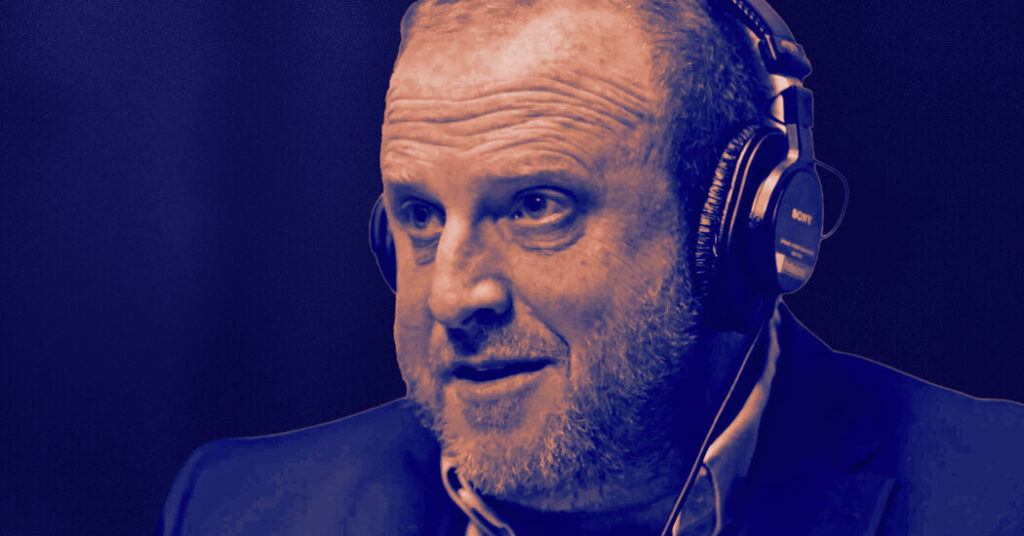
My guest this week ended up at the center of that debate when the Trump administration nominated him for a State Department post. Jeremy Carl is the author of “The Unprotected Class,” a book that argues that white Americans are in danger of becoming second-class citizens. We talked about what constitutes antiwhite discrimination and whether focusing on it leads inexorably toward white nationalism.
After we taped this interview, Carl withdrew his nomination, acknowledging that he lacked enough support to be confirmed.
Below is an edited transcript of an episode of “Interesting Times.” We recommend listening to it in its original form for the full effect. You can do so using the player above or on the NYTimes app, Apple, Spotify, Amazon Music, YouTube, iHeartRadio or wherever you get your podcasts.
Ross Douthat: Jeremy Carl, welcome to “Interesting Times.”
Jeremy Carl: Thanks so much for having me, Ross.
Douthat: So you are a senior fellow at the Claremont Institute, which is a well-known — especially in the Trump era — conservative think tank. And your background is in environmental policy and energy.
Carl: Yeah, that’s right. I mean, my formal background has nothing to do with any of the things for which I’m best known now, but I went and did many years of graduate study and have written books and articles on environment and energy policy and served in the Department of the Interior in Trump One.
Douthat: And then, after Trump One, you did a career pivot where you became a guy who writes about antiwhite discrimination, multiculturalism and immigration. These are ideas that have a lot of currency on the right, and they’ve become the focus of controversy around your nomination to be assistant secretary of state for International Organization Affairs. Did I get that right?
Carl: You got it right.
Douthat: I got it right.
Carl: It’s a mouthful.
Douthat: Talk about the job that you were nominated for. What would you be doing?
Carl: So it’s a job that oversees basically everything that we’re doing at the United Nations, but also has a supervisory role at things like the G7, the G20, the World Bank — other sorts of major international organizations that we’re a part of.
It really harks back a little bit more, frankly, to an earlier portion of my career. I spent almost a decade as the right-hand man for the late secretary of state George Shultz and did a lot of work in this field there. It was one of the reasons why, when the State Department came to me and approached me, I was interested. Obviously, on issues like migration, because the U.N. is such an expansive organization, it will touch on some of the things that we’re talking about here.
But I think one of the sad things about the way my hearing was conducted was that I got almost nothing substantive about, like: How would you do this job? For which I had all sorts of answers. And really, it just became a big gotcha about some tweet that I’d done, and that’s just an unfortunately sad reality of our current politics.
Douthat: You’re up for that nomination as we have this conversation. You’ve received criticism and skepticism from some Republicans as well as from Democrats. But we’re going to talk about the arguments that have been the source of controversy. In 2024 you wrote a book called “The Unprotected Class,” which is about discrimination against white Americans. So tell me, in broad terms, the argument of the book.
Carl: The title of the book comes from the notion in civil rights law that you have protected classes. And those are, basically, classes of people that you can’t discriminate against. That can have to do with disability, it can have to do with race, it can have to do with gender identity, et cetera.
In theory, whites actually are a protected class. And you’re beginning to see under the great leadership of Harmeet Dhillon, a friend of mine at the Department of Civil Rights right now, that we’re actually maybe finally seeing that. But historically, functionally, it hasn’t been that way.
The argument of the book is essentially I look at what I think is the rise of antiwhite discrimination and racism in the United States. I look at everything from the way that we talk about crime to how we look at entertainment more informally, to how we educate people, to the health care system, and really document in each chapter by subject where I think this is going on, why I think it’s important, and what we should do about it.
Douthat: Start with the most concrete elements of the argument. Let’s talk about the law and changes to American law in the last 50 or 60 years that you think have enabled antiwhite discrimination.
Start with the 1960s and 1970s. What happened then?
Carl: Yeah. I’m glad that you’ve raised this because it’s an important departure point. And I’m actually slightly to the left of people who are more interested in really taking a hatchet to civil rights law in some cases. I mean, yes, there are some significant reforms we need to do in civil rights laws, even some fundamental reforms. But what we actually need to do is utilize civil rights law and apply it equally.
So if you look at the Civil Rights Act, obviously, that’s the beginning, but I think it goes off the rails pretty quickly. In 1971, I believe that’s when you have Griggs v. Duke Power, which is an important case that creates a kind of doctrine called disparate impact.
And to not have the lawyers shoot me, I’m just going to say I’m oversimplifying it dramatically here, for the purposes of this discussion: Basically, what disparate impact does is if you have a reference population applying for something, whether it’s housing or a job or something else, and then the population you select ends up looking very different than that reference population, you have to go prove a bunch of things to basically show that you didn’t discriminate and that it didn’t have a disparate impact on that group. And that has been a metaphorical Sword of Damocles over all sorts of things.
The interesting thing about it is, if you go back in the civil rights law and the debate over the 1964 act, there’s a concern by some of the people who are skeptical about the act that something like this could happen. But in 1971, just a few years later, the Supreme Court, in fact, effectively enshrines that in the law.
Douthat: So, just to make this as clear as possible, the Civil Rights Act says you’re not allowed to discriminate on the basis of race. And obviously that applies to discrimination against qualified African American job applicants. And on paper, it applies to whites as well.
Then disparate impact means what? That companies find themselves so focused on making sure that they aren’t guilty of discriminating against Black people or racial minorities generally that they can’t help discriminating against qualified white applicants? Explain that a little more.
Carl: Let me get into the specifics of the case a little bit. So the particular case was: Duke Power, which was a Southern power company in North Carolina, had put some tests that they considered to be relevant, genuinely relevant, to determine who was going to advance in jobs. And there was no intent alleged that there was any racially discriminatory intent of those tests whatsoever. But you wound up with a disproportionately white group of people who passed the test.
And what the Supreme Court effectively says in Griggs v. Duke Power is: Even if there is no intent to discriminate, you are on the wrong side of the law by doing that.
Douthat: So this is one category: corporations and businesses that are afraid of being sued for racial discrimination. Qualified white applicants lose out to less qualified minorities.
Carl: Correct.
Douthat: That’s distinct, somewhat, from affirmative action programs that are sort of explicitly race-conscious.
Carl: Right.
Douthat: But those are also part of your story, right?
Carl: Absolutely. So the whole affirmative action regime, the whole D.E.I. regime — that, again, this administration, in my view, is totally correctly doing a great job of rooting out — all of those things come together.
And I do think there’s a significant break in about 2013 to 2014, where we get into a much more radical world than where we’ve been.
Douthat: But prior to that point — just to stay with the nature of the discrimination — that means that people competing for federal contracts who are white-owned businesses or white competitors are being unfairly discriminated against because there are rules that advantage minority-owned businesses. Right?
Carl: Absolutely.
Douthat: And then you have college admissions that basically say you can consider race in some form as a means for diversification, which disadvantaged white applicants there, too.
Carl: Of course.
Douthat: OK. I’m just trying to set out some categories of what we’re talking about at the outset. Is there anything else?
Carl: And I should say at the outset, in no way am I saying that everything was really happy before the civil rights law ruled in, that there was not past discrimination against racial minorities or that there’s not current discrimination against racial minorities. All those things can be reality, and yet we can still have a system that is unfairly weighted against white Americans today.
Douthat: And just to understand a little more about your view of that part of the story, the history of discrimination — segregation, slavery, everything going back around Black Americans.
Lyndon Johnson’s famous case for affirmative action was that you have hundreds of years of brutal oppression, and it’s unfair to pass a civil rights act and declare that we’re magically a meritocracy. You need some kind of extra boost.
What do you make of that argument?
Carl: Yeah. So I think there’s a couple of things, and I think it’s really time dependent. After the original affirmative action case, which was where you got college affirmative action that’s effectively affirmed by the court. And Sandra Day O’Connor, I believe, says: Well, but in 25 years, this will not be necessary anymore.
I don’t think that’s a crazy way to look at it. I’d probably be a little more aggressive on the no side, but I don’t think that it’s wrong. I think the best way to do this is to take into account the socioeconomic standing, rather than just the race of the person involved.
So the son of a major African American C.E.O. is not necessarily that disadvantaged. But obviously, if somebody is poor and in the inner city, then they are more disadvantaged, and I don’t have a problem with taking that into account.
Douthat: In what? In admissions to elite universities?
Carl: In anything. Honestly, it’s just a way of getting good people. If somebody has really come from a terrible background, but they’ve gotten 90 percent of the way there, as compared to somebody who had a lot of privileges growing up, then I think you want the better person, and that’s likely to be the person who’s come over it. But I don’t think that race needs to directly play into that.
Furthermore, I would point to the African American conservative intellectual Thomas Sowell, who talks about the quest for cosmic justice and the danger of doing that too much.
In no way am I saying that, oh, there’s some perfect way to balance the scales. But I think, just as a general rule, in a multiethnic society, we want to treat everybody the same, as much as we can, regardless of race. And as soon as you open up the Pandora’s box of “we’re going to favor this race here; we’re going to favor that race there,” you wind up in a lot of problems.
Douthat: So the term “multiethnic society” is a useful bridge to the next point. One of the realities around civil rights debates and early debates about immigration was that American culture at that point was very much — you can look at this demographically — a culture of two large groups: whites and Blacks.
Carl: Right.
Douthat: There obviously were other racial minorities present, but in the world of 1950s and 1960s America, that was a core background dynamic.
That changes as immigration policy changes in the late ’60s. How does immigration policy fit into your story?
Carl: Well, it’s huge, and I think, just for the reasons you touched on — people, I think younger people especially, don’t have a sense of just how dramatic the changes wrought by the Hart-Celler Immigration Act of 1965, which totally redid our immigration system, were.
Just to put numbers on that: In 1960, which is the last census we have before the Hart-Celler Act, we were approximately 85.5 percent white, we were maybe 10.5 percent African American — don’t shoot me if I’m like a half percent off somewhere, here or there.
Of Hispanics, 80 percent of them were U.S. born. Half of them had lived in the U.S. for more than three generations as families. So it’s a very acculturated group, for the most part.
We are now at a point where we’re 57 percent white non-Hispanic, and 12 or 13 percent African American, and then a whole bunch of groups that were totally marginal players in the American story — I’m not saying that in a judgmental way, just a factual way — who are now very, very major parts of the American quilt.
We have to deal with that reality and build a unified country out of it. But it’s a very, very big change in what’s a relatively short period of time.
Douthat: But how does it actually relate to, again, the core subject of your argument, which is discrimination against white people? How are white people discriminated against by having more Indian Americans or Asian Americans or any other group whose numbers have increased?
Carl: Well, I think that it’s a nature. I have, again, always argued for civic nationalism. I was attacked in the Senate as a white nationalist. In my book, I explicitly condemn white nationalism completely, overtly, and I’ve done it many times. But the reality is if you have a more multiethnic group, groups are going to organize in their own interests often, whether I think that’s a good idea or not. I wouldn’t prefer that, but that’s just the reality.
And so white Americans have often wound up on the low end of that. You see a lot of things right now being exploited with H-1Bs, for example. Harmeet Dhillon, herself an Indian American, has been on the front lines, saying: Hey, actually, you can’t just advertise this job for foreigners, mostly from India. You actually have to open this up to Americans.
Douthat: So is it primarily a matter of issues like that, where you have companies exploiting the immigration system to not hire native-born Americans, and that disproportionately affects whites? Is that the core mechanism that immigration changes things?
Carl: Well, I think that’s one formal thing. But I think the informal element — which, again, I don’t run away from at all — is also important.
I mean, we had a particular cohesive, mainstream American culture. Now, we can talk about multigeneration Italians, et cetera. But normatively, there was a kind of mainstream American culture in the 1950s — “Ozzie and Harriet” and baseball, whatever have you. And those traditions, as you have more groups in — not because those groups are bad, but just because they are coming from a very different perspective — become more attenuated.
Then all of a sudden you have a non-English-speaking halftime show at the Super Bowl, which is kind of the Grand Carnival of America. And so I do think that that sort of thing matters, and I think culture matters.
Douthat: OK. But just to be clear, that’s not discrimination. That’s more, let’s say, alienation, right?
Carl: Yeah.
Douthat: That it creates a more multicultural America is a culture that people who are attached to the normative culture of the 1950s or 1960s feel less at home in, right?
Carl: Yeah. I think there’s formal things, there’s less formal things. I was just addressing the less formal elements of that argument. If I took 5 million white Americans and I moved them to Thailand — maybe that’s not even so crazy at this point — then it’s going to have an effect on Thai culture. They may not like that.
So I am challenging the notion, per se, quite explicitly, that diversity is our strength.
Douthat: Is there something that’s different, though, about this period of mass immigration versus periods in our past? America is 250 years old, not 75 years old. And the story of Irish, Italian, Polish — whatever else — immigration is a big part of our story. And certainly, my Yankee ancestors in the early 19th century were probably not super sympathetic to waves of Irish Catholics coming over and felt alienated from the new dispensation.
We don’t look back on that and say, well, that was this total betrayal of Yankee puritans, or anything like that. Is this period different for some reason?
Carl: Well, I think there’s two things. And I don’t disagree with what you laid out. You can go all the way back to Benjamin Franklin complaining about the German influence.
Douthat: Right. Which was concerning, to be clear.
Carl: Yeah. Having said that, I think that there are a few differences. One is that the obvious visual differences in many groups that are coming over create more challenges to assimilation. Now, we have a growing multiethnic group, and I think that’s going to be an important part of this new American ethnicity that we’re creating.
Douthat: What do you mean by “visual differences”? Clothes? Or —
Carl: Meaning people look different. If I am from Ireland and I go and I marry some old stock English person, my kids are not necessarily going to look different in an obvious way. Whereas it’s more of a challenge when you have what Canada would call “visible minorities” now — with all the demographic changes in Canada, that may be an outdated term at some point. But I think that matters.
I think it’s also important that people don’t really understand the immigration story. There were huge periods of time that we had very low immigration in this country. If you actually read “Democracy in America” by de Tocqueville, he doesn’t mention the word “immigrant” or “immigration” even once in that book. The U.S. was 2 percent foreign born at that time, and it’s really only after the failed revolutions of 1848 that we begin to get a substantial non-Anglo component.
So I would say that we’ve never been a “nation of immigrants” consistently. There have been times where we have been a nation of settlers. But, this notion that we’ve always been assimilating immigrants for 400 years, that’s not quite an accurate story.
Douthat: No, but we do have, I think, a history of fairly successfully getting over some pretty substantial differences of, for want of a better word, physiognomy. And culture.
Carl: Yeah.
Douthat: I guess I just disagree with you. I think if you go back and read the writings of immigration critics and skeptics in the late 19th and early 20th century, you’ll find plenty of people who write about Southern Italians or Slavs in the way that people who are skeptical of East Asian or South Asian assimilation might today. I’m just not sure that that alone is a dramatic difference.
Now, maybe religion is a bigger difference.
Carl: It’s a huge difference. And if you read my book, you’ll see this. I don’t have a simplistic view of how this works, nor do I think that, oh my gosh, it’s impossible! Because now we have people who look different, who have different foods, and they have a different religion, and we can’t do it.
We have to do it. I just think it’s a real challenge, and compounding that challenge is the fact that we’ve lost so much cultural confidence since the 1960s. There was no question that in the early 20th century, you were going to assimilate. And you could have the League of United Latin American Citizens from the early 20th century, which is this very patriotic sort of proto-Hispanic activist group, that’s just like: Yeah, we’re more patriotic, even than you guys.
I don’t think we have that, at least as a unified position today. The melting pot is very unfashionable. Certainly, “assimilation” on the left and in correct establishment worlds, like you and I have often existed in, is a very, very dirty word.
I think it’s just much more challenging because of where we are culturally and our lack of confidence culturally as a nation right now.
Douthat: Do you think it’s challenging because of the structure of affirmative action and civil rights law? Like, if you had your way and a lot of forms of D.E.I. were swept away, would that make assimilation easier?
Carl: Oh, absolutely. You’re teeing up my point unintentionally, or maybe intentionally — I don’t know.
Douthat: Everything that happens on this show is intentional, Jeremy.
Carl: [Chuckles.] Yes. I mean, part of the problem is, you have an Igbo from Nigeria, which is a very successful group both in Nigeria and when they get to the U.S. — higher income, higher educational attainment, obviously no history of slavery here — and you’re going to walk in and give them very substantial advantages because of the color of their skin. And you actually see ADOS — American descendants of slaves — complaining about this in the context of Harvard admissions or something, where you have a lot of these African immigrants.
But beyond that, again, if a Hispanic person with no history of slavery here is coming here for opportunity, and they walk in and they’re automatically advantaged over my kids — yeah, that creates a huge opportunity for resentment. It’s one of the real important reasons to get rid of these sorts of programs, in my view.
Douthat: To pick up a point you mentioned earlier, you think that there was a transformation or acceleration in antiwhite discrimination in the last 10 or 15 years. Is that fair?
Carl: Yeah, absolutely.
Douthat: What concretely changes, in terms of patterns of hiring discrimination and admissions discrimination? What are we talking about there?
Carl: Yeah. There was a piece in Compact that got some attention and I just all of a sudden blanked on its name.
Douthat: I think it’s Jacob Savage.
Carl: Right, Jacob Savage’s piece.
Douthat: It’s called “The Lost Generation,” which is essentially about what looked like stark inequities in hiring, in what you might call creative class professions — academia, media and elsewhere — that are specific to the last 10 years, where it suddenly just becomes really, really hard to get an entry-level job in Hollywood or media if you’re white or if you’re a white man. That was the argument, right?
Carl: And I think also universities.
Douthat: Right. Hiring for tenure track positions.
Carl: And for somebody like me, I went to Yale, Harvard, Stanford. I did all that stuff as a white guy. I’m sort of core Gen X — I was born in 1972. There were certain things I had to navigate. There were certain things where, even early on, I wasn’t a beneficiary of affirmative action, but I could still do it. It was a bigger impediment to my career, ultimately, that I was a right-winger than that my skin happened to be white.
But I talked to friends of mine who were a decade or a decade and a half younger, or certainly any of the 20-somethings who are some of the biggest fans of my book, and that is not the case for them. It was very, very different. They were really shut out of all of these sorts of formal prestige occupations, effectively. Even no matter, almost, what their view was. I think the interesting thing is that liberal whites, which is a subject of my next book, have become far more left-wing over the last decade plus on all of these issues than actually minorities are.
It’s one of the fascinating elements of this discussion.
Douthat: Yeah, and we’re going to come back to that, because I want to talk about what white culture actually means in America. I have some questions about that.
So that’s a story of intensification in antiwhite discrimination that then yields the election of Donald Trump. And the Trump administration has gone much further than past Republican administrations in rolling back affirmative action and attacking D.E.I. programs. Obviously, this follows on a Supreme Court decision that made certain kinds of affirmative action in higher education, presumptively, unconstitutional.
Do those changes solve the problem that you’re describing?
Carl: Well, again, I think the team at Civil Rights is doing amazing work right now. They’re really pushing the envelope. My hat is off to them because what they’re doing is really hard. And Harmeet has often had to work with, frankly, a legacy base of attorneys with a very left-wing understanding of what civil rights might look like. So I’ve just been enormously impressed by what the administration has done in this area.
That having been said, if you look at the 2023 Supreme Court case that made this illegal, Asian Americans were chosen as the plaintiffs for that case. There’s some reasonable reasons that you might do that, facially. The gap between Asian Americans and other groups on their test scores was the most of any group, more than for white Americans and other groups.
Douthat: This is in applications to Harvard and elite institutions generally, right?
Carl: Exactly. But I actually don’t think that that was the primary reason they did it. I think it was because they knew — the savvy plaintiffs’ attorneys — that boomer white Supreme Court justices were just going to be uncomfortable doing anything that looked like they were advantaging white people, so they put this more friendly Asian face on this to make it acceptable to them.
However, now we have a couple of years of admissions data. And what’s happened is that Asian American percentages have gone up very significantly at these schools. The white percentage, I believe, is actually down a little bit — certainly not up.
Douthat: I have not looked at every single case, but there is variation in this, school to school.
Carl: Yes.
Douthat: And my sense from looking at other elite colleges, though, is that it is, in some of the cases you’re describing, a matter of Asian American admissions going up, white admissions staying somewhat flat and Black and Latino admissions going down, and those Black and Latino admissions — or matriculation or whatever else — go up at state schools.
But that suggests the dynamic where, if whites are being discriminated against now, it’s more in the name of Asian American applicants. Is that your view?
Carl: In this micro area, I would say yes. In fact, one of the things I talk about in “The Unprotected Class” is that you have both intentional and unintentional discrimination going on. Some of it is very specifically targeted against whites, although they don’t put it that way. It’s more: We’re going to be for African Americans or Hispanics. But functionally, it’s the same thing. Asian Americans end up getting caught up in a lot of that.
But, there are also some things where it’s just like: You can’t be white to apply for this scholarship. And Asians get sort of folded in. So it’s different on a case-by-case basis.
Douthat: Is there a way, though, in which some of your analysis is the white conservative version of disparate impact analysis? We started out with you saying it’s a big problem that the law says that if you end up with a hiring pool that doesn’t look like the population of applicants, that’s presumptively considered racial discrimination — at least in some of these cases. But it sometimes seems to me like conservatives are doing a disparate impact analysis for white people. They’re saying: You can tell that people are discriminating against white people just because of the mismatch.
Carl: But I think the difference is I’m not claiming it’s just because of the mismatch. It’s because they have discriminated actively against white people in the immediate past, and they’re on the record a million times. It’s almost without shame. They effectively say: We want to continue to discriminate against white people. I think that’s the difference.
Douthat: They don’t usually utter that sentence. Would you agree with that?
Carl: They don’t utter that sentence, but they say: We need to advantage BIPOC, which means, guess who? Black, Indigenous and people of color, for people who are not familiar with the new lingo. And guess who gets left out of that?
I think the difference is there really is intent. Disparate impact was never designed to — I mean, if you have intent, if you can show that there was intent to discriminate by race, then disparate impact doesn’t figure into it. It’s just illegal.
Douthat: But in the case of a Hollywood screenwriting shop, where you go from a world where there’s five white guys out of 10 to zero, there’s no SAT score measurement you can do there. To some degree, it seems like the conservative has to make some version of that argument, to say: You can tell there’s discrimination there just because suddenly there aren’t any white guys in the writer’s room.
Carl: Well, I’m not quite sure. I get what you’re saying. I’m not saying there’s absolutely zero to it. If I made the strongest possible version of my argument, I might grant you that. But I think we have all sorts of cases where people have said: Yes, I, as a white guy, was told to take my name off this script that I had written because they didn’t want a white screenwriter, and I did the work and somebody else got credit.
We have enough of those stories to suggest that this is a real thing that is going on. And certainly, if you look at, say, the Academy Awards — and very few people know this — where, in the last few years, there’s all sorts of explicit quotas of racial — not just racial, but all sorts of things that you have to check off.
Again, I think we’ve got smoking guns here. It’s not just that I’m saying the number is different, so it’s wrong.
Douthat: OK. Then how does your side of the argument win? Is it just a matter of having Republican administrations with Donald Trump’s policies for long enough to investigate and sue enough institutions? What’s the path to victory, I guess, from your perspective?
Carl: Absolutely. So, I think one is legal changes, and we’re seeing those, again, through Republican administrations.
One is a cultural change in just even being able to talk about this issue. When you used to say “antiwhite discrimination,” it was uncomfortable for me. I was talking to Chris Rufo, who’s a person who’s been very prominent in this, and he was one of the endorsers of my book. But when I first showed it to him, he puckered a little bit, like: Oh, “antiwhite.” Can we even say that? That’s just where the culture was.
I don’t have the Google Ngram data yet because it’s not updated, but I can tell you that the use of the term, since I wrote my book, of “antiwhite discrimination and racism,” of politicians and people who will call that out by name, has gone up a lot.
Douthat: So you’re raising awareness. You’re doing callouts, right?
Carl: [Chuckles.] I’m raising awareness, I’m doing callouts.
Douthat: I feel like I’ve heard this language before, but in the concrete, you need the changes that the Trump administration has made to stick over time?
Carl: Yeah. So I’d say, here’s the key thing: You have to go back and look at civil rights law and how it actually ended up winning. This is where I think — again, it’s really important that I’m saying don’t throw the baby out with the bathwater, as far as civil rights law goes. Because what happened is you have Brown v. Board in 1954. School desegregation doesn’t fully happen probably until the late ’60s. Then, of course, you have some informal resegregation that has happened since then, but that’s another story. What happens in the interim is you get that win at the Supreme Court, and then you had to go sue all the resistors one by one and say: You are going to comply with this. Right now, that’s the phase of the battle that we’re in.
What Civil Rights needs to do, what right-wing groups need to do, is we need to just sue people who are breaking the law and make that painful for them. And eventually, over time, we’re going to bring them into compliance, because it’s going to be painful for them not to obey the law.
Douthat: You mentioned earlier feeling like you had suffered more professionally at times for being right wing than for being white. Do you feel like you have been discriminated against personally at any point in your career because of your race?
Carl: Well, I mean, I just think, obviously. And I mean, I was able to overcome it, obviously, to get into some good schools and opportunities. But just as a point of fact, obviously, I was.
Douthat: Just in the sense that affirmative action and diversity rules discriminated against you when you applied?
Carl: Right. And then — this is one of the toxic things. Actually, talk about things that build up an excess of unjustified white resentment — I think this is one of the primary things when you have that type of system in place.
So let’s say you’ve got 100 white guys who apply for something, right? And then it goes to a particular minority who, at least on paper, would be less qualified. Then you’re going to be told, potentially even by the person: Hey, we couldn’t hire you because we had to have X minority in this role.
The reality is you might not have gotten that anyway. There might have been 30 white guys who were better than you. So it’s a little bit like handicapped parking spots, where people see them empty, and you’re like: Ah, if there weren’t some handicapped person there, I would get it — no, somebody else would have taken the spot.
Douthat: But I think that’s — You mentioned the discomfort with the language of antiwhite discrimination
Carl: Right.
Douthat: I think that when people talk about racial discrimination, they associate it with racial hostility, racial slurs — like, racist interpersonal dynamics?
Carl: Right.
Douthat: Has America become racist against white people in any way that’s comparable to racial slurs against Black people or Mexicans or anything else?
Carl: Well, I talk about this in my entertainment chapter of the book in particular, where the ways in which I think kind of whiteness — not a phrase I love, but I’m just using it as a place holder — has been stigmatized in our modern entertainment. This can come from everything like “Hamilton,” which is a work that artistically, actually, I like a lot, but I think can be interrogated racially, to use the left-wing term, to movies like “Black Panther,” and if you look at some of the racial politics around that. Again, I have a lot of very specific examples I get into in the book.
Now, is that the equivalent of the hostility of the Jim Crow South in the 1950s? No. But is it there? I do think that whiteness, again, has become culturally disfavored, at least in certain elite circles, in recent years.
Douthat: But that doesn’t seem like racial hostility. I don’t want to go through 16 different examples from popular culture, but if you go watch “Gone With the Wind,” and you watch the portrayals of slaves in that movie, they are just racist stereotypes.
Carl: Absolutely.
Douthat: I don’t get that vibe watching American pop culture in the current age, with regards to white people. Do you?
Carl: Well, as I said — I’m not saying — I mean, I just explicitly said I don’t think it’s as extreme as it was in the other direction in the, say, early 20th century.
On the other hand, I cite some data from Annenberg — which is actually using it for opposite purposes of how I’m using it — which looks at the demographics of people in every mainstream movie. And white people kind of wind up on the short end of the stick.
Now, it is a big culture. Kid Rock can still go do his thing, right? Obviously, Tom Cruise is off being the white fighter pilot hero. I’m not saying that doesn’t exist, but I think statistically, that tendency is still there, and it’s OK to call that out.
Douthat: Is there any other area in the culture where you feel like this kind of legal structure of discrimination cashes out in something that is actually overtly oppressive? Like, something that would affect your kids, for instance, in their everyday life?
Carl: Oppressive is a pretty strong word, so I don’t know that I would go that far, at least as a generality. But, again, as whites become another minority in America or just one of many groups, you could see the pressures pushing in that direction over time.
That’s not to say it’s inevitable. I wrote the book because I don’t want that to happen. I think if we ethnically Balkanize around various racial nationalisms, it’s going to be a disaster. We’ve got to recreate a common American culture.
That’s frankly tricky, because we’ve had massive amounts of immigration without enough time, in my view, to assimilate them into American mores and values, and you’ve got a lot of people who benefit from creating that division.
Douthat: All right. Let’s pivot back to your nomination. To what extent do you think that your prominence and your writings on this subject influence why the Trump administration would offer you a job? Would they have preferred that you take a job focused on these areas, do you think?
Carl: I didn’t get into that discussion too deeply with them, and I want to be very, very careful in not misrepresenting the administration or the State Department.
I’ve had fans just as a matter of record in the White House and the State Department at senior levels who really like my work, just in general.
They reached out to me, and another group has subsequently reached out to me after the hearing, saying: Hey, we would love to have you talk.
So I have fans in those places. I don’t think they wanted me to go in to necessarily be like: Oh, go put your agenda vis-à-vis race — I think what they looked at is they said: OK. This guy is not afraid of shaking things up. He’s not afraid to take a controversial position and stick to it. He’s not afraid to go into a sclerotic U.N. bureaucracy and say: Hey, we need to do things differently.
In that meta sense, I think that’s why I was potentially an attractive candidate. It wasn’t because my view on X issue was the thing that they were looking to drive. If they were, I think I would have been working in immigration or whatever else.
Douthat: OK. Now I want to talk about two areas where I am skeptical of those controversial views. And I think anyone listening to this conversation can intuit this already from some of my questions.
But I guess I would say this just as a brief editorializing interlude: I think the story that you tell is broadly correct, that there was a long period in American life, in the aftermath of the civil rights era, in which, for a variety of reasons — some defensible, some less so — there was a thumb on the scale against white people, maybe especially white men, in various aspects of American life. Some of that was de facto, some of it was formal.
I also think that soft thumb on the scale became much more intense in the last 10 years, in the period of wokeness. So these are points of broad overlap between our perspectives.
Where I’m skeptical is sort of twofold. One is about scale and intensity and direness of the problem and the way that conservatives — and especially white conservatives — should talk about it and the framing that they should use. And related, the other is about how white people and white conservatives should think about white identity — their sense of their own identity and how they label themselves.
Let’s just start with the question of scale. And again, you’ve said you’re a controversialist, but what came up at the Senate hearing and what circulated on the internet was not just statements about the problems of disparate impact. Right?
Carl: Right.
Douthat: It is phrases like calling “American whites victims of a cultural genocide.” It’s using language about replacement and the “great replacement” in tweets that you had that were deleted, but I assume that they were actually your tweets. And I’ll just give one more ——
Carl: Yeah. Automatically deleted, by the way. I’ve always just deleted my tweets quarterly for years. It had nothing to do with trying to hide anything.
Douthat: OK. But to take one of the fuller quotes, this was something you wrote after a jury convicted Jan. 6 rioters. You said: “I would rather be a black man on trial for the assault of a white man in 1930s rural Mississippi than I would be a right winger in DC today on trial for political crimes.”
I would note that even if you think that those trials were show trials and totally unfair to Jan. 6 defendants, no one was, to my knowledge, lynched in that context. No one was executed.
Carl: Well, so can I address that particular one?
Douthat: Yes.
Carl: And we can get into it. It’s totally fair of you to bring up specifics. And a lot of things truly were taken out of context. A few were just my bads, right? They were idiocies.
But for example, let’s take the Jim Crow one. That was definitely a statement of provocation. Now, obviously, I’m not equating in any real sense that there were some very serious miscarriages of justice. I mean, I’m using Jim Crow because it was ——
Douthat: In the Jim Crow South?
Carl: Yeah, because everybody agrees it was a horrible thing. But in my role as a provocateur, that’s the sort of thing I’m talking about.
Douthat: Can you offer a similar explanation for why you would use a term like “cultural genocide”? Just because, again, that’s a phrase that circulates widely on the internet, not just from you, but it’s associated with some pretty far-right perspectives on the world.
Carl: So, I’m thrilled that you asked this, because I’ve used it twice.
Douthat: I don’t know if you’re thrilled ——
Carl: No, no, I am ——
Douthat: But you’re OK that I’ve asked it.
Carl: It’s great because I can show how totally disingenuous my critics have been.
So the particular case that was brought up at the Senate hearing, where I’d said this at a conference, I specifically said, I’m mostly just saying this to “troll the libs.”
So I was immediately taking some genuine ironic distance. I don’t actually think that we are in a cultural genocide, per se.
However — and I talk about this in my book — Raphael Lemkin, who’s the Polish Jewish lawyer who invents the term “genocide” and gets it recognized at the U.N., had a concept of cultural genocide. He talks about the takeover of the education system and the destruction of monuments and cultural symbols. He goes up and down the list, and a lot of those things you can point to and say: Hey, a lot of this is happening in a slow-motion way — which is what I talk about in my book — for white Americans today.
I’m trying to kind of push people, like: Wow! Think about this just a little bit and see how this matches up with the typology of cultural genocide that was used.
I don’t think that we’re there yet, but I see some disquieting things going on that make me concerned about our trajectory.
Douthat: Just to be concrete, you mean dismantling monuments not just to Confederate generals but to founding fathers, right? That kind of thing?
Carl: Absolutely.
Douthat: Yeah. So this is where I’m curious what you think about this in the context of actual right-wing politics in the age of Trump.
Carl: Yeah.
Douthat: Where it just seems to me that a lot of what the Trump administration, not just what they have done, but the language around it, the intensity, the “no enemies to the right and relatively few friends in the center” mode that they’ve sometimes embraced, reflects this extreme pessimism. I’ve used the term “black-pilled.”
It just seems like there are a lot of people on the right, maybe especially young people, who aren’t using “cultural genocide” just to troll the libs. When they say the “great replacement,” they don’t mean what you were talking about earlier, the anxieties of a historically dominant majority in a diversifying country. They mean like evil elites are trying to replace us with immigrants in this conscious scheme.
There’s a lot of that on the right.
Carl: Well, I believe the last thing. Not evil elites, but I believe it’s the conscious policy of the Democratic Party to hyperdiversify the country because they perceive — and we’ll see whether it actually works out for them; the Hispanic vote suggests that maybe it won’t ——
Douthat: But see, that’s an example. You said: We’ll see if it works out for them. To me, yes, clearly there has been a period in Democratic Party politics where the party decided that more immigration would lead to more Democratic votes, and that was good for them.
Carl: Correct.
Douthat: But, one, I think that that is understandable as a normal part of ethnic patronage politics, which is part of the American tradition — which you can be against — but it’s not like five guys sitting in a room, saying: We hate white people, and we only want Hispanics now.
Two, it seems like the evidence of Donald Trump himself is that, in the American context, this is just not how politics works. You end up getting a lot of Hispanics who vote for Trump because people assimilate, right?
Carl: Yeah. Absolutely.
Douthat: Shouldn’t there be a little more, I guess, fundamental optimism about where things are going than the kind of language you’re using would suggest?
Carl: Well, again, if you read the end of my book — and God bless you. You’ve got a million things to do. [Chuckles.]
Douthat: I’ve read every single word of your book, Jeremy. And don’t test me on it.
Carl: But it ends on a very optimistic tone.
Douthat: Right. But there’s books, and then there’s internet persona.
Carl: Sure.
Douthat: And there are plenty of people on the right who have a tone in their books, and then a tone on social media.
Carl: Sure.
Douthat: But the tone on social media is a dominant tone in our culture — maybe more important than the tone in books. It just seems like the things that Democrats have plucked out and critiqued in your writings are things that are pervasive on the right — styles of speaking.
Carl: Yeah. I mean, there are a few things that they dug out in their intellectual proctological exam of everything I’ve ever tweeted or written or said on a podcast that I was really like: Ugh, I shouldn’t have said that. My bad.
It does happen. So, without getting into each individual utterance, I’m certainly not going to defend everything I’ve said.
I would also say that frankly, as a result of this process, I have become more aware of — even though I consider tweets to be a lot less important than books and articles ——
Douthat: They’re pretty important, Jeremy. I hate to tell you this.
Carl: Well, so, lesson learned, right? At least in the discourse.
Having said that, I want to come back to something you said earlier, because I think it is important and maybe a little bit of a point of difference for us. I actually view Trump as one of the main engines of deradicalization, particularly of youth. Because I think there were a lot of these folks — and I knew them, and maybe you were in group chats or talked to them, maybe not ——
Douthat: [whispers] I don’t know what you mean.
Carl: With these people who were very radicalized and black-pilled, for lack of a better term, under the previous administrations. And they sort of despaired that they could have any effect on the system at all.
Then Trump has come in and just done things like do correct civil rights law, from my view. And now these people are saying: Oh, I don’t need to come into some weird, esoteric, right-wing, pagan ethnonationalism. I can just be a normal person and advocate for things I believe.
So I think that’s something that Trump has actually really been attacked for, but I think the opposite is true. And the young people, I think, who have some of these more out-there views, they’re just marginal politically. I don’t know anybody — and I know a few people — who are in what I would consider a serious position of responsibility in government, who I’m like: Wow, that person’s views are just, from my perspective, way, way dangerous and outside of any American mainstream.
Obviously, some of your liberal listeners will disagree with where I’m drawing that boundary.
Douthat: They might, yes. I don’t know. I don’t fully agree with that. I guess I agree with you that Trump himself is substantially less radical than important parts of the online right.
And I definitely agree with you that Trump’s victory had a partially deradicalizing effect on some people.
At the same time, I think there are people — we’ll take a very concrete example: Elon Musk. Elon Musk is not in the administration right now, but held a very important administration job. I read Elon Musk’s tweets about issues that you’re writing about — race, antiwhite discrimination. He clearly thinks the United States is in a South African position, where there is going to be a white minority, on a very rapid time horizon, in a state governed by nonwhites — that this is the future.
One, that’s a radical perspective. Two, I just think it’s obviously wrong. Whatever is going to happen to the United States is not going to be what’s happened in South Africa.
Carl: I could not agree more, by the way.
Douthat: OK, good. Tell me more about that.
Carl: Our bad case is not South Africa. No, we are not going to wind up in a South Africa-type situation. And I think that it is wrong and foolish to suggest that we are.
Douthat: OK, good. So that brings me to my second question for your argument. As a matter of political engagement or self-identification, does it make sense for white conservatives and white people generally to just think of their own identity in those terms, to think about white culture, for instance — another thing you were asked about in your hearing — as something that they should be attached to or associated with.
In terms of broader engagement with American politics or American culture, is there anything productive in thinking about your own whiteness in those terms?
Carl: Yeah, I mean, again, contrary to what was thrown at me in the Senate, I don’t think I’ve ever used the term “white culture” — maybe like once or twice in a million words, plus, of interviews. It’s not that I think it’s invalid. And in fact, the only good thing that came out of the hearing was there was an interesting discussion from guys like Eric Kaufman — a very interesting scholar of race and ethnicity, who reviewed my book positively — on like: Do we have a white culture? Is it being discriminated against?
It’s not a term that I prefer. I prefer to talk, as I said at the hearing, about our common American culture, which is derived from European cultures, but it’s not European, nor is it exclusively racial to white people. I think that’s just a better way of looking at the problem.
I would say, beyond that, the reason you have to talk about it is it’s a little bit of a bifurcated thing. I think about this with my own kids. I tell them: Look, you need to understand that this is out there. At the same time, you cannot use it as an excuse because it’ll just destroy you.
Douthat: That discrimination is out there, but you can’t use it as an excuse?
Carl: Yeah. You can’t use it. You’ve got to have sort of a bifurcated consciousness, almost, where you’re working against this at some level, to the extent you can, but you’ve got to still be responsible for your own life and making your own life good. You cannot get into a victim mentality. It’s just very toxic and self-destructive. For your own totally selfish reasons, you just shouldn’t do it.
Having said that, I have made my opinion. I’ve said it not once, I’ve said it 100 times, and I’ll say it 101 times here: I’m a civic nationalist. I’m not an ethnic nationalist or certainly not a racial nationalist of any type. However, I am not willing to let every other racial group play racial politics and white people just sit there and be victimized by that. Let’s try to focus on what unifies us as Americans, and let’s slow down immigration so that we can kind of reconstitute whatever our new common identity as a country is going to be, and go from there.
That’s the way that I think is going to do that, but I’ve done enough real politics that I don’t think that that comes from just saying: “Oh, pretty please, stop.” We need to show that there are going to be actual consequences for people who are discriminating against whites in America.
Douthat: But isn’t there at least a certain limitation on that organization imposed by the reality that white people as a category is — I mean, look, all these categories are insanely diverse.
Carl: Of course.
Douthat: But white liberals have become more radicalized on racial issues. You can see this in the polling data.
Carl: Absolutely.
Douthat: What that means to me is that there is just an inherent dead end, a kind of absurdity, to certain forms of white culture that I think was honestly reflected in some of the back-and-forth in your interview.
Like, I’m from New England. I go to Maine in the summer. Just to be clear, I’m not on a yacht.
Carl: You’re not at Kennebunkport.
Douthat: I’m not at Kennebunkport. I’m near my lobster fishermen cousins mostly. But, Maine is one of the whitest states in the union. It is also an extremely progressive environment. Not the whole state, there’s white working class voters.
Carl: Yeah, downstate is more progressive.
Douthat: And that’s white culture, right? If there is any white culture, isn’t that white culture?
Carl: Well, I agree. And this is why I don’t use the term. I mean, again, it was pinned on me at the Senate hearing. But, I do think that there’s some validity in it. I mean, that’s kind of where I wound up in reading the subsequent internet debate, but it’s not the best term. And it’s not the term that I use.
Douthat: Right. In that internet debate, there really were a bunch of people, not all in the furthest reaches of the right, who wanted to come out and defend the notion that: OK, historic American culture, we should describe as “white culture.” If other races can have these terms, we should have this term.
And, again, I followed the ins and outs of that debate. It definitely reflected, I think, a real impulse on the right to respond to antiwhite discrimination with a more self-conscious white identity politics.
Carl: Yeah. What I’m interested in most: stopping the formal discrimination. OK? That’s what I want to stop.
After that, it gets much messier. The book I’m working on right now has got the working title “What’s the Matter With Minnesota?” And I chose that a year ago, by the way. Listeners just like you will recognize that as an allusion to Thomas Frank’s book “What’s the Matter With Kansas?” What I’m essentially doing is looking at white liberals and white leftists and why, from my view, they’ve gone so insane, and what the consequences are for the country.
I really do think that they’re, in many ways, the biggest impediment right now to coming to a more sane kind of truce on a lot of these issues. And they’re not showing a lot of signs, to me, of putting the woke away, as they say.
Douthat: But there is, I think, at least some tension in the argument you’re making, just in the sense that if that is reality, if a big part of what whiteness in America means is liberal, progressive, far-left politics, then guess what? You as a white conservative are stuck with a landscape in which your politics, your perspective can only be instantiated if you’ve got a bunch of nonwhites on your side.
So there’s a version of Jeremy Carl who would say: Good news! The American culture of the 1950s, of baseball and hot dogs and so on, it encompasses minorities and united this multiracial conservatism, which is just Americanism, can defeat or hold back progressivism.
But at the same time, there’s also a part of your argument that is extremely solicitous toward conservative white Americans, for whom what they’re freaked out about isn’t white libs in Minnesota or white liberals in Maine, but people whose skin color is different, people whose cultures are different.
Can you reconcile those two views?
Carl: I think you can, but of course it’s inherently messy. And I should mention, of the young people, certainly young white men have been huge fans of the book, but I’ve had tons of young minority folks come up to me and say: Yes, we see the same thing. It’s a problem, and we’re glad that you’re speaking up about it.
This is a very optimistic element. At the same time, I absolutely do have sympathy for this notion that we’re changing too quickly. I’ve called for a net zero immigration — I’m not running away from that or apologizing for it. I think we need a long pause to reconstitute what this country is and what our new identity is going to be. The Democrats are obviously totally opposed to that in every way. And we have just a fundamental impasse.
But I absolutely think that we need to have, ultimately, if we’re going to succeed, a multiethnic coalition around American identity. That’s going to have to happen.
Douthat: Is it OK if the deal that is offered to white people by that coalition is to say: No. 1, we are going to reduce the burden of legal discrimination that you favor, but No. 2, you need to not throw around terms like “heritage American” and be a little more chill about the realities of ethnic diversity that aren’t going away?
Carl: I think some element of that is going to have to be the truce that we’re going to work out, hopefully. But to do that, we have to beat the left’s version, because I think the left’s version is just incompatible with a peaceful civilization. It’s just an empirical judgment on my part. I’m not making a moral judgment. I just don’t think that what the left wants to do is going to lead to anything other than incredible amounts of racial strife and anger and societal dislocation.
What I’m hoping is a group of us beats that vision, and then we’re going to have to negotiate exactly along the lines of what you’re saying. And I certainly do tell especially some younger people who I see getting a little bit out of line, I’ll say: Hey ——
Douthat: Here and there.
Carl: Here and there. They don’t always listen, but I say: This is not a productive way to talk about these issues, either publicly or privately.
And I think that it is going to be that negotiation, but I think the good news is that’s what’s going to win. Either the country is going to lose as a whole, or some version of what you were just talking about is going to win. Because we’re not going back to the 1950s. We’re going to have to reconstitute. There’s a ton of patriotic people I know of every possible ethnic background who want to make that happen.
That’s going to be, I hope, the negotiation for our future polity and what it’s going to look like.
Douthat: Last question then. It is the 2050s or the 2070s — some future point where we have achieved a greater consensus than we have now. We have a restored sense of American identity that’s different from the 1950s, but has commonalities. What does that look like? Because we’ve talked a lot about American identity as distinct from white identity or racial identity. What are the four pillars — the nonnegotiables — of Americanness that you would want to see endure?
Carl: So I think freedom, but within a sense of community. Not being out there as a libertine all by yourself, but the combination of those two things. I think America’s directness has always been a great boon. I would love to see a religious sense return much more to the mainstream of American culture. I think that’s incredibly important. And just a sense of patriotism. I think that the American experiment is an incredible, unique experiment. I am not just a creedal American, but I think that what we’ve accomplished here is incredibly unique, and we should be proud of that. I want every American to be proud of that, and I want us to preserve it.
Douthat: All right, Jeremy Carl, thank you for joining me.
Carl: Thanks so much, Ross. A pleasure to talk to you.
Thoughts? Email us at [email protected].
This episode of “Interesting Times” was produced by Sophia Alvarez Boyd, Victoria Chamberlin and Emily Holzknecht. It was edited by Jordana Hochman. Mixing and engineering by Pat McCusker and Sophia Lanman. Cinematography by Bets Wilkins. Video editing by Julian Hackney, Dani Dillon and Arpita Aneja. The supervising editor is Jan Kobal. The postproduction manager is Mike Puretz. Original music by Isaac Jones, Sonia Herrero, Pat McCusker and Aman Sahota. Fact-checking by Kate Sinclair and Mary Marge Locker. Audience strategy by Shannon Busta, Emma Kehlbeck and Andrea Betanzos. The executive producer is Jordana Hochman. The director of Opinion Video is Jonah M. Kessel. The deputy director of Opinion Shows is Alison Bruzek. The director of Opinion Shows is Annie-Rose Strasser. The head of Opinion is Kathleen Kingsbury.
The Times is committed to publishing a diversity of letters to the editor. We’d like to hear what you think about this or any of our articles. Here are some tips. And here’s our email: [email protected].
Follow the New York Times Opinion section on Facebook, Instagram, TikTok, Bluesky, WhatsApp and Threads.
The post White Identity Is Galvanizing the Right appeared first on New York Times.