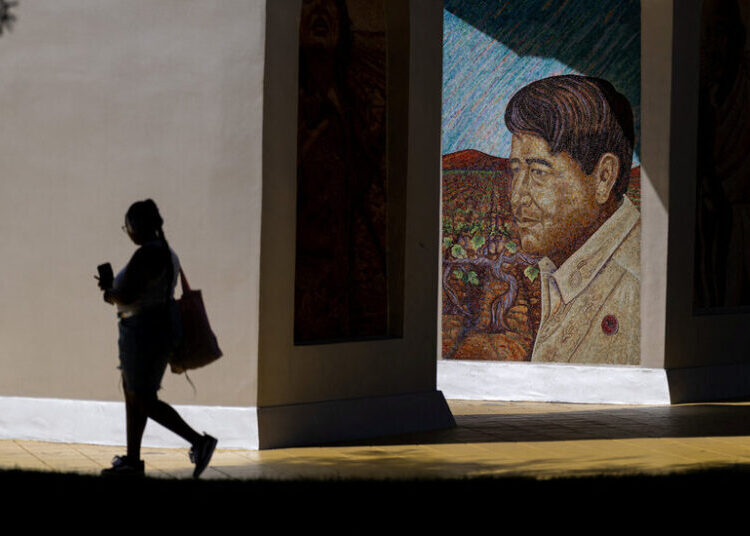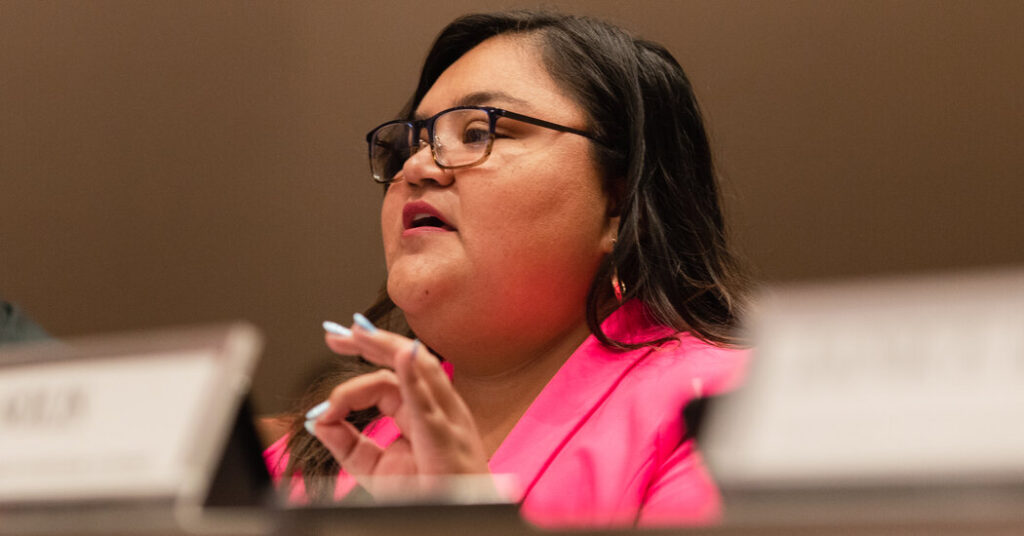
Across California, women in social movements and Democratic politics said that they had seen their own experiences and pain reflected in the sexual abuse allegations against the labor movement icon Cesar Chavez that were publicized Wednesday.
In particular, many said they recognized the difficult choice that Dolores Huerta said she grappled with over decades: Speak out, or keep quiet about the abuse she suffered over fear of harming the movement to which she had devoted her life.
“You think about how your life might change when you publicly come forward, how your family’s life might change. You also think about the person who assaulted you,” said Zahra Hajee, the vice president of California Women’s List, a political action committee that supports and endorses women running for office in the state. “The story greatly resonated with me and it’s also cathartic.”
In 2024, Ms. Hajee spoke publicly about having been sexually assaulted years earlier by a fellow political aide in San Francisco’s Democratic circles. The man she accused of the assault has denied wrongdoing and said that their encounters were consensual. She has since moved to Los Angeles and has continued working for Democratic politicians, including Lindsey Horvath, a member of the powerful Los Angeles County Board of Supervisors.
She said the similarities between her experiences and those of women like Ms. Huerta decades before her are striking.
Efforts to quantify the scale of abuse of women in politics are rare, she said, but one such attempt, a 2023 report by California Women’s List, found that roughly 65 percent of women had experienced some kind of harassment during their political campaigns, compared with half of men.
More than 42 percent of women experienced stalking at least once in their campaign, compared with 27 percent of men.
Many women said that the revelations about Mr. Chavez’s conduct were all the more excruciating because they considered Ms. Huerta a personal hero — a mentor to generations of younger women and a friend to those working alongside her, including Representative Nancy Pelosi, the former House speaker, and other high-profile leaders.
“The amount of weight — how heavy it must have been for Dolores Huerta to carry that for so long,” said Eunisses Hernandez, a Los Angeles City Council member who worked as a community organizer and represents a heavily Latino district. “I’ve seen the repercussions when you speak out against a man in power, and you are blamed for the repercussions.”
Ms. Hernandez said that she is a survivor of sexual violence that occurred when she was a college freshman, and that trauma has informed her work since then. Still, when she got to City Hall in 2022, she at times felt that she was being overlooked — her views dismissed because she was the youngest council member and a Latina woman.
Since then, the City Council has become majority female.
She said that the allegations against Mr. Chavez are a potent reminder that “the model of organizing is people-powered — it’s about building up people, not a person.”
Mayor Karen Bass of Los Angeles, who also worked as a community organizer, said that Ms. Huerta had inspired her to activism.
On Wednesday, she said in a statement that “the sickening reality” is that what those who accused Mr. Chavez of sexual abuse endured “is not isolated, nor is it of the past.”
She continued: “Real progress requires more than moments of reckoning — it demands sustained action to dismantle social, cultural, economic, and political structures that have hurt women throughout our history.”
Jill Cowan is a Times reporter based in Los Angeles, covering the forces shaping life in Southern California and throughout the state.
The post Women in California Politics See Their Own Stories in Chavez Accusations appeared first on New York Times.