1 p]:text-cms-story-body-color-text clearfix”>
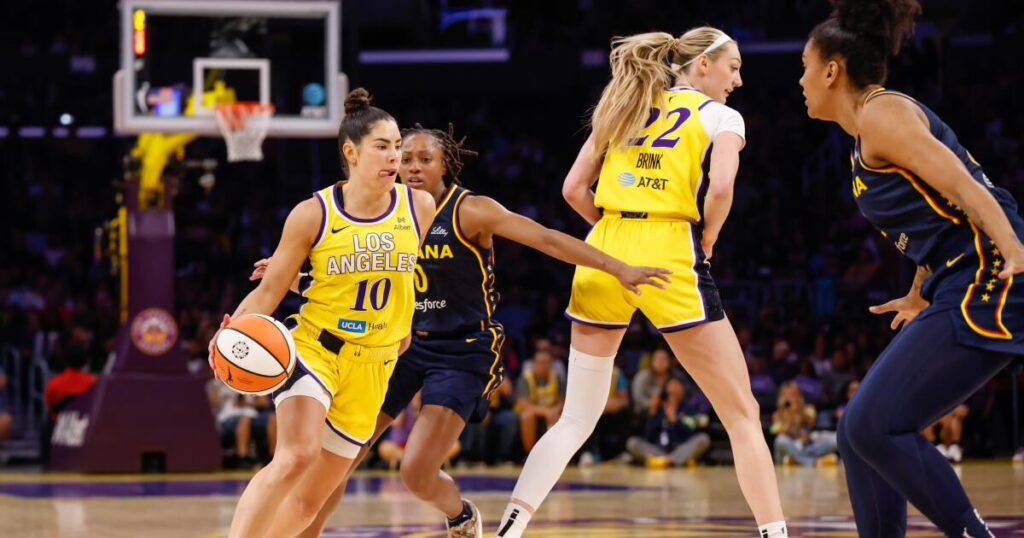
There will be a 2026 WNBA season.
After over 100 hours of in-person negotiations since March 10 in New York city, the WNBA and its players union came to an agreement on a new collective bargaining agreement early Wednesday morning.
The deal will allow the season to begin on time, commissioner Cathy Engelbert said, and training camp to kick off at the end of April.
Before that, though, there is a lot to get done.
2
What we know
p]:text-cms-story-body-color-text clearfix”>
The league and players association have not made the terms public yet, but the salary cap will start at $7 million, up from $1.5 million in 2025, and the supermax will start at $1.4 million, up from $249,244 in 2025, a person with knowledge of negotiations not authorized to discuss them publicly told The Times. ESPN was the first to report the figures.
The total salary cap will jump by around 4.64 times the previous amount. The super maximum salary will be elevated by 5.61 times the previous amount. It means the top players will be eligible for larger raises than the league’s middle class.
The average salary will be $600,000, a bump from the previous average of $120,000, and the minimum salary will be more than $300,000, up from $66,079.
“For the first time, player salaries are tied to a truly meaningful share of league revenue, driving exponential growth in the salary cap, increasing average compensation beyond half a million dollars and raising the standard across facilities, staffing and support,” union president Nneka Ogwumike told reporters.
The main sticking point during negotiations was revenue sharing, and that number will be around 20% for the entirety of the multi-year deal. The league had previously offered 15.5%, a source told The Times, and players went down from their 40% ask to around 26% at the end of February, and then reached the agreement around 20% on Wednesday morning. The Athletic first reported the shift in revenue sharing figures.
Players had been negotiating for a percentage of overall revenue without factoring in expenses while the WNBA was seeking sharing tied to net revenue, mirroring the NBA’s structure that deducts expenses before sharing 50% of profits. It’s still unclear which model the CBA falls under, but since the league had previously offered 70% of net revenue, the 20% number appears to be attached to gross revenue that doesn’t take into league expenses.
“This deal is going to be transformational, and you’ll see all the details hopefully soon,” WNBPA vice president Breanna Stewart told reporters on Wednesday. “But it’s gonna build and help create a system where everybody is getting exactly what they deserve and more from on the court and off the court aspects.”
3
What questions remain
p]:text-cms-story-body-color-text clearfix”>
Now that the deal has been agreed to in principle, a term sheet will go to the players for a vote and then to the WNBA board of governors for ratification. That, according to a source with knowledge of the negotiations, could happen in around two weeks, giving time for the league’s full offseason transaction period to occur in April.
Details are not clear around player housing, league prioritization and core designation salaries after they became touch points of negotiations during the past eight months. Those should be announced once the term sheet is agreed to.
4
What must happen before tipoff
p]:text-cms-story-body-color-text clearfix”>
The league’s two expansion teams, the Portland Fire and Toronto Tempo, need to have drafts to build their initial core of players, and according to a league source that would likely occur in the first week of April. The exact terms of what the expansion draft will look like are yet to be announced, and it is unclear whether anything in the CBA regarding the expansion draft changed during negotiations.
Nearly 80% of the league will be free agents shortly after when free agency kicks off and players can sign for more lucrative deals. There will need to be a period for teams to give their players qualifying offers — which will also have new terms under the CBA — before they can negotiate with other clubs.
The 2026 WNBA draft, which is scheduled for April 13, takes place just six days before training camp and a week after the NCAA Final Four. The Dallas Wings have the first overall pick. The Sparks, who have no first-round picks, traded their No. 3 draft slot to the Seattle Storm in 2024 to acquire Kia Nurse and the No. 4 draft pick used to select Rickea Jackson.
5
How we got here
p]:text-cms-story-body-color-text clearfix”>
The previous CBA, which was agreed to in 2020, was initially set to run through the 2027 season, but the players triggered an opt-out clause in October 2024. That changed the deadline to the end of October 2025.
After a 30-day extension in November, they agreed to another 40-day extension, pushing the deadline back to Jan. 9. Without an agreement, that opened a period of status quo, where the previous CBA remained in place but either side could engage in a work stoppage.
On Dec. 18, in the middle of the second extension, the WNBPA authorized the executive committee to “call a strike when necessary” in a historic vote, but the players never actually went on strike.
The negotiations were at times tense in the public eye. During WNBA All-Star weekend in Indianapolis, the players wore warm-up shirts that read “Pay Us What You Owe Us.” Then, as the 2025 season neared a close, Minnesota Lynx star and WNBPA vice president Napheesa Collier heavily criticized Engelbert in her viral end-of-season interview.
The WNBA will begin its 11-year media rights deal, worth roughly $200 million annually, this season with Disney, Amazon and NBCUniversal. Games will also air on Ion and USA Network. Last season, franchise valuations soared, and Sportico estimated the expansion Golden State Valkyries brought in $70 million, a league record. The league also accepted $250 million in expansion fees for new teams set to debut in Philadelphia, Cleveland and Detroit.
The post WNBA and players reached a historic deal. Here’s what needs to happen next appeared first on Los Angeles Times.