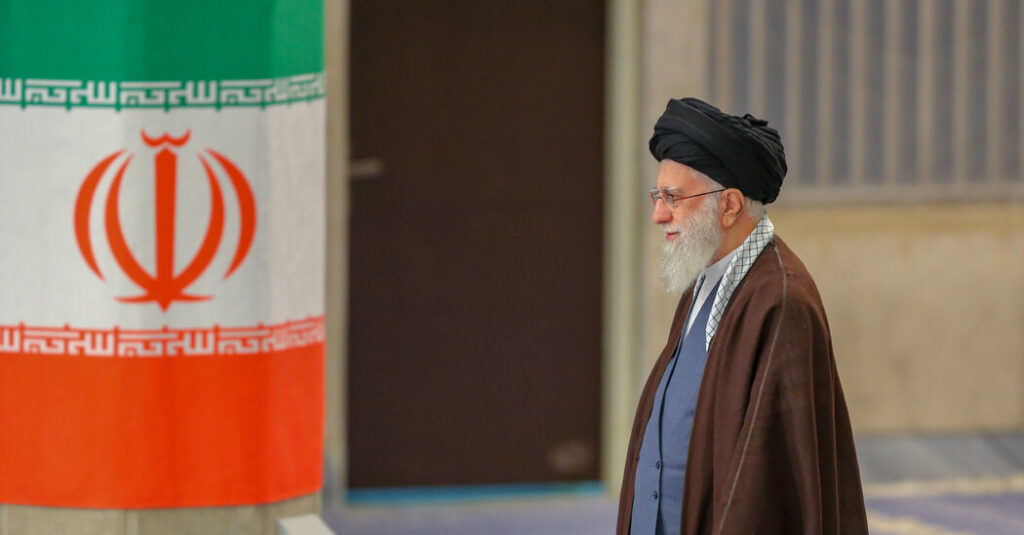
People worldwide were betting on the fall of Iran’s late supreme leader, Ayatollah Ali Khamenei, on prediction markets long before he was killed in an airstrike on his compound in Tehran late last month.
But when his demise was confirmed on March 1, the platform Kalshi said it would not pay out millions of dollars in expected winnings, citing a prohibition on wagers involving death. The company outraged bettors and fueled a fierce cultural debate about the ethics and dangers of prediction markets.
Such bets have also highlighted national security risks. Several times, betting patterns have suggested that anonymous users were using inside information to gamble on geopolitical developments, like the timing of attacks. There is often little governments can do about it.
Prediction markets allow trades on “event contracts,” bets on whether almost anything will occur — an Oscar win, a natural disaster, or the president garbling his words. Trading volume on these exchanges globally rose by more than 400 percent between 2024 and 2025. Most trades are on sports, but bets on geopolitical events are also popular.
A wager on Ayatollah Khamenei’s ouster by March 1 on Kalshi opened in early January, as Iranians were protesting their government, but it did not mention war or his death. By the time the U.S.-Israeli bombing of Iran began on Feb. 28, more than $50 million traded on the contract.
Kalshi, based in the United States, is regulated by a federal agency, the Commodity Futures Trading Commission, and federal rules prohibit betting on war and death. The company reimbursed bettors. “Profiting from death is not allowed on Kalshi, and that’s a good thing,” said Elisabeth Diana, the company’s communications chief.
Not so for Kalshi’s main competitor, Polymarket, which operates primarily abroad. Outside the United States, it allowed wagers on the ayatollah’s removal, and paid on them. Polymarket recently began limited operations in the United States, where it did not allow those bets, but Americans with VPNs have been able to use its overseas platform.
Disgruntled users sued Kalshi in federal court in California, arguing that it had pulled a bait-and-switch, touting wagers on the ayatollah’s removal and keeping up interest in the market until the last minute without clearly disclosing the “death carve out.”
“Consumers understood that the most likely — and in many cases the only realistic — mechanism by which an 85-year-old autocratic leader would ‘leave office’ was through his death,” their complaint argued.
Members of Congress also expressed dismay, but for very different reasons.
“Betting on whether a war will start. Betting on whether someone will be assassinated. Betting on whether a city gets hit with a nuclear weapon,” said Representative Mike Levin, Democrat of California. “This is what has been allowed to flourish.”
Republican and Democratic lawmakers have introduced several bills to reign in questionable bets on prediction markets. Mr. Levin introduced one last week to strengthen the ban on “death bets.”
Representative Blake Moore, Republican of Utah, proposed a bill to ban bets contradicting the public interest, as defined by lawmakers and regulators, “related to sensitive matters like terrorism, assassination, war, or elections.”
But Polymarket, which touts itself as the world’s biggest prediction market, operates largely outside of U.S. regulation. The company did not respond to a request for comment.
Some wagers have raised suspicions about people gambling on secret information about government plans.
A New York Times analysis showed that on Feb. 27, more than 150 accounts on Polymarket bet a combined $855,000 that the U.S. would strike Iran the next day — and it did. Until then, large bets on strikes in such a narrow time frame had been relatively rare.
In January, just before U.S. troops captured President Nicolás Maduro of Venezuela in a surprise operation, a Polymarket user bet that he would soon fall, despite seemingly long odds, and made about $400,000.
In Israel last month, several army reservists were arrested on suspicion of using classified knowledge to bet on military operations on Polymarket.
“Perfectly timed bets on prediction markets have the unmistakable stench of corruption,” said Senator Jeff Merkley, Democrat of Oregon, introducing a bill to restrict betting and give regulators more power.
A regulatory crackdown on prediction markets could be a difficult sell to the White House. Donald Trump Jr., the president’s eldest son, is both an investor in and an unpaid adviser to Polymarket, and a paid adviser to Kalshi.
The C.F.T.C. is trying to evolve for a landscape that would have been unimaginable in 1974, when it was created by Congress to regulate futures trading on commodities like soybeans and copper. Last week it sought public comment about prediction platforms ahead of possible new rules.
Whether this agency should be “the primary gambling regulator for everything” is another question, said Tyler Gellasch, a former government lawyer who has drafted financial legislation and now leads the Healthy Markets Association, a financial policy nonprofit. “Congress wasn’t thinking of making the C.F.T.C. the regulator for bets on who would win the Super Bowl or what Taylor Swift might say in an interview.”
Ephrat Livni is a Times reporter covering breaking news around the world. She is based in Washington.
The post Betting on Ayatollah’s Ouster Ignites Ire Over Prediction Markets appeared first on New York Times.